

Warehouse Forklift Recommendations for Safe and Efficient Operations
2026-11-03
A forklift is only as safe as the decisions made around it. In many warehouses, the difference between a smooth shift and a costly accident comes down to a handful of small choices—tire pressure, load center, aisle width, and the equipment itself. If you're looking to cut downtime without cutting corners, this post offers realistic forklift recommendations for safe and efficient operations, drawing on HANGCHA's expertise in building machines that respect both the operator and the bottom line.
The Forklift Metric That Predicts Tip-Overs Before They Happen
Forklift tip-overs are often treated as sudden, unpredictable events, but the physics that lead to them build up long before the machine actually leaves the ground. The most reliable early warning is the ratio between the load moment and the truck's rated capacity at a given lift height and tilt angle. Instead of watching only the gross weight on the forks, this metric compares where the combined center of gravity sits relative to the stability triangle formed by the front wheels and the rear axle. When that point drifts toward the triangle's edge under acceleration, braking, or uneven ground, a tip-over is already in progress even if the operator cannot feel it.
On trucks equipped with load moment indicators or dynamic stability systems, this value is calculated in real time by combining data from pressure sensors in the tilt cylinders, a load cell in the hydraulic circuit, and a mast height sensor. The result is not a simple weight readout but a stability margin: the percentage of safe capacity remaining before the rear wheels would lose contact. Operators trained to read this margin can adjust speed, lift height, or fork tilt before reaching the critical threshold. Fleets that log this metric over time notice patterns, like a specific aisle where the margin drops sharply because of a floor slope, which allows targeted corrections rather than waiting for an incident.
The key distinction is that weight alone does not predict tip-overs. A forklift carrying 80% of its rated capacity can still be dangerously unstable if the load is raised high, the mast is tilted forward, or the truck is turning on a ramp. The predictive metric accounts for all of these simultaneously by tracking the shifting moment arm. This is why two seemingly identical lifts can have very different outcomes. By making the stability margin visible to both the operator and the maintenance team, facilities move from reactive safety reports to proactive load handling decisions.
Why Experienced Operators Sometimes Take the Riskiest Shortcuts
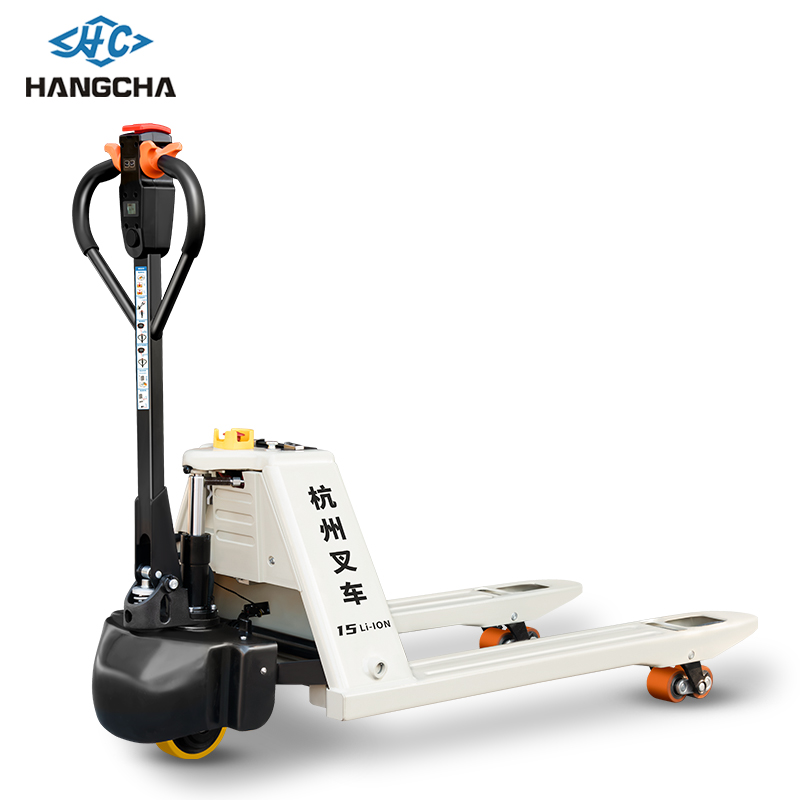
Seasoned operators often develop a quiet arrogance around risk—not out of carelessness, but because their own track record becomes the primary filter. After hundreds of uneventful repetitions, the brain starts treating a high-stakes procedure as routine, pruning away the mental alarms that once kept a novice hyper-vigilant. This is not a conscious decision to cut corners; it’s more like a gradual dimming of the hazard lights. The shortcut that once seemed unthinkable now feels almost natural, because experience has rewritten the boundary between acceptable and reckless.
Another driver is the unspoken economy of time on the floor. Veteran operators are often the ones who can “make things work” under pressure, and their shortcuts are frequently rewarded—implicitly or explicitly—by supervisors who value speed and output. Over time, the shortcut stops being a deviation and starts being the norm, passed down as tribal knowledge to newcomers. The risk is normalized through repetition, and the experienced operator, now a role model, has little incentive to question what has become second nature.
Finally, there’s the psychological trap of near-miss reinforcement. When a risky shortcut works nine times out of ten, the brain encodes those nine successes far more vividly than the one close call that didn’t quite lead to disaster. The absence of immediate consequences builds a false sense of immunity—a belief that “I know exactly where the edge is, and I can dance on it.” This overconfidence is not stupidity; it’s the predictable outcome of learning from incomplete feedback, which is exactly what experience often provides.
Battery Care Routines That Match How Your Warehouse Actually Runs
The first shift starts at 6 a.m., and no one has time for a charging ritual that ignores the pace of actual picking and replenishment. Instead of treating every battery as if it needs the same eight-hour rest, routines should follow the equipment's real duty cycle. For reach trucks that stay on the floor until lunch, a top-up charge during the only 30-minute break makes more sense than waiting for a full cycle at day's end. That's the kind of adjustment that keeps batteries warm and ready without forcing operators into downtime they don't have.
Different zones in a warehouse age batteries differently. Cold storage drains lead-acid faster than a dry, ambient dock, and a charger set to the same voltage for both will leave one undercharged and the other boiling off water. Matching care to zone means recording what actually happens: how many moves per hour, how long a lift sits between tasks, and whether the same battery is double-shifted before it cools. These details aren't extras—they're the baseline for deciding when to water, equalize, or rotate packs.
The best schedule isn't the one that looks clean on a spreadsheet. It's the one that survives a Tuesday with three call-outs and a truck down. Build enough slack so a missed charge doesn't strand the night crew, and keep a couple of healthy spares in rotation instead of parked until they sulfate. When care routines bend around the warehouse's own rhythm—not the other way around—batteries stop being a daily scramble and become just another gear that turns without noise.
Aisle Design Flaws That Force Unnecessary Forklift Maneuvers
Warehouse layouts often look fine on a blueprint, but once forklifts start moving through them, narrow aisle widths and poorly placed support columns quickly turn routine pallet drops into frustrating slalom courses. Operators end up making three-point turns just to line up with a rack face, or they have to back out of a dead-end aisle because the turning radius was never factored into the design. These extra maneuvers don't just waste a few seconds—they multiply across hundreds of daily trips, wearing down both the equipment and the drivers' patience.
Another common issue is the lack of designated staging zones near high-traffic intersections. When aisles intersect at sharp angles or open into congested cross-docks without any buffer space, forklift drivers are forced to perform tight reverse turns or wait for long gaps in traffic. This creates a ripple effect where one hesitant operator blocks an entire pick path, forcing others to reroute through even tighter corridors. Over time, these forced maneuvers become ingrained habits, and the original aisle design flaw gets accepted as "just how the warehouse works"—until a near-miss or a damaged rack finally exposes the cost.
Fixing these flaws usually means rethinking aisle width based on the largest forklift model in use, not the smallest, and eliminating blind corners that require stop-and-go repositioning. Simple changes like angling rack ends, adding mirrors at intersections, or relocating frequently accessed SKUs to wider central aisles can drastically cut down on needless maneuvering. The goal isn't just faster travel—it's reducing the cognitive load on operators so they can focus on safety instead of constantly calculating whether their forks will clear the next corner.
Load Center Mistakes That Cause Damage Even at Low Speeds
One of the most overlooked errors is treating the load center as a fixed number. It shifts the moment you add attachments, pick up an irregular pallet, or tilt the mast. At walking speed, a forklift with a 24-inch rated load center can become dangerously unstable if the actual load center sits at 30 inches. The truck won't groan or strain; it just loses lateral stability when you turn or brake gently.
Another common mistake is ignoring side shift. Operators often nudge the load sideways to line up with racking, but that shifts the combined center of gravity outside the stability triangle. Even at creep speed, a small bump or slight incline can turn that off-center load into a tip-over. The damage isn't always immediate: repeated off-center handling warps fork heels, cracks carriage bars, and slowly destroys steer tires.
Finally, there's the habit of lowering the load while moving. It sounds harmless at 2 mph, but lowering a heavy load changes the mast's dynamic load center. The momentum pulls the truck forward, overloading the front axle and slamming the load into the ground. Over time, this causes hidden stress fractures in the overhead guard and mast channels. None of these failures require speed—just repeated mistakes at low velocity.
The Four-Minute Daily Check That Prevents Most Mechanical Failures
Most breakdowns don't happen suddenly. They brew quietly over days or weeks, hiding in plain sight until something finally gives. A short walk-around inspection every morning takes less time than waiting for a tow truck, yet it catches the loose belts, slow leaks, and cracked hoses before they turn into roadside emergencies.
Start with fluids: oil, coolant, brake fluid, and transmission fluid all leave traces when they escape. Look for fresh drips on the ground or wet spots on the engine block. Then check the tires—uneven wear or a nail embedded in the tread is easier to fix in your driveway than on the highway. Finally, listen for changes. A new squeal, rattle, or hiss usually points to a failing component that still has time to be replaced cheaply.
The trick is consistency. Four minutes every morning builds a baseline of normal. Once you know what your machine sounds and looks like when healthy, the abnormal becomes obvious immediately. That early warning is what separates a quick fix from a major repair.
FAQ
Inspect tires, brakes, steering, horn, lights, fluid levels, and forks for wear. Confirm the load capacity plate is legible and the seat belt works. Report any issue immediately.
Install convex mirrors, use floor markings, and require operators to sound the horn and slow down. Some facilities add blue pedestrian lights or motion sensors to alert both drivers and foot traffic.
Slow down and keep loads low. Report potholes and cracks right away, and schedule repairs. For persistent trouble spots, consider using forklifts with larger cushion tires or adjustable mast tilt to maintain stability.
Turning with forks elevated shifts the center of gravity and increases rollover risk. Always lower the load to a safe travel height, usually just above the ground, before making turns.
Centering loads and keeping them close to the mast reduces strain on the hydraulic system and improves stability. It also cuts cycle times because operators do not need to re-adjust or double-handle pallets.
Speed limits tailored to aisle width, floor condition, and pedestrian traffic prevent collisions and product damage. Many fleets use electronic speed limiting to enforce site-specific rules without constant supervision.
Consider replacement when repair costs exceed 50% of the unit's value, when downtime disrupts operations, or when battery runtime no longer covers a full shift. Upgrading to electric models may also improve indoor air quality and reduce noise.
Cross-train operators, stagger break times, and pre-stage high-demand pallets to reduce rushed travel. Assign dedicated spotters in congested zones and hold brief shift handover notes on equipment condition.
Conclusion
Forklift stability is not a matter of guesswork. Watching the lateral acceleration and load moment during turns gives a real-time signal long before a tip-over becomes inevitable; most incidents build slowly, and a slight adjustment in speed or steering angle can erase the risk entirely. Yet even the best physics are undermined by poor warehouse layout. Narrow aisles that force three-point turns, blind intersections that demand sudden braking, and racking set too close to column lines all add unnecessary maneuvers. Each extra correction increases the chance of wheel lift, especially when the load center shifts because a pallet is not snug against the mast or an operator carries a double-stacked load "just once." At walking pace, a forward-shifted center can still tilt a mast enough to drop a load or crack a fork heel.
Experience does not always equal safety. Seasoned operators often take shortcuts precisely because they have gotten away with them—coasting through stop signs, raising forks while moving, or reversing without looking. These habits are hard to break through lectures; instead, supervisors should review dashcam clips or telematics data with the operator and ask what they would tell a new driver about that moment. On the maintenance side, battery care needs to match real shift patterns. If trucks run two shifts, opportunity charging at breaks beats a full overnight equalize on weekends. And none of this matters if the four-minute daily check is skipped. A quick walkaround for hydraulic leaks, chain tension, tire chunking, and fork cracks catches most failures before they strand a truck mid-shift. Make that check a habit, not a checkbox.
Contact Us
Contact Person: Liuxue
Email: [email protected]
Tel/WhatsApp: +86-19084200370
Website: https://www.hf-ec.com/