

Top Pharmaceutical Intermediates: Essential Building Blocks for Modern Medicine
2026-08-04
Behind every life-saving drug lies an unsung hero—pharmaceutical intermediates. These chemical building blocks form the backbone of modern medicine, enabling the synthesis of complex active pharmaceutical ingredients (APIs) that treat conditions ranging from infections to cancer. Without high-quality intermediates, the journey from lab to pharmacy shelf would halt. At DSL Chemicals, we understand that precision and purity at this stage are non-negotiable. In this post, we’ll explore the top intermediates driving innovation, revealing how they shape the drugs we rely on—and why choosing the right partner makes all the difference.
The Unsung Heroes of Drug Development
Behind every breakthrough medication lies a workforce rarely mentioned in press releases. These are the clinical trial volunteers, often patients themselves, who step into the unknown, trusting their bodies to experimental compounds with no guarantee of benefit. Their courage fuels the data that determines safety and efficacy, yet their names never appear on the label.
Equally invisible are the laboratory technicians who spend years refining cell lines, the data managers who wrestle messy trial results into analyzable formats, and the regulatory specialists who translate complex science into compliance dossiers. Without their quiet precision, no drug would ever navigate the path from pipette to prescription.
From Lab Bench to Life-Saving Pills
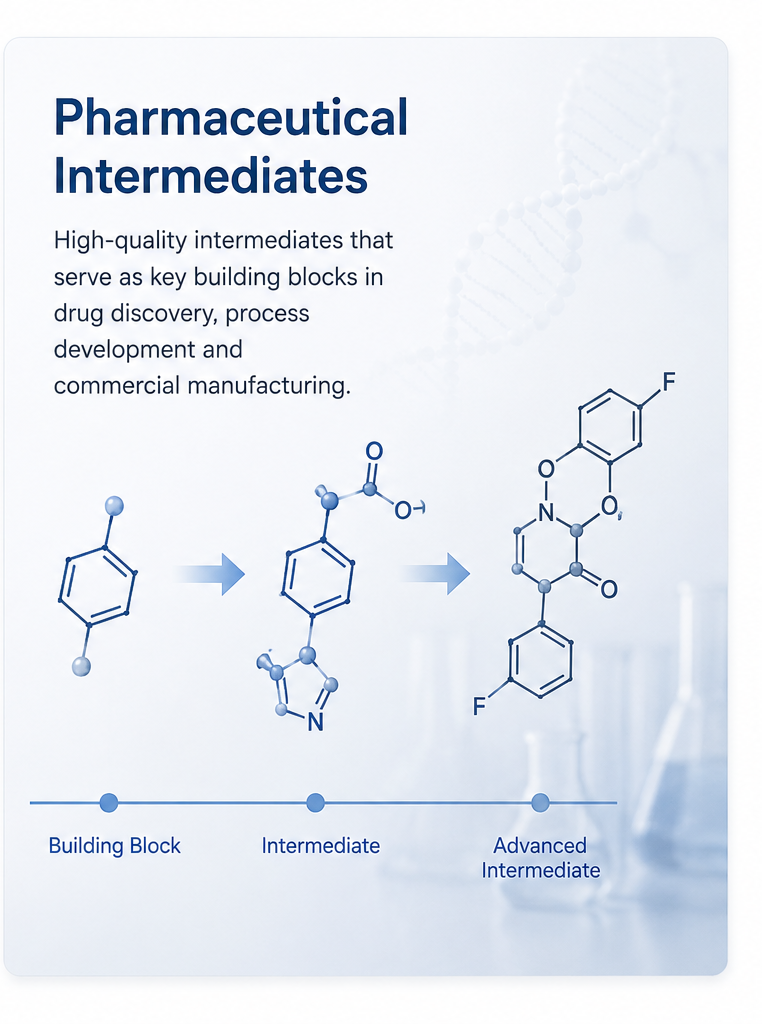
The journey of a new medication starts with a spark of curiosity in a research laboratory. Scientists spend years understanding disease mechanisms at the molecular level, often screening thousands of compounds to find one that shows promise. It’s a meticulous process of trial and error, where each failed experiment teaches a lesson, gradually guiding the team toward a candidate worthy of further exploration.
Once a lead compound is identified, it enters preclinical testing—extensive studies in cells and animal models to gauge safety and efficacy. This phase weeds out many hopefuls, leaving only the most robust candidates to advance. The transition from petri dish to pill form is far from straightforward; formulation experts must balance stability, absorption, and patient tolerance, often tweaking the chemical structure slightly to enhance its drug-like properties.
The final leap to human trials marks a pivotal moment. Rigorous clinical studies, conducted in phases, scrutinize the drug’s impact on actual patients. Only a fraction of candidates survive this gauntlet, but those that do represent a triumph of persistence and science—a tangible lifeline that began as nothing more than an idea on a lab bench.
Key Intermediates Shaping Today’s Therapies
The landscape of modern medicine is quietly anchored by a class of molecules that rarely make headlines: key intermediates. These chemical building blocks bridge the gap between raw materials and the final active pharmaceutical ingredients (APIs) that reach patients. Without them, the complex architectures of today’s most effective therapies—from small-molecule kinase inhibitors to next-generation biologics—would remain purely theoretical. Their role extends beyond simple synthesis; they often embody critical functional groups or stereochemical centers that define a drug’s potency, selectivity, and safety profile. As supply chains become increasingly globalized, the reliability and purity of these intermediates dictate not only the feasibility of production but also the pace at which new treatments can move from bench to bedside.
A closer look at therapeutic areas like oncology reveals just how indispensable custom intermediates have become. Many targeted cancer agents depend on heterocyclic cores or precision linkers that are not available off the shelf. A single misstep in their construction—an incorrect chiral configuration or a trace impurity—can render a batch useless, delaying clinical trials and escalating costs. This has spurred a quiet revolution in process chemistry, where innovation is measured not in flamboyant breakthroughs but in higher yields, fewer steps, and greener routes. Companies that master intermediate synthesis can reduce the environmental footprint of drug manufacturing while ensuring a steady supply of life-saving medicines. The result is a virtuous cycle: smarter chemistry at the intermediate stage leads to more accessible therapies, even for rare diseases where economies of scale were once prohibitive.
Looking ahead, the evolution of intermediates is tightly entwined with emerging modalities like antibody-drug conjugates (ADCs) and gene therapies. The demand for ultra-pure, multifunctional linkers and nucleotide monomers is reshaping the field, pushing the boundaries of what synthetic chemistry can achieve. As regulatory scrutiny intensifies, the traceability of every intermediate—from source to final formulation—becomes a non-negotiable pillar of quality assurance. This emphasis on transparency not only safeguards patients but also propels the industry toward a future where personalized medicine can be manufactured on demand. The unsung ingenuity embedded in a flask of carefully crafted intermediates may well determine the speed and success of the next therapeutic frontier.
Crafting Complexity: The Art of Synthesis
Synthesis isn't about collecting fragments; it's about threading them into something that breathes on its own. When you sit with scattered ideas, the first instinct is to categorize them—tidy piles that never quite touch. But real synthesis asks you to blur those edges, to let the compartments bleed into one another. A chemist mixing compounds understands this: the resulting molecule isn't a simple sum but a new entity with emergent properties. The same holds for weaving together historical narratives, software architectures, or culinary flavors. The art lies in finding the invisible ligatures that transform a heap of notes into a coherent argument, a patchwork of code into an elegant system.
What trips people up is the assumption that synthesis must be linear—first A, then B, inevitably leading to C. But the practice is more akin to kneading dough. You fold in contradictions, massage counterarguments, and sometimes let the mixture rest while your subconscious does its quiet work. A historian piecing together a disputed event doesn't just stack evidence; they listen for the harmonic frequencies between conflicting accounts. In design, a well-synthesized solution often emerges from deliberately juxtaposing incompatible constraints. It's this willingness to dwell in the messy middle, rather than rush toward premature resolution, that separates surface-level assembly from genuine intellectual alchemy.
The most overlooked aspect is how synthesis changes the synthesizer. Each time you wrestle disparate elements into unity, you stretch your cognitive range. You start noticing patterns in unrelated domains—how the structure of a sonnet mirrors the flow of a legal argument, or how ecological interdependencies echo team dynamics. Over time, you develop an instinct for fertile incongruities, the places where a slight nudge can collapse chaos into clarity. This isn't a mystical gift but a practiced fluency in complexity. The final product—whether an essay, a product roadmap, or a dinner menu—carries the fingerprints of that struggle, and it's those very fingerprints that make it resonate with others long after the last piece falls into place.
Quality and Purity: Non-Negotiables in Manufacturing
When it comes to manufacturing components that end up in medical devices, food processing equipment, or aerospace systems, quality and purity aren't just buzzwords—they're the baseline for everything that follows. A single compromised batch can trigger recalls, damage reputations, and in the worst cases, put lives at risk. That's why rigorous material vetting and in-process controls are baked into every stage, from raw material sourcing to final inspection. It's not about meeting a spec sheet; it's about building trust that each part will perform exactly as expected under real-world conditions.
Purity, in particular, demands constant vigilance. Contaminants can sneak in through subpar raw materials, inadequate cleaning protocols, or even the manufacturing environment itself. Advanced analytical tools—like spectrometry and chromatography—are essential for detecting trace elements that shouldn't be there. But technology alone isn't enough. The people running these tests need to understand the stakes, and the culture must encourage speaking up when something feels off. Over time, small choices add up: opting for a more costly but cleaner alloy, investing in better filtration, or slowing down a process to ensure residue doesn't linger.
What often separates the best manufacturers from the rest isn't a secret formula—it's the refusal to compromise when no one is looking. Audits and certifications validate the systems in place, but the real test comes in the unexpected moments, like a sudden raw material shortage or a rush order. Sticking to purity and quality during those times costs more upfront and can delay shipments, yet it's exactly those decisions that define a manufacturer's integrity. In industries where the margin for error is razor-thin, that integrity is everything.
Driving Innovation in Modern Medicine
True breakthroughs in medicine rarely come from a single discovery. They emerge at the crossroads of disciplines, where biology meets data science, and engineering aligns with patient care. Today’s most compelling innovations are fueled by a willingness to dismantle silos, enabling real-time collaboration between researchers, clinicians, and technologists. This integrated approach not only speeds up the translation of laboratory insights into bedside solutions but also ensures that new tools are shaped by the practical realities of healthcare delivery.
Precision medicine is moving beyond genetic profiling to embrace a more dynamic view of human health. Wearables, implantable sensors, and advanced imaging now generate continuous streams of physiological data, allowing clinicians to track disease progression and treatment response in ways that were once impossible. By blending these real-world signals with molecular information, we are entering an era where interventions can be tailored not just to a person’s DNA but to their daily life. This shift demands new analytical frameworks and a reimagining of how clinical trials are designed, yet the potential to catch illness before it becomes irreversible is unprecedented.
Perhaps the most transformative change is the evolving role of the patient. No longer a passive recipient, the individual is becoming an active participant in their own health journey through access to personal data, decentralized trial models, and digital therapeutics. This participatory model challenges traditional hierarchies in medicine and spurs innovation that prioritizes usability and long-term engagement. When people are equipped with clear, actionable insights rather than raw numbers, the divide between medical expertise and everyday wellness begins to blur—creating a system that is not only more responsive but profoundly more human.
FAQ
Pharmaceutical intermediates are chemical compounds that serve as precursors or building blocks in the multi-step synthesis of active pharmaceutical ingredients (APIs). Unlike APIs, which are the final biologically active components in a medicine, intermediates undergo further chemical transformations before becoming the desired drug substance. They are not intended for direct therapeutic use and are typically produced under less stringent regulatory controls compared to APIs, though purity and consistency remain critical.
They enable the efficient and scalable production of complex drug molecules by breaking down intricate syntheses into manageable steps. Without high-quality intermediates, it would be nearly impossible to achieve the precision, yield, and cost-effectiveness required for mass-producing modern medicines. They allow manufacturers to control each reaction carefully, ensuring that the final API meets strict purity and safety standards while keeping production economically viable.
There are countless intermediates, but a few widely recognized ones include 6-aminopenicillanic acid (6-APA) for semisynthetic penicillins, 7-aminocephalosporanic acid (7-ACA) for cephalosporin antibiotics, and guaiacol derivatives used in cough suppressants. Others like chiral amines, pyridine derivatives, and heterocyclic building blocks (e.g., piperazine, indole) are fundamental in synthesizing antivirals, cardiovascular drugs, and CNS medications.
Quality is maintained through rigorous in-process controls, analytical testing (HPLC, GC, NMR), and adherence to Good Manufacturing Practices (GMP) even if intermediates aren't always mandated to follow full GMP. Impurities or inconsistent quality can lead to failed API batches, safety risks, and costly delays. A reliable intermediate supplier provides detailed certificates of analysis and has robust quality systems to guarantee batch-to-batch reproducibility, which directly impacts the efficacy and safety of the final drug.
During R&D, intermediates are crucial for exploring synthetic routes and optimizing lead compounds. Medicinal chemists rely on a diverse library of intermediates to rapidly assemble candidate molecules for screening. A well-characterized intermediate can shave months off development timelines and allow for the quick scale-up of promising candidates. Moreover, proprietary intermediates often form the backbone of a drug's intellectual property, enabling novel synthesis pathways that are patentable.
The sector has seen a shift toward more sustainable and green chemistry practices, with emphasis on reducing waste, toxic reagents, and energy use. Continuous flow chemistry and biocatalysis are becoming mainstream for producing certain intermediates. Geographically, manufacturing has become more globalized but also faces supply chain resilience concerns, prompting some reshoring. Additionally, the rise of complex generics and personalized medicine is driving demand for high-purity, niche intermediates that require advanced synthesis capabilities.
Conclusion
Behind every breakthrough pill lies a quiet army of pharmaceutical intermediates—molecular scaffolds that never make the headlines yet form the very skeleton of modern medicine. These compounds are the unsung heroes, bridging the gap between a chemist’s sketch and a life-saving tablet. Their journey from the lab bench to the pharmacy shelf is a masterclass in complexity: it demands an artful blend of precision, creativity, and deep understanding of organic synthesis. Crafting these intermediates often means choreographing multi-step reactions where each bond formed is a deliberate move toward a molecule that can slip into the body and rewrite disease. Today’s therapies—from targeted cancer agents to antiviral stalwarts—lean on a select cast of key intermediates, each tailored to unlock a specific biological lock. Without them, the most promising drug candidates would remain trapped in the realm of theory, never reaching the hands of patients who need them.
Yet the story doesn’t end with a beautiful synthesis; it only begins. In manufacturing, quality and purity are non-negotiable. A single impurity at trace levels can derail a batch, compromise safety, or blunt efficacy. Rigorous, often proprietary, purification protocols ensure that these building blocks meet the relentless standards demanded by regulators and the human body alike. This obsession with consistency and cleanliness is what propels innovation forward. It empowers chemists to push boundaries, designing intermediates of staggering complexity that become the engines of next-generation drugs. As medicine sets its sights on harder-to-treat conditions, these essential building blocks will keep evolving—silent but irreplaceable partners in the drive to turn molecular dreams into tangible, life-changing realities.
Contact Us
Contact Person: Wei Zhang
Email: [email protected]
Tel/WhatsApp: 862163529955
Website: https://www.dslchem.com