

PTFE Gland Packing Wholesaler Benefits for Industrial Sealing Applications
2026-11-02
Leaking glands don't announce themselves — they just quietly drive up energy costs and eat into uptime. If you're sourcing PTFE gland packing for industrial sealing, one-off retail orders often mean inconsistent quality, awkward minimums, and delayed maintenance cycles. A focused wholesaler like TAIFNO flips that model: chemically inert, low-friction PTFE packing in the exact cross-sections your pumps and valves demand, with volume pricing that makes proactive replacements affordable. In this post, we'll dig into the real operational benefits — from fewer unplanned shutdowns to longer service life — and why choosing the right wholesale partner matters more than the material spec sheet alone.
Choosing a PTFE Gland Packing Wholesaler That Actually Lowers Maintenance Costs
A wholesaler's real value shows up months after installation, when pumps are still running without constant gland adjustments. The difference often comes down to material consistency, not just the PTFE grade on paper. Ask for batch-level compression and creep test results, not generic datasheets. If they hesitate, move on.
Pricing that undercuts everyone usually hides corners cut in filler distribution or sintering time. That translates directly into more frequent repacking, more downtime, and higher labor costs for your crew. A supplier who can explain how their packing handles thermal cycling without hardening is worth a slightly higher unit price.
Finally, look for someone who asks about your specific media, shaft speed, and pH range instead of pushing the same square braid for every application. That conversation alone filters out order-takers from partners who actually reduce your long-term spend.
What High-Volume Sealing Projects Gain from Bulk PTFE Packing
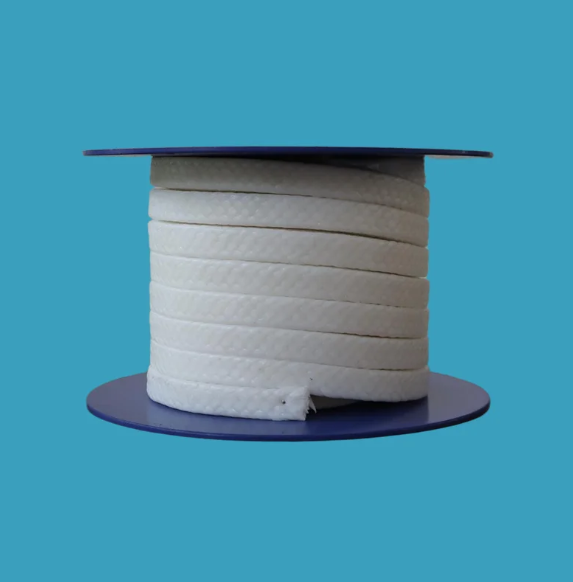
Bulk PTFE packing changes the math for high-volume sealing work in ways that spec sheets rarely capture. When you buy in large spools or coils instead of small pre-cut kits, the per-foot cost drops enough to free up budget for other maintenance priorities. More importantly, you stop paying for packaging you don't need and the labor tied to opening dozens of individual boxes. Teams that run multiple pumps, valves, or mixers find that a single bulk order covers several months of routine replacements without the constant reordering cycle.
Another practical gain is consistency across installations. Bulk PTFE packing from the same production lot behaves the same way under compression, which means torque settings and break-in procedures become predictable across a whole plant. That uniformity reduces the guesswork when technicians move from one piece of equipment to another. It also simplifies training, since new crew members learn one material's handling quirks instead of adapting to whatever random brand happened to be in stock that week.
Inventory control gets simpler too. Instead of tracking multiple SKUs for different lengths and sizes, you keep a few master rolls and cut what each job requires. That cuts down on half-used boxes cluttering shelves and prevents the frustrating moment when a critical seal fails and the right size is out of stock. For facilities running continuous operations, having bulk PTFE packing on hand means a failed pump gets back online in the time it takes to cut and install a new ring, not after a rush order arrives two days later.
The Hidden Durability Advantages of PTFE in Aggressive Chemical Sealing
What often gets overlooked about PTFE in aggressive chemical sealing is that its durability comes from more than just chemical resistance. The carbon-fluorine backbone is so stable that prolonged contact with concentrated acids, oxidizers, and polar solvents leaves the material essentially unchanged. Rubber and many engineered plastics will swell, harden, or crack under the same conditions, but PTFE keeps its original cross-section and elasticity. That means the seal does not lose its initial compression, and the joint remains tight without the need for constant retorquing—even after years of exposure.
There is also the matter of how PTFE behaves under mechanical load. Fillers such as glass or carbon reduce the already low creep of pure PTFE, allowing the seal to hold its shape and contact pressure between flanges. Because the material is self-lubricating and has very low surface energy, it does not bond to metal faces or accumulate hard deposits that can tear softer materials. In practice, this hidden stability shows up as fewer leaks, less maintenance, and longer service intervals in chemical processing, where downtime is far costlier than the seal itself.
Why Inventory Managers Prefer Wholesale PTFE Gland Packing Over Repeated Small Orders
Stocking PTFE gland packing in larger wholesale quantities shifts the math in a way that repeated small buys rarely can. Freight charges, processing fees, and the time spent reordering several times a quarter eat into margins that look fine on paper but turn thin once the full procurement cycle is counted. A single bulk purchase flattens those costs and lets the warehouse absorb demand spikes without scrambling for a last-minute carton.
There is also the matter of batch consistency. Gland packing from different production runs can vary in density, finish, or dimensional tolerance, and those small differences show up as uneven sealing performance in the field. Buying wholesale typically means a larger run from one production lot, so the maintenance team works with a uniform product across pumps and valves, which cuts down on troubleshooting time.
Beyond cost and quality control, the stocking decision reduces internal friction. Inventory managers do not need to approve a purchase order every few weeks, track multiple shipments, or explain why the same item appears on the ledger with three different unit prices. Bulk purchasing consolidates those decisions into one planned event, and the remaining effort goes into monitoring stock levels rather than chasing suppliers.
Reducing Leakage Risks in Pumps and Valves with Consistent PTFE Supply
Pump and valve failures rarely start with a sudden rupture. They begin with tiny, almost invisible leaks that gradually erode seals, wear down seats, and invite corrosion into threaded connections. A consistent supply of PTFE-based components—whether machined gaskets, packing rings, or valve seats—removes one of the most common variables behind these slow failures. When the PTFE source fluctuates in density, crystallinity, or filler distribution, even a well-designed pump loses its tightness over weeks, not years. Reliable suppliers who control their raw PTFE resin and extrusion parameters allow maintenance teams to stop chasing intermittent drips and start preventing them.
Field experience shows that most leakage problems trace back to dimensional drift in soft parts. A PTFE gasket that compresses slightly more than the one installed last quarter changes the bolt load, which then redistributes stress unevenly across the flange. Over time, that uneven load works the gasket loose, especially under thermal cycling. Keeping a single, consistent PTFE source for all sealing elements means those compressive tolerances stay predictable. Maintenance engineers can record torque values, trust that the next replacement will behave identically, and reduce the need for repeated re-torquing after startup. This kind of stability is rarely mentioned in pump manuals, but it often determines whether a valve stays dry for five years or starts weeping after five months.
Cost pressure frequently pushes procurement toward the cheapest available PTFE stock, but that approach backfires in high-cycle or chemically aggressive service. Cheaper material may contain recycled content or uneven filler distribution, which creates weak spots in diaphragms and stem packings. Once a leak develops, the resulting cleanup, downtime, and potential safety incidents far exceed the small savings from inconsistent supply. A disciplined approach—sourcing all PTFE components from one qualified supplier with documented lot-to-lot consistency—turns leakage prevention from a reactive repair task into a quiet, built-in property of the pump or valve assembly.
How Direct Wholesale Partnerships Improve Lead Times for Critical Sealing Work
When a critical seal fails during unplanned downtime, waiting weeks for a replacement is not an option. Working directly with a wholesale supplier instead of through multiple distribution layers removes common delay points. These partnerships typically include direct shipment from the wholesaler's regional warehouse, so you are not waiting for an order to move through several hands before it reaches the job site.
Stock reservation agreements with a direct wholesale partner also make a difference. The wholesaler can hold safety stock of your most-used seal sizes and materials because the relationship gives them visibility into your demand patterns. When urgent work comes up, the needed parts are often already on the shelf or ready to pull within hours, rather than sitting in a standard procurement queue behind unrelated orders.
Direct contact also speeds up technical clarification. Questions about specifications, pressure ratings, or material compatibility can be resolved in one call instead of being relayed back and forth through an intermediary. For critical sealing work, that kind of responsiveness often determines whether you get back online the same day or extend a costly shutdown.
FAQ
A focused wholesaler typically holds deeper stock, offers consistent material grades, and understands the sealing demands of pumps, valves, and agitators. That reduces lead times and helps avoid mismatched specifications on critical equipment.
PTFE resists nearly all industrial chemicals, operates across a wide temperature range, and has a low friction coefficient. Those properties help maintain a reliable seal in corrosive media without excessive shaft wear.
Ordering larger volumes locks in consistent material quality and simplifies inventory for scheduled shutdowns or routine repacking. It also cuts per-unit cost and lowers the risk of running short during urgent repairs.
Chemical processing, pharmaceutical manufacturing, food and beverage, pulp and paper, and water treatment all benefit. These sectors often need chemically inert, clean-running packing that performs under strict operating conditions.
Yes, when properly selected and installed. PTFE's low friction generates less heat than traditional packing, making it suitable for higher shaft speeds, though operating pressure and lubrication practices still need to match the application.
Look at the PTFE composition, impregnation type, cross-section size, and temperature-pressure limits. Also confirm whether the wholesaler provides batch traceability and technical guidance for installation, which helps avoid premature seal failure.
Conclusion
A dependable PTFE gland packing wholesaler does more than supply material—it changes how maintenance budgets behave. Bulk purchasing from the right source often trims per-unit costs enough to offset labor and downtime, and when that packing arrives with consistent density and strand quality, re-torquing and replacement intervals stretch noticeably. In high-volume sealing projects, this predictability is worth more than a marginal price break from an unfamiliar vendor. PTFE's inherent resistance to aggressive chemicals, combined with proper compression and dimensional stability from a wholesaler that understands formulation, means fewer surprise failures in pumps and valves handling acids, solvents, or caustics. That durability quietly reduces callbacks and keeps crews focused on production instead of chasing leaks.
Inventory managers tend to avoid repeated small orders because freight, paperwork, and receiving time add up quickly. A wholesale partnership consolidates those purchases into scheduled, full-size shipments that match actual consumption without tying up excessive floor stock. Reliable supply also matters when a critical pump can't wait days for a standard lead time; direct wholesale channels often shorten that wait by keeping common PTFE packing sizes on hand or producing them quickly. The tighter control over material consistency lowers leakage risks in valves and pumps, since even small variations in packing cross-section or lubricant content lead to uneven gland loading. By aligning volume, quality, and delivery, a strong wholesaler turns a basic sealing consumable into a practical reliability upgrade.
Contact Us
Contact Person: Tommy Xiao
Email: [email protected]
Tel/WhatsApp: 8615651509888
Website: https://www.ptfe-factory.com