

OEM Angle Steel Tangent Tower Manufacturer: Engineering Stability for Power Grids
2026-07-22
In the vast landscape of power transmission, every tower plays a silent yet critical role. But when it comes to angle steel tangent towers—those unassuming workhorses holding the line steady across miles of terrain—not all are created equal. Meet Anbang, an OEM manufacturer that doesn’t just fabricate steel; it engineers stability into every bolt and brace. As grids expand and demand resilience grows, the choice of tower partner can make or break a project. So what sets a truly dependable tangent tower apart? Let’s dig into the craftsmanship that keeps the lights on—without the usual industry jargon.
The Anatomy of an Angle Steel Tangent Tower
Angle steel tangent towers form the backbone of many transmission line systems, engineered to handle the gradual directional shifts that occur along straight-line segments. These structures rely on a lattice framework built from L-shaped steel profiles, each leg and cross-brace meticulously sized to bear tension, compression, and wind loads with minimal material waste. Unlike suspension towers, tangent units anchor conductors at slight angles—typically under 5 degrees—using insulator strings that dampen vibration and maintain clearance even under ice or high wind. The real art lies in the connection design: gusset plates, bolted splices, and step bolts create a modular assembly that crews can erect quickly in remote terrain, while galvanized coatings fend off decades of corrosion.
Digging deeper into the anatomy, you’ll find that every strut serves a dual purpose. The main leg members carry vertical loads straight to the foundation, while diagonal bracing resists lateral forces that would otherwise twist the tower. The cross-arm assembly, often built from wider angle sections, supports the insulators and must withstand the constant tug of conductors without buckling. Engineers often fine-tune the slenderness ratios of these members to prevent resonant vibration—a lesson learned the hard way in early designs that suffered from fatigue cracking. At ground level, a grillage foundation or concrete pad anchors the stub angles, effectively tying the lightweight structure to the earth and preventing overturning during storms.
What sets an angle steel tangent tower apart is its silent adaptability. While it lacks the heavy armor of a dead-end tower, its skeleton is customized for specific terrain: a hilltop profile might get extended legs to combat leaning, while a coastal installation receives extra bracing and thicker zinc layers to battle salt spray. Maintenance crews come to know each tower’s quirks—the slightly undercut bolt on leg A, the insulator assembly that always catches the morning light—but for the casual observer, these towers are simply quiet giants stitching the horizon.
Why Material Choice Defines Tower Longevity
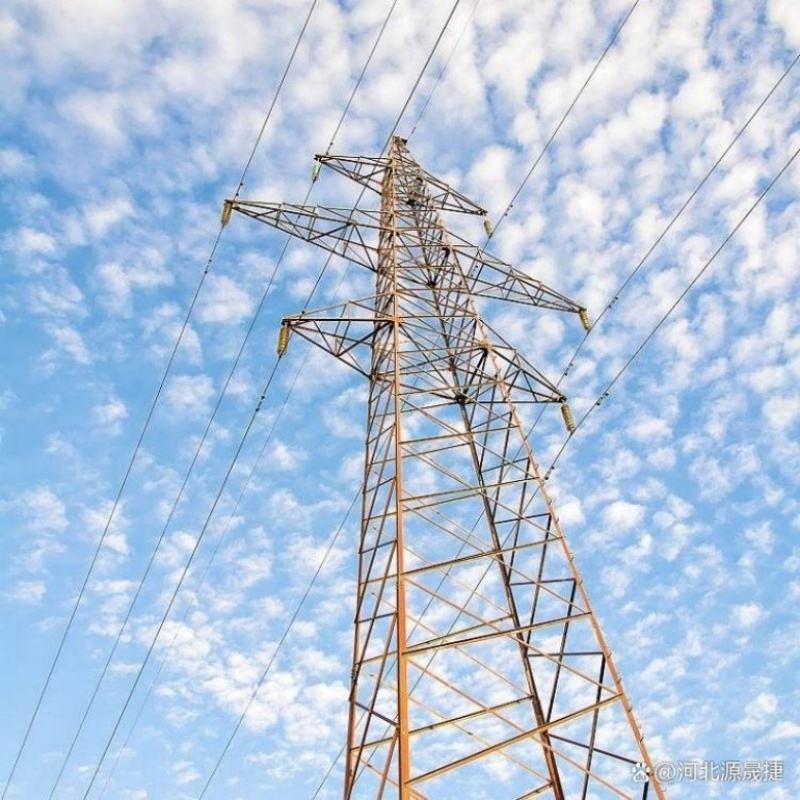
The very skeleton of a tower determines how many decades it will stand against wind, weather, and time. Opting for high-grade structural steel isn’t just a technical decision—it’s a long-term investment in resilience. Premium steel alloys with carefully balanced carbon content and added chromium or nickel resist the slow creep of corrosion far better than basic carbon steel. In coastal or industrial environments, where salt spray and chemical pollutants accelerate deterioration, this difference becomes stark within just a few years. Towers built from inferior materials start showing red rust blooms and flaking paint early, demanding constant maintenance, while well-chosen materials keep their integrity with minimal intervention.
Beyond corrosion resistance, the fatigue behavior of the material plays a hidden but critical role. A tower constantly sways under wind loads, and each subtle movement stresses the metal at its connections and curves. Materials with higher fatigue endurance limits can cycle through millions of these small deformations without microscopic cracks forming. When engineers select steel or aluminum grades with documented fatigue performance tuned to the expected wind spectrum of a site, they effectively eliminate a major failure mode. This foresight prevents the sudden, catastrophic collapses that have historically made headlines, and it keeps communication networks online when they are needed most.
The practical lifespan of a tower also hinges on how easily its material accepts protective coatings. Galvanization, for instance, forms a metallurgical bond that low-grade steels sometimes fail to hold uniformly, leading to bare spots that become corrosion batteries. Advanced weathering steels, on the other hand, develop a dense patina that self-heals when scratched, dramatically reducing the need for repainting. In the end, the money saved by choosing cheaper base materials is invariably dwarfed by the cumulative costs of inspection, repair, and prematurely shortened service life. The towers that remain robust and unobtrusive in the landscape for half a century or more are those whose material choice was never treated as a mere line item.
Custom Fabrication for Complex Terrain
When standard equipment falters on uneven slopes, rocky outcrops, or soft marshland, custom fabrication steps in to bridge the gap between generic designs and site-specific demands. Instead of forcing machinery to adapt to hostile ground, we engineer solutions from the ground up—literally. Every weld, bolt, and plate is chosen to match the exact soil composition, gradient, and obstacle profile of the project. The result isn't just a modified off-the-shelf part; it's a purpose-built component that feels native to the landscape, reducing wear and improving safety on terrain that would destroy conventional alternatives.
The process begins not in the workshop, but on the job site, where we map the subtle contours that can't be captured in a survey report. By walking the ground and understanding how water drains, where frost heaves, and what hidden pockets of instability lie beneath the surface, our team translates raw field data into fabrication parameters. This hands-on approach ensures that each custom bracket, pivot, or mount accounts for dynamic forces—like shifting weight distribution on a tracked vehicle crossing a 30-degree incline—that no CAD model could fully predict.
Beyond simple durability, custom fabrication for complex terrain opens up possibilities that standardized parts foreclose. A unique hinge geometry can allow an excavator arm to reach around boulders without tipping, while a reinforced undercarriage guard shaped to deflect debris in a specific direction can prevent costly downtime. These aren't incremental improvements—they're fundamentally different ways of interacting with the environment, born from the recognition that rugged landscapes demand equally rugged originality.
Stability Testing That Exceeds Industry Norms
While typical protocols only scratch the surface with fixed temperature and humidity cycles, our approach pushes into the margins where failures actually occur—cycling between extreme highs and lows, introducing controlled vibration and light stress to mirror real-world transit and storage missteps.
We run long-term studies that stretch well past standard durations, not just to check a box but to build genuine confidence in product resilience over years, capturing late-stage degradation patterns that shorter tests miss.
By pairing these conditions with high-resolution analytical monitoring—tracking subtle shifts in potency, dissolution, and impurity profiles well before they cross threshold—we turn stability data into a predictive tool rather than a retrospective snapshot.
Streamlining Grid Expansion with Modular Designs
One of the biggest hurdles in grid modernization is the time and cost required to scale infrastructure. By shifting toward modular architectures, utilities can deploy pre-configured, standardized components that reduce on-site construction and eliminate lengthy custom engineering. This plug-and-play approach not only accelerates project timelines but also allows for incremental capacity additions, matching demand growth without overbuilding.
Modularity also brings a new level of adaptability to grid planning. As renewable integration and load patterns evolve, standardized modules can be easily reconfigured, upgraded, or relocated—limiting the risk of stranded assets. Field teams benefit from repeatable processes, which drive down labor costs and improve system reliability through proven, factory-tested designs. Moreover, standardization simplifies supply chains, making it faster to procure and stockpile critical equipment, which is increasingly vital in a global market prone to disruption.
Beyond cost and time savings, modular designs support a more resilient grid. Distributed modular assets can be sited closer to load centers, reducing transmission losses and improving voltage profiles. When paired with digital monitoring, these systems offer granular control and faster fault isolation. This modern approach aligns with sustainability goals by minimizing material waste and enabling a smoother transition to a decarbonized energy mix, ultimately reshaping how the industry thinks about infrastructure investment for the long haul.
Partnerships That Bridge Engineering and Execution
The real magic happens when engineering minds and execution experts work hand in hand. It’s not just about handing off a blueprint; it’s about continuous dialogue that refines ideas into workable realities. The best outcomes emerge from teams that challenge each other’s assumptions early and often, turning potential friction into creative fuel.
True partnership means shared ownership of both the vision and the gritty details. When engineers and operators co-navigate constraints—whether material, temporal, or budgetary—solutions become more resilient. This synergy doesn’t just speed up delivery; it builds a foundation of trust that makes every subsequent project smarter and smoother.
FAQ
An angle steel tangent tower is a type of transmission structure designed to carry electrical conductors in a straight line. It uses steel angles bolted together to form a lattice framework, providing the robust support needed to maintain tension and alignment of power lines over long distances.
Stability ensures the tower can withstand environmental stresses like wind, ice, and seismic loads without failure. In power grids, even one collapsed tower can disrupt service for thousands of customers, so precise engineering minimizes risks and keeps the network reliable.
An OEM manufacturer offers custom design and production capabilities tailored to specific project requirements. Instead of off-the-shelf solutions, clients receive towers built to exact specifications, often with better material quality control and after-sales support.
By controlling the entire manufacturing process, OEMs can optimize material usage, reduce waste, and avoid the markups of intermediary suppliers. This often leads to competitive pricing without compromising on structural integrity or durability.
High-strength steel such as ASTM A572 or equivalent is common, with hot-dip galvanizing as the primary anti-corrosion measure. In coastal or highly corrosive areas, additional coatings or duplex systems may be applied to extend the tower’s service life.
Yes, reputable OEMs maintain substantial production capacity and inventory of raw materials. They often have streamlined processes for large orders and can deploy extra shifts or parallel production lines to accommodate tight schedules without quality shortcuts.
Look for ISO 9001 for quality management, along with sector-specific certifications like ISO 3834 for welding, and adherence to standards such as ASCE/SEI 10, EN 50341, or relevant national standards. Third-party inspection readiness is another good sign.
Well-engineered tangent towers reduce maintenance needs and enhance reliability, forming the backbone of transmission networks that can adapt to increasing demand and extreme weather. Their longevity helps utilities avoid frequent replacements and keeps the grid stable for decades.
Conclusion
The backbone of any resilient transmission network lies in the precision engineering of its support structures. An OEM angle steel tangent tower, at its core, is a carefully orchestrated assembly of high-grade steel members, each bolt hole and gusset plate serving a distinct load path. The anatomy of these towers, from leg extensions to cross-arm bracing, is not a one-size-fits-all arrangement; it is tuned to the electrical and mechanical demands of the line. Material selection goes beyond mere grade specifications—it is a deliberate decision that governs corrosion resistance and fatigue life, particularly in coastal or heavily polluted zones. This is where custom fabrication enters the picture, translating site-specific requirements into tangible structures. Whether the tower must withstand hurricane-force winds, cling to a rocky slope, or minimize visual impact, the manufacturing process adapts. Tapered legs, unequal angle bracing, and reinforced splice joints become the norm rather than the exception, ensuring that each tower behaves predictably under the combined weight of ice, wind, and conductor tension.
Engineering stability does not stop at the drawing board; it is validated through testing regimes that routinely surpass standard benchmarks. Full-scale prototype load tests push towers beyond their design limits, revealing any hidden vulnerability before mass production. These exercises are complemented by computational simulations that mirror decades of service in mere hours. In parallel, modular design philosophies accelerate grid expansion, allowing components to be pre-assembled in controlled factory conditions and transported without specialized heavy equipment. This approach reduces field welding and on-site errors, shaving weeks off project schedules. Yet, none of this would succeed without the deep partnerships that align manufacturers with utilities, engineering firms, and construction teams from concept to commissioning. When a manufacturer becomes an integral part of the planning conversation—offering insights on foundation optimization, stringing methods, and future upgrade paths—the result is a transmission line that not only stands firm but also adapts gracefully to an ever-evolving grid. Together, these elements forge a supply chain where stability is never left to chance, and the tower truly becomes a lasting asset in the power delivery landscape.
Contact Us
Contact Person: antor khan
Email: [email protected]
Tel/WhatsApp: 8613863903569
Website: https://www.qdabtower.com/