

LED Marine Light Wholesale: A Comprehensive Guide to the Best Deals and Top Products
2026-08-07
When it comes to sourcing marine LED lights in bulk, finding a balance between quality, durability, and cost can feel like navigating rough seas. Whether you're outfitting a fleet, stocking a chandlery, or upgrading port infrastructure, the choices you make today affect safety and visibility for years to come. That’s why partnering with a trusted supplier like LUXFIGHTER matters—they combine cutting‑edge LED technology with wholesale pricing that doesn’t compromise on performance. In this guide, we’ll shine a light on the best deals and standout products that keep vessels bright and compliant, without breaking the bank.
What Sets Marine-Grade LEDs Apart from Standard Lighting
Marine environments are unforgiving, with constant exposure to saltwater, humidity, and temperature swings. Standard LEDs, built for indoor or mild outdoor use, simply can't withstand these conditions. Their components corrode quickly, seals fail, and moisture seeps in, causing flickering or complete failure. Marine-grade LEDs are engineered from the ground up to resist corrosion, using specialized materials like stainless steel, anodized aluminum, and high-grade polymers. Circuit boards are conformal coated, and every connection is sealed, ensuring longevity even when totally submerged or battered by waves.
Durability extends beyond waterproofing. On a boat, lights endure constant vibration from engines and pounding waves, which can shake standard bulbs loose or snap delicate filaments. Marine LEDs use solid-state construction and reinforced housings to absorb shock without failure. They also tackle voltage fluctuation—a common issue in marine electrical systems. Built-in voltage regulation protects against spikes and sags, maintaining consistent, flicker-free output so you’re not left squinting in a dark cockpit during a critical maneuver.
Light quality is another differentiator. Standard LEDs often cast harsh glares or disrupt night vision, which is unsafe for navigators. Marine-grade LEDs are tuned for superior color rendering and feature red or dual-color options that preserve dark-adapted eyes while keeping instruments readable. They also incorporate advanced optics to precisely direct beams, cutting through fog or illuminating decks without blinding you. These aren’t off-the-shelf lights adapted for the sea—they’re purpose-built tools that ensure safety and reliability when you’re miles from shore.
Key Features to Look for in Wholesale LED Boat Lights
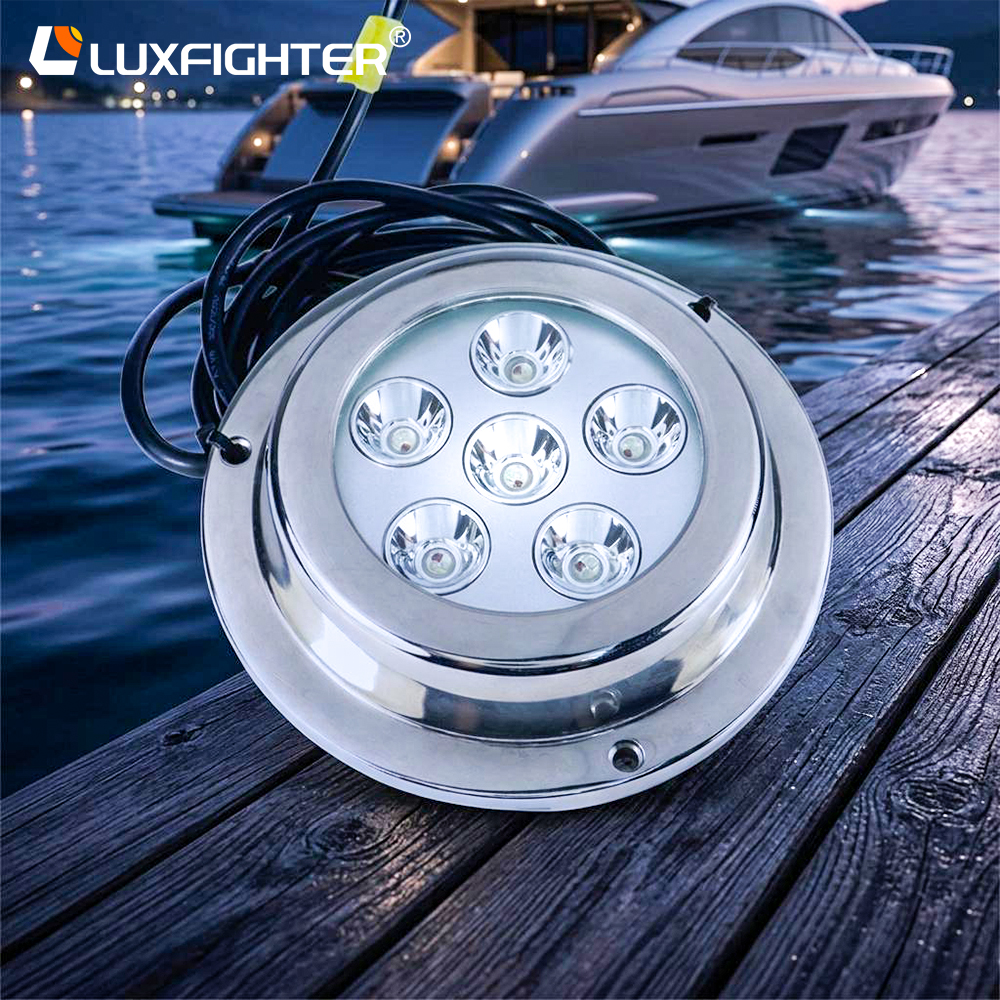
Not all LED lights are built to handle the unique challenges of marine environments. When browsing wholesale options, prioritize corrosion resistance. Look for fixtures with marine-grade stainless steel or anodized aluminum housings, paired with fully sealed, waterproof construction carrying an IP68 rating. This ensures they can withstand constant exposure to saltwater, humidity, and vibrations without failing prematurely. A strong build is the foundation of any reliable boat lighting setup.
Brightness and beam pattern matter just as much as durability. Check the lumen output and opt for lights that offer a balanced, wide beam angle for deck illumination or a focused spot for navigation. Adjustable color temperature, from warm white for relaxed evenings to cool white for crisp overnight passages, adds versatility. Some models even include red or blue modes to preserve night vision, which is a thoughtful touch for serious boaters. Don’t settle for harsh, one-dimensional lighting.
Efficiency and ease of installation can make or break your experience. Low power draw is crucial for preserving battery life on long trips, so verify the wattage and ensure they work with common 12V or 24V systems. Modular designs with plug-and-play connectors simplify retrofits and save valuable time. Also, look for lights backed by generous warranties, signaling a manufacturer’s confidence in their product’s longevity. A well-chosen LED system should install fast and run for years without a second thought.
Navigating Bulk Purchase: How to Lock in the Best Prices
The art of securing the best prices in bulk buying isn’t just about ordering more units—it’s about understanding the rhythm of your supply chain and the leverage you hold. Start by mapping out your true consumption patterns over a full business cycle, not just a good quarter. Suppliers often offer steeper discounts when they see a predictable, long-term commitment rather than a spike in demand they can’t sustain. Approach negotiations with data in hand: show them your projected volumes and ask for tiered pricing that rewards consistency, not just volume. This shifts the conversation from a one-time deal to a strategic partnership, which can open doors to perks like priority shipping or customized packaging that don’t show up in the per-unit cost but add real value.
Timing your purchases can be just as crucial as the quantity you’re ordering. Many industries have hidden cycles—raw material surpluses, end-of-quarter pushes, or seasonal lulls—where suppliers are more flexible on pricing. Instead of waiting until you’re nearly out of stock, build relationships with your vendors and ask when their slower periods occur. Placing a large order during their downtime not only gets you a better rate but often means more attentive service. You might also explore group purchasing with non-competing businesses to combine orders, hitting volume thresholds that unlock deeper discounts without overstocking your own shelves.
Don’t let the allure of a low unit price blind you to the total cost of ownership. A pallet of goods at a rock-bottom rate means little if storage fees, spoilage, or tied-up capital erode your savings. Run the numbers on carrying costs—warehouse space, insurance, and potential obsolescence—before committing to a massive order. Sometimes, negotiating a just-in-time delivery schedule with a slight price bump can be cheaper overall than a firesale deal that clogs your inventory. The real win is balancing price with cash flow, ensuring that locking in a great rate today doesn’t create a squeeze tomorrow.
Top Product Picks for Different Vessel Types
Selecting the right products for your vessel goes beyond basic compatibility—it’s about matching gear to the unique demands of each boat type. A compact fishing skiff benefits from space-saving, corrosion-resistant accessories, while a spacious cruiser calls for comfort-enhancing additions that withstand extended time on the water. Understanding these nuances ensures every item you choose works as hard as you do.
For sailboats, lightweight and aerodynamic equipment is key to preserving performance. Wind indicators, low-profile deck hardware, and UV-resistant sail covers keep you sailing smoothly season after season. Powerboats, on the other hand, thrive with robust engine components and durable dock lines designed for quick maneuvering. Each vessel category has its own rhythm, and the products you pick should amplify it without adding unnecessary bulk or complexity.
Even specialty crafts like pontoons and personal watercraft have distinct needs. Lounge-friendly seating upgrades and waterproof sound systems turn a pontoon into a social hub, while high-impact hull protectors and quick-dry storage bags make PWAs adventure-ready. Zeroing in on vessel-specific essentials transforms a routine maintenance run into a tailored upgrade, keeping your boat primed for whatever the water brings.
Installation and Maintenance: Long-Term Reliability on the Water
Getting equipment to perform consistently in a marine environment starts well before the first voyage. Installation demands more than just bolting things down; it requires a thoughtful approach to placement, vibration isolation, and corrosion protection from day one. Every component, from deck hardware to below-deck systems, must be mounted with the assumption that salt, moisture, and motion will try to undermine it. Using the right bedding compounds, sealing fasteners properly, and allowing for thermal expansion can make the difference between a system that lasts a decade and one that fails after a single season. The goal isn't just to get things working—it's to create a foundation that shrugs off the relentless attack of the elements.
Maintenance on the water is a different kind of discipline. It's not about following a generic checklist; it's about knowing your vessel's personality and reading the subtle signs of wear that the sea writes onto every surface. A slight change in engine note, a faint rust stain appearing in an unexpected place, or a hatch that suddenly feels less snug—these are the early warnings that prevent breakdowns at the worst possible moment. Smart owners develop a rhythm of inspection tied to usage rather than a calendar, checking critical systems after heavy weather or long runs, when stresses have peaked. Anticipating failure points means keeping spare impellers, fuses, and o-rings not just in a locker, but in your mind, ready for the scenario where you're miles from the nearest dock.
Ultimately, long-term reliability isn't a feature you purchase; it's a culture you build. It lives in the small habits: rinsing salt from rod holders after each trip, exercising seacocks monthly even when you don't use them, and documenting repairs not for a logbook but for your future self. The best-maintained boats aren't necessarily the newest or the most expensive—they're the ones where someone has spent hours in the bilge, headlamp on, doing something invisible that won't be appreciated until a dark and stormy night when it matters most. That kind of dedication turns a machine into a trusted partner, capable of handling whatever the water throws at it, year after year.
Avoiding Common Pitfalls When Ordering in Large Quantities
Placing a bulk order can feel like a victory, but hidden costs often turn it into a budget nightmare. Beyond the sticker price, watch out for freight surcharges, customs duties, and warehousing fees that pile up faster than expected. A common mistake is assuming the quoted rate covers everything—always request a door-to-door cost breakdown and compare multiple logistics partners before committing.
Quality inconsistencies are another trap that amplifies with volume. A sample that looks flawless doesn't guarantee the full shipment will match. Without clear specifications and random sampling at the production site, you risk receiving a container full of defects. Build checkpoints into the manufacturing process, not just at the end, and consider third-party inspection services to catch issues before they leave the factory.
Overstocking due to overly optimistic demand forecasts ties up capital and warehouse space, while understocking causes missed sales. The sweet spot lies in phased deliveries tied to actual consumption rates rather than a single drop. Work closely with suppliers to set flexible release schedules, and use real-time inventory data to adjust replenishment triggers. This keeps your storage lean without sacrificing availability.
FAQ
Durability is non-negotiable—look for corrosion-resistant materials like marine-grade aluminum or stainless steel. Brightness output measured in lumens matters more than wattage, and a wide beam angle ensures better deck coverage. Also, check for low power draw to keep your battery happy, especially on long trips.
Timing helps—many suppliers run clearance sales in the off-season, usually late fall or winter. Signing up for newsletters from specialized marine wholesalers often gives you early access to promos. Bulk orders almost always drop the price per unit, so teaming up with other boat owners can be a smart move.
Brands like Hella Marine, Lumitec, and Rigid Industries are consistently praised for their robust construction and consistent performance. They may cost more upfront, but the waterproofing and longevity often justify the price. Lesser-known but reliable names like TracLED and SeaLux also offer solid mid-range options.
Navigation lights are essential for safety, while spreader lights and floodlights are favorites for illuminating work areas. Underwater lights have become a popular upgrade for aesthetic appeal, and flexible LED strips are commonly used for interior cabin lighting due to their easy installation.
Think about function first: a spotlight for docking needs around 2,000 lumens, while a gentle cabin glow might only need 200. Color temperature also plays a role—cool white (5000K-6000K) offers sharp visibility, but a warmer tone (3000K) can be less harsh on your night vision.
Absolutely. Saltwater and moisture will quickly destroy a fixture without proper sealing. Aim for at least IP67, which means it can handle temporary submersion. For underwater lights, IP68 is the standard, as they are continuously submerged. Even interior lights benefit from a high rating on boats prone to condensation.
Yes, they draw significantly less power than traditional halogen bulbs—often 80% less. This reduction is a game-changer for sailboats or when running multiple lights at anchor. Lower amp draw means you can run lights longer without worrying about draining the battery or needing to recharge.
Beyond the obvious cost savings, buying wholesale ensures you have matching fixtures across your vessel, which looks cleaner. It also means you have spares for future repairs, and replacements will maintain the same color temperature. For dealerships or fleet operators, bulk purchasing simplifies inventory and installation scheduling.
Conclusion
When it comes to outfitting a fleet or stocking up for retail, knowing what truly separates marine-grade LEDs from standard lighting is the first step to making a smart investment. These fixtures are engineered to withstand saltwater corrosion, heavy vibration, and extreme temperature swings, which means you can’t simply cut corners with off-the-shelf bulbs. In the wholesale game, the real value lies in examining key specs such as IP ratings, lumen output, and color temperature, but beyond the data sheets, savvy buyers negotiate tiered pricing, request samples, and time their orders around manufacturing cycles to lock in the best possible margins. It’s a balancing act of technical diligence and commercial strategy.
Not every light works for every boat—a deck floodlight for a commercial trawler has little in common with the subtle cabin ambiance needed on a luxury yacht, so matching products to vessel type is where top-tier wholesalers shine. Beyond the purchase, longevity on the water depends on correct installation and proactive maintenance, such as checking seals and connections that prevent moisture ingress. Finally, even experienced distributors can stumble by overlooking hidden costs like customs duties, compliance certifications, or inconsistent batch quality when ordering in bulk. A comprehensive approach that ties together product selection, installation know-how, and supply chain foresight ensures that what you buy today won’t become a liability tomorrow.
Contact Us
Contact Person: Gavin Chen
Email: [email protected]
Tel/WhatsApp: (+86)756-6831079
Website: https://www.luxfighter.com/