
Karate Shin Guards Supplier Guide to Choosing Durable Protective Gear for Training
2026-08-26
Karate training punishes shin guards harder than almost any other piece of gear—one bad block or mistimed check, and cheap padding gives out mid-session. If you’re tired of replacing cracked shells and flattened foam every few months, this guide from PandaWin Sports cuts through the noise. You’ll learn exactly what separates durable, fight-ready shin guards from the flimsy knockoffs, so your next purchase actually survives the dojo.
What Breaks First in Low-Cost Shin Guards
The straps give out way before the shell does. On most budget shin guards, the elastic turns slack and the Velcro hook side gets clogged with sock fuzz, so the guard starts rotating to the side of your leg after every sprint. You end up yanking it back into place more than actually playing.
The foam liner is the next weak link. Cheap padding flattens under the shin bone and never bounces back, leaving a hard plastic ridge pressing straight against your skin. Slide tackles that used to sting for a second now leave bruises that hang around for a week.
Oddly enough, the hard outer shell can last through a whole season looking ugly but intact. It might get scratched to hell and lose a chunk near the ankle, but by the time it cracks, you've already replaced the straps twice or taped the liner back together.
Padding Density and How It Affects Kick Impact
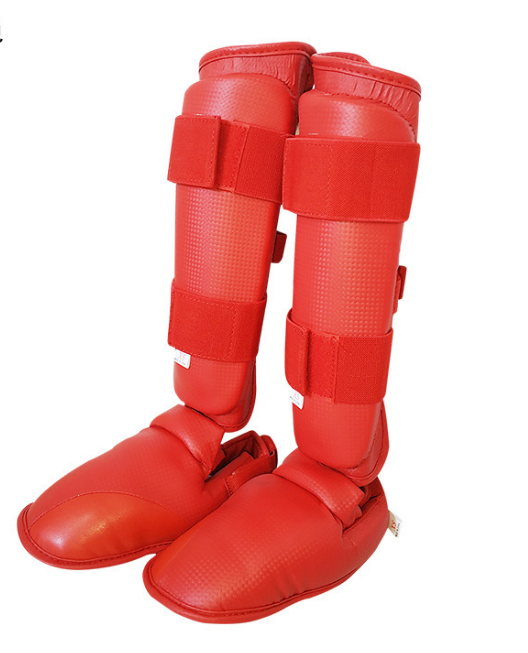
Padding density determines how force is dispersed when a kick lands. Dense foam compresses less on impact, which sounds like it would deliver harder hits, but in practice it spreads the load over a larger surface area and slows the impact peak. That matters for both the kicker and the target: too little density and the padding bottoms out, transferring sharp force; too much and you lose feedback and can create a rebound that throws off balance.
When density is matched to kick velocity, the material reaches full compression without hard stops. This sweet spot protects the striker's instep and shin while still letting the target feel a solid thump. In training pads or protective gear, higher density usually means better protection at high impact speeds, but it also adds weight and stiffness, which can reduce mobility and change the feel of the kick.
Real-world testing shows that two pads of identical thickness can behave very differently depending on foam density. A low-density pad may feel soft on light kicks but fail under a full-power roundhouse, while a high-density pad stays protective but can feel like kicking a wall if the density is excessive. The goal is to tune density so the pad absorbs the peak force without bouncing back or collapsing.
Sizing Mistakes That Cause Slipping and Bruising
Many people choose shoes based on length alone, ignoring width and volume. A slightly long but narrow shoe can let the heel slide up and down, leading to blisters on the back of the ankle and bruised toes from repeated impact against the toe box. The real problem isn't always the number on the size chart—it's how the shoe holds your foot through the midfoot and heel.
Another common error is sizing up to accommodate thick socks or orthotics without adjusting the lacing or closure. Extra room in the forefoot might feel comfortable at first, but your foot will drift forward on descents, jamming toes into the front and leaving the heel loose. That combination is a fast track to black toenails and bruising under the ball of the foot.
Pay attention to heel lock rather than just toe wiggle room. A properly sized shoe should grip your heel snugly even before you tie it tightly. If you can easily pull your foot backward out of the shoe while standing, that heel slippage will only worsen as the materials soften, and the repeated friction can bruise the skin and underlying tissue.
Stitching and Strap Quality Worth Checking Before Ordering
Stitching often reveals more about a bag's lifespan than any glossy product photo ever will. Run your eyes along the seams where the strap meets the body—look for tight, even stitches without loose threads or skipped holes. Double stitching at stress points, like where a shoulder strap anchors, is a sign the maker actually expects you to load the bag up and carry it daily. If the thread looks thin or the stitches are spaced wide apart, that strap is likely to start pulling away within months.
The strap itself deserves a closer look before you click “buy.” Is the material flimsy webbing that folds sharply under weight, or does it have a dense, slightly stiff feel that suggests it will soften without collapsing? Check whether the hardware—like buckles or D-rings—is stitched into a reinforced tab rather than just looped through a single layer of fabric. A quality strap sits flat against your shoulder and doesn’t twist at the attachment points, which is something you can often spot in customer photos even when the official listing hides it.
Don’t underestimate the inner seams either. A bag can look flawless outside but start fraying near a zipper or lining because the edge binding was skimped on. Look for bound seams or a clean, folded hem rather than raw cut fabric that’s been serged once and left exposed. If you can’t see the inside in the listing, check review photos or ask the seller directly—better to spend an extra minute now than to receive a bag that sheds threads into your belongings.
Questions to Ask a Supplier Before Committing to a Batch
Before you lock in a batch, ask about raw material sourcing and batch-to-batch consistency. Suppliers often hand over a spec sheet, but you want to hear how they handle variation when a crop or chemical feedstock shifts. Ask for recent lot samples and records of any out-of-spec batches, including how those were resolved. A supplier that hesitates to walk you through their deviation process is hiding something.
Push on lead times and capacity. If they quote four weeks but run multiple clients on the same line, your order can slip quietly. Ask what happens when equipment goes down or a bigger client books a slot. Request a production schedule and ask how they prioritize orders. You also need clarity on minimum order quantities, payment terms, and who owns the tooling or molds if you part ways.
Finally, test their communication and problem-solving. A good supplier will bring up a past failure and how they fixed it without you prompting. Ask for references from clients who had a quality issue, not just the happy ones. Confirm who your day-to-day contact is and how fast they respond to urgent quality holds. If the answers stay vague or they only want to talk about price, walk away.
Simple Care Habits That Keep Training Gear in Rotation
Most people think gear wears out from hard use, but neglect does more damage. Sweat, chalk, and gym floor dust settle into fabrics and seams. A quick wipe with a damp cloth after each session stops that buildup before it turns into odor or fraying.
Rotating two pairs of wraps or gloves gives the foam and stitching time to spring back. Hang everything up instead of shoving it in a bag. Air circulation is the cheapest deodorizer you have, and it also keeps Velcro strips from snagging other materials.
Once a week, take ten minutes to inspect straps, buckles, and zippers. Tighten loose threads and replace small parts before they fail mid-workout. This simple routine keeps your kit ready to grab, so you spend less time fixing gear and more time training.
FAQ
Focus on high-density foam padding paired with a tough outer shell, usually synthetic leather or vinyl, because these hold up under repeated kicks and blocks. Also check that the stitching around the straps is reinforced so the closures don't tear after a few weeks.
Yes. Shin guards with a molded plastic or hard foam exterior over layered impact foam tend to outlast basic cloth-covered pads. Synthetic leather resists cracking better than natural leather when exposed to sweat, and closed-cell foam keeps its shape instead of flattening out.
Measure around the widest part of your calf and the length from just below the knee to the top of your ankle bone. Match those numbers to the supplier's size chart rather than just going by shoe size. Many models rely on adjustable elastic straps, so the fit can be fine-tuned after you put them on.
Look for compressed padding that no longer springs back, cracks in the outer shell, or straps that have lost their elasticity. If you start feeling more impact through the guard during light contact, the foam has likely broken down internally even if the outside looks fine.
You can in many cases, but karate tends to involve more brief, sharp contact while kickboxing has heavier, repeated low kicks. A guard built for full-contact kickboxing will usually work for karate, though it may feel bulkier. Check whether your dojo has rules about the amount of coverage or material before using them across disciplines.
Request details about the density rating of the foam, the type of outer material, and whether replacement straps are available. Ask for a sample pair to test for a few weeks, and confirm lead times and return policies if the sizing runs small or large across different batches.
Breathability mainly affects comfort and hygiene, but it also plays an indirect role in longevity. If sweat sits inside the padding and the guard is stored damp, the glue and foam can break down faster. Guards with perforated shells or mesh lining dry quicker and tend to stay intact longer in humid conditions.
Not necessarily. Thickness adds protection but can also make the guard stiffer and more prone to surface cracks if the outer material is rigid. Durability is more about the combination of a flexible outer layer that can absorb impact without splitting and a foam core that doesn't collapse after repeated hits.
Conclusion
Most low-cost shin guards don't fail all at once—the straps snap first, often at the point where they meet the guard. Stitching around the edges then starts to pull apart, and the inner foam flattens within a few weeks of hard sparring. That flattening matters more than people think. Dense, high-rebound padding spreads the force of a kick across a wider area, so a guard with thin or spongy foam will leave you feeling every blocked strike. Getting the size right is just as critical. If the guard is too loose around the calf, it rotates during movement and exposes the shin bone; too tight and it cuts off circulation, leading to bruising and distraction mid-fight.
Before you place a bulk order, inspect the stitching and strap quality on a sample pair. Double-stitched seams and wide, elastic straps with strong hook-and-loop closures tend to last much longer than single-stitch designs. Ask the supplier specific questions: what type of foam is used, whether the straps are replaceable, and if they have batch consistency reports. Don't settle for vague answers about "high quality." Once the gear arrives, simple habits keep it in rotation—wipe down the outer shell after each session, air-dry the guards away from direct heat, and alternate between two pairs if training daily. These small steps slow down foam compression and prevent odor buildup, so your investment lasts through the season rather than just a few months.
Contact Us
Contact Person: Fei Xu
Email: [email protected]
Tel/WhatsApp: +8618631245578
Website: https://www.pandawinsports.com/