

Introducer Sheath High-Quality Manufacturer for Superior Medical Devices
2026-09-28
When precision meets patient safety, the choice of introducer sheath manufacturer becomes critical. In the world of superior medical devices, INT stands out by combining meticulous craftsmanship with rigorous quality control. But what truly sets a high-quality introducer sheath apart? From smoother insertion to reliable kink resistance, every detail matters. Join us as we explore how INT's innovative approach is reshaping vascular access—and why your next device deserves nothing less.
Precision Engineering from Mandrel to Finished Sheath
Every sheath begins as a meticulously ground mandrel, held to tolerances most shops won't even quote. That mandrel isn't just a form—it's the DNA of the final part. We control its diameter, taper, and surface finish because those details decide how the sheath will slide, seal, and wear in the field.
From there, layers are built up with deliberate pacing. Whether we're braiding, co-extruding, or wrapping, each pass gets checked against the mandrel's baseline. If a wall thickness drifts by a few microns, we catch it before the next layer hides the error. The result is a sheath that doesn't just meet the print—it repeats that performance across the entire run.
Finishing steps are treated as part of the engineering, not an afterthought. Cutting, tipping, and surface conditioning are all done with the same precision mindset. You end up with a sheath that handles exactly the way you designed it to, every single time.
Polymer Blends That Balance Flexibility and Pushability
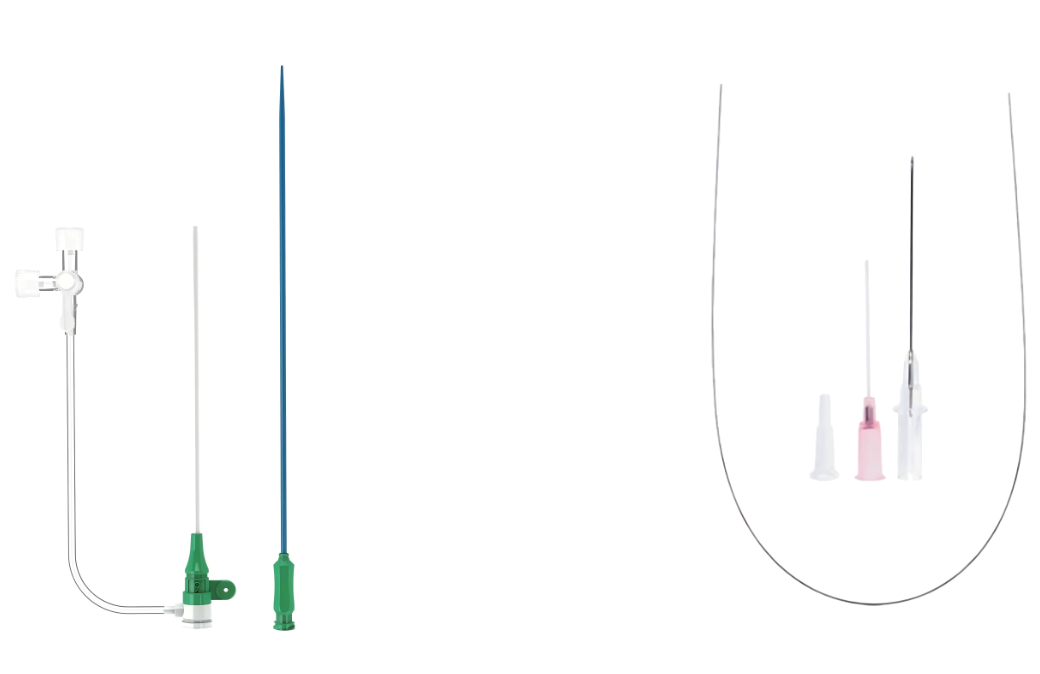
Achieving the right feel in a catheter or delivery system often comes down to how the shaft behaves under pressure. Materials that are too stiff turn every bend into a struggle, while overly soft blends lose the column strength needed to advance through tortuous anatomy. The sweet spot lies in polymer combinations that distribute force evenly—retaining enough rigidity at the proximal end for push, yet yielding gracefully at the distal tip for trackability.
One approach that works well is blending a harder base resin with a carefully chosen elastomer. The continuous phase provides backbone and prevents kinking, while the dispersed rubbery domains absorb micro-deformations during navigation. Adjusting the ratio and the processing conditions lets manufacturers fine-tune the durometer without sacrificing tensile integrity. The result is a shaft that feels responsive in the hand and predictable in the vessel.
Testing these blends involves more than just shore hardness readings. Real-world performance comes from measuring how much force reaches the tip when the proximal end is pushed around a curve, and how well the material recovers after repeated flexing. Blends that pass these benchmarks give clinicians the confidence to reach distal targets without excessive forward pressure or the need to swap devices mid-procedure.
Cleanroom Protocols That Go Beyond ISO Standards
Most facilities treat ISO 14644-1 class limits as the finish line, but the cleanest operations we've audited treat them as a floor. One biotech site, for example, added a rule that any unplanned door opening triggers an immediate particle count reading rather than waiting for the next scheduled check. That single change caught a faulty interlock seal three days before it would have shown up on routine monitoring—saving a batch that would otherwise have failed sterility testing.
Protocols that go beyond ISO often focus on human movement patterns instead of just air changes. At a semiconductor packaging line, they mapped particle bursts to shift transitions and found that gowning benches were too close to the entry airlock. Moving the bench by two meters and adding a 30-second settling pause after donning boot covers cut the incursion rate by more than half, even though the room's static classification never changed. These are the kinds of tweaks that don't appear in any standard.
Another differentiator is how recovery time is validated. Instead of accepting the standard's recommended interval, high-performing cleanrooms run smoke studies during actual production—not just empty-room commissioning—and require operators to demonstrate that a simulated spill clears below action limits within 20% of theoretical best. That's tighter than most ISO annexes recommend, but it exposes dead zones from stacked carts or open pass-throughs that a generic test would miss. The result is a protocol that reads less like a compliance checklist and more like a live operating manual.
Custom Tip Shapes and Lengths for Every Access Route
The real advantage shows up in difficult posterior teeth. Instead of forcing a standard file into a canal that curves sharply, you can pick a tip shape that follows the canal's original trajectory. Long, tapered tips work well for straight, wide canals, while shorter, stiffer tips give better control when the access is limited or the canal divides early.
Because the tips are manufactured in multiple lengths, you won't need to pre-bend as often or fight against the access cavity walls. A shorter tip can slip under a cusp or around a tight distal corner without losing tactile feedback. This matters most when you're working through a narrow mesial access on a molar and the canal's true path only becomes clear after the first millimeter.
The length options also let you match the instrument to the tooth's anatomy rather than adapting your technique to whatever is on the tray. In shallow preparations, a shorter tip prevents apical pressure from building too early. In longer canals, a longer, more flexible tip reaches the full working length without requiring excessive hand repositioning.
How We Test Burst Pressure and Kink Resistance
We don't rely on manufacturer datasheets or theoretical calculations. Instead, every hose assembly gets pushed to its actual failure point on a custom-built hydraulic bench. The burst test involves sealing one end, filling the line with water, and ramping pressure at a controlled rate until the wall gives way. We log the exact PSI at rupture, then compare that against the rated working pressure. If a hose bursts below four times its rated value, it never makes it into inventory.
Kink resistance is trickier because it's about geometry as much as material. We use a mandrel bend test with progressively tighter radii, measuring the point where the internal cross-section collapses by more than 20%. A hose that flattens at a gentle curve gets flagged — even if its burst rating is stellar. We also cycle samples through repeated flexing at cold temperatures, since many hoses behave fine at room temperature but turn brittle when the mercury drops.
What sets our approach apart is that we test production samples pulled randomly from stock, not hand-picked prototypes. That means the numbers you see on our spec sheets reflect what actually ships to your door, not what a lab engineered for a single perfect run.
Real-World Feedback from Interventional Cardiologists
Interventional cardiologists rarely hold back when discussing what actually works in the cath lab. One recurring theme from recent peer discussions is that newer stent platforms deliver measurable improvements in deliverability through tortuous vessels, but the real differentiator often comes down to how a device handles under pressure—literally. Several physicians noted that guide catheter support and lesion preparation matter more than the stent brand itself, especially in calcified or heavily angulated segments. There's a shared frustration with overpromising trial data that doesn't translate to daily practice, particularly when dealing with elderly patients who have multiple comorbidities.
Another honest take from the field revolves around imaging. While IVUS and OCT are widely praised for optimizing stent expansion, many admit that time constraints and reimbursement hurdles still limit routine use. One operator mentioned that in a busy hospital setting, pulling in an imaging catheter for every case simply isn't feasible, so they reserve it for left main or complex bifurcations. That pragmatic approach resonates with colleagues who've learned to trust tactile feedback and fluoroscopic landmarks, even as guidelines push for more intravascular imaging.
Feedback also touches on the learning curve for newer technologies like robotic-assisted PCI. Early adopters appreciate the precision and reduced radiation exposure, but they caution that setup time and cost can be prohibitive for smaller labs. One cardiologist with over a decade of experience said the robot forces you to slow down and think more deliberately about wire manipulation, which ultimately improves technique—but only if you're willing to invest the first fifty cases to get comfortable. That kind of candid insight, shared in hallway conversations and late-night case reviews, often matters more than any published registry.
FAQ
We focus on precision extrusion and laser-drilled side holes, which give clinicians smoother insertion and better kink resistance than standard sheaths.
The sheath body is typically made from medical-grade Pebax or PTFE, with a hydrophilic coating that becomes extremely lubricious when wet.
Yes, we offer a wide range of French sizes from 4F to 26F, custom lengths up to 120 cm, and straight or curved tip options depending on the procedure.
Every lot undergoes dimensional inspection, burst pressure testing, coating uniformity checks, and biocompatibility verification before it ships.
Absolutely, the inner lumen is designed to accept 0.018", 0.035", or 0.038" guidewires, and the hub geometry matches commonly used dilator systems.
We are ISO 13485 certified and produce sheaths that meet FDA 510(k) and CE MDR requirements for Class II and Class III devices.
Each sheath is packaged in a Tyvek pouch and sterilized using ethylene oxide, with a five-year shelf life validated under accelerated aging protocols.
They are used in interventional cardiology, radiology, electrophysiology, and vascular access procedures where reliable trackability is essential.
Conclusion
Precision engineering defines every stage of our introducer sheath production, from mandrel design to the finished sheath. We start with carefully selected mandrels that ensure consistent inner diameters and smooth transitions, then layer polymer blends engineered to balance flexibility with pushability. These materials are chosen not for convenience but for their ability to navigate tortuous anatomy without kinking or losing column strength. Our cleanroom protocols go beyond ISO standards, with controlled air pressure, particle monitoring, and strict gowning procedures that prevent contamination at every touchpoint. This discipline allows us to deliver sheaths that interventional cardiologists can rely on in high-stakes procedures where a single defect is unacceptable.
Customization is central to our approach. We offer tip shapes and lengths tailored to every access route, whether radial, femoral, or brachial, ensuring a snug fit and atraumatic entry. Testing is rigorous and transparent: each batch undergoes burst pressure and kink resistance evaluation using methods that simulate real-world bending and pulsatile flow. Feedback from practicing cardiologists drives iterative improvements—shorter tapers for challenging radial loops, softer transitions to reduce vessel spasm, and reinforced hubs for secure valve attachment. The result is an introducer sheath that feels intuitive in the hand and performs predictably under pressure, making our manufacturing partnership a true extension of the clinician's skill.
Contact Us
Contact Person: Jeffrey
Email: [email protected]
Tel/WhatsApp: 86-0633-2230056
Website: https://www.sd-intmedical.com