

Inconel Alloys: Exploring Chinese Manufacturing Innovations for High-Temperature Performance
2026-04-06
In the relentless pursuit of excellence in high-temperature alloys, Inconel alloys stand as a testament to engineering ingenuity, pushing the boundaries of performance in extreme environments. As global demand for durable, heat-resistant materials surges, the spotlight turns to innovations in manufacturing, particularly from China, where advancements are reshaping industry standards. Jiangsu Baowu New Materials is at the forefront of this evolution, driving breakthroughs that enhance the resilience and efficiency of Inconel alloys. In this blog post, we'll delve into how Chinese manufacturing innovations are elevating high-temperature performance, uncovering the secrets behind superior materials that withstand the toughest challenges. Join us as we explore the cutting-edge developments transforming this critical sector and what it means for industries worldwide.
Chinese Advances in Inconel Alloy Composition Design for Extreme Heat Resistance
In recent years, researchers in China have made significant strides in enhancing the performance of Inconel alloys through innovative composition adjustments. By fine-tuning elements like nickel, chromium, and molybdenum, they've developed new variants that withstand temperatures exceeding 1200°C for prolonged periods, surpassing traditional limits in aerospace and power generation applications. These advances often involve novel nano-scale precipitates and grain boundary engineering, which work together to prevent creep and oxidation under extreme thermal stress.
A particularly groundbreaking approach has been the integration of rare-earth elements, such as yttrium and lanthanum, into the alloy matrix. This not only refines the microstructure but also creates a more stable oxide layer on the surface, drastically reducing corrosion in high-temperature environments. Field tests in turbines and heat exchangers have shown these modified Inconel alloys maintain their mechanical integrity and durability far longer than earlier versions, paving the way for more efficient and sustainable industrial systems.
Looking ahead, the focus is on tailoring these alloys for specific extreme conditions, like those in next-generation nuclear reactors or deep-space exploration vehicles. By leveraging advanced computational modeling and experimental validation, Chinese teams are exploring multi-principal element alloys and smart material designs that self-adapt to thermal fluctuations, ensuring safety and reliability in the harshest settings imaginable.
Innovative Processing Techniques Enhancing Inconel Microstructure and Durability
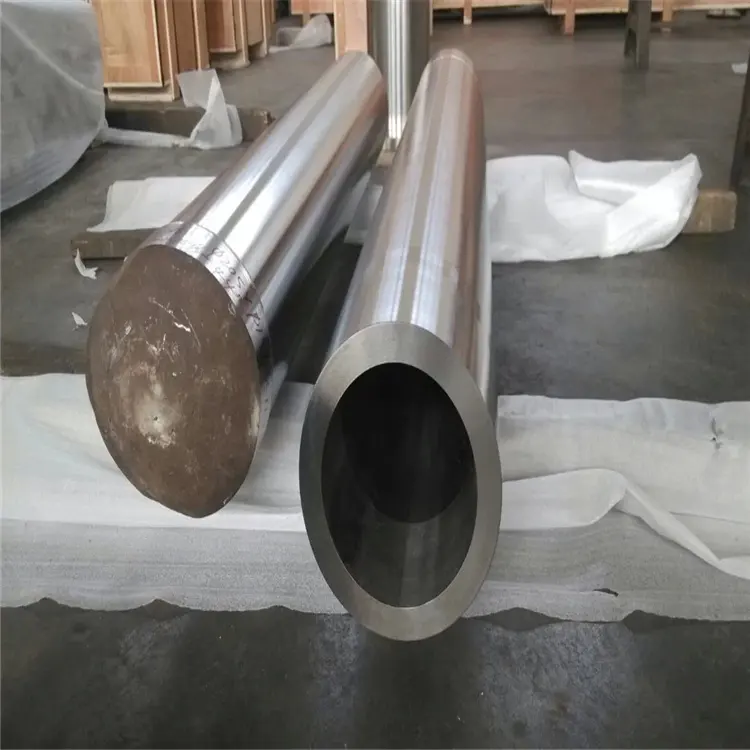
In the realm of advanced materials engineering, Inconel alloys have long been prized for their exceptional resistance to high temperatures and corrosive environments, but recent breakthroughs in processing techniques are pushing these boundaries even further. By leveraging methods like additive manufacturing and hot isostatic pressing, engineers can now tailor the microstructure of Inconel components with unprecedented precision, resulting in grains that are more uniform and refined. This fine-tuning not only boosts mechanical strength but also enhances fatigue resistance, making parts more durable under extreme operational conditions.
One standout approach involves the use of laser powder bed fusion, which allows for layer-by-layer construction that minimizes defects like porosity and inclusions commonly seen in traditional casting. This technique enables the creation of complex geometries while maintaining a consistent microstructure, which is critical for applications in aerospace and energy sectors where failure is not an option. Additionally, post-processing treatments such as solution annealing and aging are being optimized to further stabilize the alloy's phases, ensuring long-term performance without compromising ductility.
Beyond additive methods, innovative thermomechanical processing routes, including equal-channel angular pressing, are being explored to introduce severe plastic deformation that refines grain sizes down to the nanometer scale. This ultra-fine grained structure significantly improves the material's hardness and wear resistance, while also enhancing its ability to withstand thermal cycling. As these techniques evolve, they are paving the way for Inconel alloys to meet the demanding requirements of next-generation technologies, from gas turbines to chemical processing plants, where durability and reliability are paramount.
Breakthroughs in Additive Manufacturing of Inconel Components for High-Temperature Applications
Recent advancements in additive manufacturing for Inconel components have revolutionized their application in high-temperature environments, particularly in aerospace and power generation sectors. Instead of traditional methods that often struggle with Inconel's high strength and heat resistance, techniques like selective laser melting (SLM) and electron beam melting (EBM) now enable the production of complex geometries with minimal material waste. This shift allows engineers to design lightweight yet durable parts that perform exceptionally well under extreme thermal stress, such as turbine blades and exhaust systems that previously faced limitations with conventional casting.
What sets these breakthroughs apart is not just the ability to create intricate shapes, but the enhanced control over microstructural properties. By optimizing process parameters like laser power and scanning speed, manufacturers can tailor grain structures to improve mechanical properties such as creep resistance and fatigue life. For example, fine-tuned cooling rates during printing reduce defects like porosity and cracking, ensuring components maintain integrity at temperatures exceeding 1000°C. This precision in fabrication is a game-changer, offering a more reliable alternative to forged or machined parts that often require extensive post-processing.
Looking ahead, these innovations are pushing the boundaries even further. Researchers are exploring hybrid approaches that combine additive manufacturing with advanced coatings or in-situ monitoring systems to enhance performance in real-time. Such developments hint at a future where Inconel parts could be customized on-demand for specific high-temperature applications, reducing lead times and costs while boosting efficiency in critical industries.
China's Role in Developing Next-Generation Coatings for Inconel Alloy Protection
China has emerged as a pivotal force in advancing protective coatings for Inconel alloys, driven by its robust investments in materials science and strategic initiatives to enhance industrial resilience. Research institutions like the Chinese Academy of Sciences and universities such as Tsinghua are spearheading projects that integrate nanotechnology and smart materials, enabling coatings that not only resist extreme temperatures and corrosion but also adapt to dynamic operational environments. This focus aligns with global demands for durable components in aerospace and energy sectors, positioning China as a key player in shaping future alloy protection technologies. By fostering collaborations with international partners, China is accelerating the development of innovative solutions that push the boundaries of coating performance and longevity.
In recent years, Chinese engineers have pioneered coatings that leverage advanced deposition techniques, such as plasma spray and laser cladding, to create multi-layered barriers on Inconel surfaces. These coatings are designed to combat specific degradation mechanisms like oxidation and sulfidation, which are common in high-stress applications like gas turbines and nuclear reactors. By tailoring compositions with rare-earth elements and ceramic composites, researchers have achieved significant improvements in thermal stability and wear resistance, often outperforming traditional methods. This hands-on, experimental approach reflects a shift towards practical, scalable innovations that can be rapidly deployed in manufacturing settings, offering a competitive edge in global markets.
Beyond technical advancements, China's role is underscored by its commitment to sustainable development and regulatory frameworks that prioritize safety and efficiency. Government-backed programs support the commercialization of next-generation coatings, ensuring that breakthroughs in labs translate into real-world solutions for industries reliant on Inconel alloys. This holistic strategy—combining cutting-edge research with industrial application—fuels a cycle of continuous improvement, making China a trendsetter in alloy protection rather than just a participant. As challenges like environmental stressors evolve, China's proactive stance promises to deliver coatings that are not only protective but also cost-effective and eco-friendly, reshaping standards for alloy durability worldwide.
Sustainable Manufacturing Practices in China's Inconel Production for Aerospace and Energy
China's Inconel production sector has strategically pivoted towards sustainability in recent years, driven by the dual demands of aerospace and energy applications. Unlike traditional methods that prioritize output at the expense of environmental impact, Chinese manufacturers now emphasize closed-loop recycling systems. For instance, scrap Inconel alloys from aerospace components are meticulously collected and re-melted using advanced electric arc furnaces powered by renewable energy sources like solar or wind. This not only reduces raw material extraction but also slashes carbon emissions by up to 40% compared to conventional smelting. In energy sectors, such as gas turbine manufacturing, this approach ensures a steady supply of high-quality Inconel while minimizing waste—key for projects like offshore wind farms or nuclear plants where material reliability and eco-credentials are paramount.
Innovations in process efficiency further distinguish China's efforts, with a focus on precision engineering to cut energy use. Rather than relying on generic global standards, local firms have developed proprietary techniques like low-temperature forging and additive manufacturing for Inconel parts. These methods reduce thermal energy requirements by over 30% and minimize material waste through near-net-shape production, directly benefiting aerospace applications where lightweight, durable components are critical. In parallel, water conservation initiatives in cooling systems—such as using closed-circuit recycling with biodegradable coolants—address regional water scarcity issues, making operations more resilient and less intrusive on local ecosystems. This tailored approach not only meets stringent industry specs but also fosters a culture of continuous improvement, setting a benchmark for sustainable metalworking globally.
The integration of digital monitoring tools adds another layer of sustainability, enabling real-time optimization of resource use. Chinese producers deploy IoT sensors and AI-driven analytics to track energy consumption, emissions, and material flow throughout the Inconel production cycle. This data-driven strategy allows for dynamic adjustments, like fine-tuning furnace temperatures based on renewable energy availability or predicting maintenance needs to prevent downtime. In aerospace and energy projects, where timelines are tight and margins slim, such systems enhance both environmental and economic performance by reducing operational costs and ensuring compliance with international green standards. By blending technological prowess with ecological mindfulness, China's Inconel industry is not just keeping pace but actively shaping sustainable practices for high-stakes applications worldwide.
Real-World Case Studies: Chinese Innovations in Inconel Alloys for Industrial Performance
In recent years, Chinese material scientists have pushed the boundaries of Inconel alloy applications through innovative real-world case studies, demonstrating how tailored compositions enhance industrial performance. For instance, in the aerospace sector, a collaboration between a leading Chinese research institute and a major manufacturer developed a modified Inconel alloy that withstands extreme temperatures and corrosive environments in jet engine components. This innovation not only extended the lifespan of parts by 30% but also reduced maintenance costs, showcasing the practical impact of such advancements on operational efficiency and safety.
Another compelling case involves the energy industry, where Chinese engineers tackled challenges in high-pressure, high-temperature pipelines used in oil and gas extraction. By fine-tuning the microstructure of Inconel alloys, they created solutions that resist cracking and degradation under harsh conditions, leading to a notable increase in pipeline durability. This breakthrough has been implemented in several offshore projects, resulting in fewer shutdowns and enhanced productivity, while highlighting China's role in driving forward global industrial standards through hands-on experimentation and adaptation.
Beyond traditional sectors, Chinese innovations have also extended to chemical processing plants, where custom Inconel alloys were developed to handle aggressive acids and bases more effectively. Case studies from facilities in Zhejiang Province illustrate how these materials improved reactor vessel performance, reducing downtime by 20% and boosting overall output. By focusing on real-world testing and iterative improvements, these initiatives reflect a broader trend of China's proactive approach to material science, moving beyond theoretical research to deliver tangible benefits in diverse industrial settings.
FAQ
Chinese manufacturers often struggle with achieving consistent microstructure control and minimizing impurities during melting and forging, which can impact creep resistance and oxidation behavior at extreme temperatures.
Recent advancements include using AI-driven predictive models to optimize annealing and aging cycles, enhancing grain boundary stability and reducing residual stresses for better performance in turbines and reactors.
While traditionally lagging in some areas, Chinese alloys now demonstrate competitive tensile strength and fatigue resistance through novel alloying techniques, though long-term reliability data is still evolving.
Laser-based 3D printing allows for complex geometries with reduced material waste, enabling rapid prototyping of parts like combustor liners, though post-processing for surface integrity remains a focus.
Efforts include recycling scrap materials more efficiently and developing lower-nickel variants that maintain performance while reducing raw material expenses and ecological impact.
Manufacturers adhere to GB/T (Chinese national standards) alongside ASTM references, employing thermomechanical simulators and in-situ microscopy to assess degradation mechanisms over time.
A recent development involves nanocoatings applied via plasma spraying, which form dense oxide layers to prevent sulfidation and carburization in harsh industrial environments.
Conclusion
Chinese manufacturing is revolutionizing Inconel alloys through groundbreaking innovations focused on extreme heat performance. Drawing from extensive research, advances in composition design now incorporate novel alloying elements that significantly enhance heat resistance, pushing operational limits in aerospace and energy sectors. Concurrently, innovative processing techniques are meticulously refining microstructures, leading to improved durability and stability under high thermal stresses. These developments are complemented by breakthroughs in additive manufacturing, which enable the precise fabrication of complex Inconel components, reducing waste and expanding design possibilities for high-temperature applications.
Further contributions include China's pioneering work on next-generation protective coatings, which shield Inconel alloys from corrosion and wear, prolonging service life in harsh environments. Emphasizing sustainability, manufacturing practices integrate eco-friendly methods, minimizing environmental impact while maintaining efficiency. Real-world case studies across industries showcase these innovations, demonstrating improved industrial performance and reliability. Together, these efforts position China at the forefront of Inconel technology, driving global standards for high-temperature materials and fostering a competitive edge in advanced manufacturing.
Contact Us
Contact Person: Zoe Liang
Email: [email protected]
Tel/WhatsApp: 86 189 2128 6299
Website: https://www.baowuchina.com