

How to Source High-Quality Carbon-Based Soil Conditioners for Sustainable Agriculture
2026-08-11
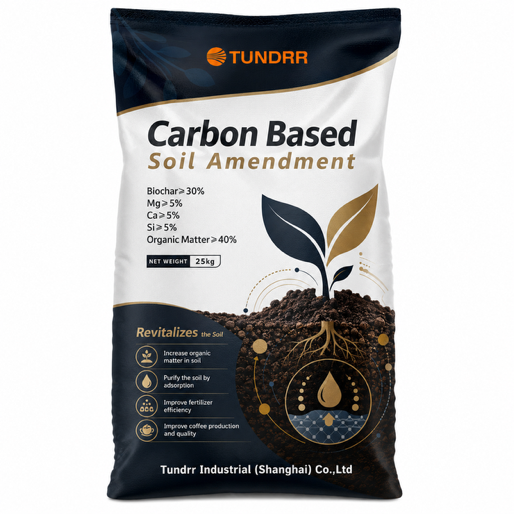
Every farmer knows that soil is more than just dirt—it's a living, breathing foundation for crops. Yet maintaining soil health in the face of intensive farming can feel like an uphill battle. That's where carbon-based soil conditioners step in, offering a natural way to rejuvenate tired land. But with so many products on the market, how do you separate genuine quality from empty promises? Enter Tundrr, a trusted source for premium conditioners that deliver measurable results. In this post, we'll walk you through how to source reliable carbon-based amendments that truly enrich your soil—without getting lost in the hype.
Beyond Compost: What Sets Carbon-Based Conditioners Apart
Compost has long been the go-to for improving soil, but carbon-based conditioners operate on a different level. While compost adds organic matter that breaks down relatively quickly, these materials—like biochar or lignite—introduce stable carbon structures that can persist for decades. This isn't just about short-term fertility boosts; it's about creating a lasting framework in the soil that holds water, shelters beneficial microbes, and slowly releases nutrients. Think of compost as a feast that feeds the soil for a season, whereas a carbon-based conditioner is more like a renovation that transforms the house it lives in.
What truly separates them is how they interact with the soil's chemistry and biology over time. Compost can be variable, its benefits fading as it decomposes, but high-carbon amendments create permanent humic substances that enhance cation exchange capacity and buffer pH swings. They don't just feed microbes—they give them a permanent home, fostering a self-sustaining soil ecosystem that resists compaction and erosion. The result is a soil that doesn't just grow plants better today; it becomes more resilient tomorrow, requiring fewer inputs season after season.
In a world where sustainability is often measured in seasons, carbon-based conditioners offer a multi-year perspective. They're not a replacement for compost but a complement that fills a different role—one that prioritizes structure, longevity, and the kind of soil vitality that doesn't wash away with the next heavy rain. For anyone weary of amending year after year without seeing lasting change, this is where the conversation moves beyond simple decomposition and into real regeneration.
Finding the Right Supplier: Key Questions to Ask
Supplier evaluation goes beyond pricing and catalog specs. Dig into how they handle real-world hiccups: What happens when raw material lead times stretch? How do they communicate production delays—before they become your emergency? Ask for a live walkthrough of their quality control points, not just a certificate. The best suppliers will show you where rejects get caught and how they trace a defect back to its root cause, not just the rework procedure.
Get specific about their capacity and backup plans. Instead of asking "Can you scale?", ask "What's the largest single-month spike you've absorbed without slipping lead times, and what did you rearrange to make it work?" If they talk about sister factories or flexible lines, ask to speak with the people who actually managed that shift. Generic answers about "great teams" tell you nothing—you want the operations story.
Finally, probe how they handle conflict. A tough question like "Tell me about a time a client blamed you for a defect that wasn't your fault—how did you resolve it?" reveals more than any audit. You're not just buying production capacity; you're entering a relationship that will be tested when things go wrong. Look for suppliers who describe concrete de-escalation steps and mutual problem-solving, not defensiveness or scripted harmony.
Quality Checks That Matter: Lab Tests and Field Trials
Real-world performance isn't built on paper specs. It's forged through a rigorous interplay of controlled lab assessments and unpredictable field trials. One validates the science; the other confirms the experience. Skipping either leaves critical gaps that no amount of theoretical modeling can close.
Inside the lab, materials and components face accelerated aging, thermal shock, vibration extremes, and chemical exposure. These tests strip away variables, exposing fundamental weaknesses. But a stellar lab report doesn't guarantee a product will survive six months on a dusty worksite or a rain-soaked installation. That's where field trials step in.
Field trials are the honest mirror. They show how humidity, user error, and maintenance habits—or the lack thereof—affect longevity. They uncover the small, cumulative failures that lab cycles often miss. When both stages align, you don't just have a compliant product; you have one that actually lasts under the conditions people care about.
Sourcing Sustainably: Evaluating Ethical and Environmental Claims
When a brand touts its sustainable sourcing, peeling back the layers of those claims often reveals a more nuanced picture. It's not enough to spot eco-friendly buzzwords on packaging; instead, look for concrete details like specific certifications, transparent supply chain mapping, or third-party audits that back up promises of reduced environmental impact and fair labor practices. A label might highlight recycled materials, but without data on water usage, chemical inputs, or actual working conditions, the narrative remains incomplete. Digging into how a company defines 'sustainable' for each raw material separates meaningful commitment from marketing fluff.
Ethical claims demand the same scrutiny. Fair trade logos or pledges to support local communities can mask complex realities if they aren't paired with measurable outcomes. Genuine progress shows up in long-term partnerships, living wage benchmarks, and investments in regenerative farming—not just one-off charity projects. Consumers can gauge credibility by checking whether a brand discloses its tier-one and tier-two suppliers, publishes regular impact reports, and engages in third-party verification rather than self-declared accolades. The strongest signals come from companies willing to share both successes and setbacks openly.
Beyond labels, evaluating environmental and ethical claims involves connecting the dots between sourcing decisions and broader ecological footprints. A product made from organic cotton still leaves a mark if it's shipped across continents in fossil-fueled vessels, while a plant-based alternative may rely on monocrops that deplete soil. True sustainability demands systems thinking: brands that integrate circular design, low-carbon logistics, and respect for biodiversity into their sourcing models are the ones moving beyond rhetoric. By asking tough questions and valuing transparency over perfection, we can distinguish those who are genuinely reshaping supply chains from those simply repackaging the status quo.
Application Tactics: Tailoring Use to Your Soil and Crops
Matching your soil amendment approach to field conditions isn’t a one-size-fits-all game. Sandy soils, for instance, drain fast and lose nutrients quickly, so frequent but lighter applications tend to work better—think spoon-feeding rather than a heavy dump. On the flip side, clay-heavy ground holds onto water and nutrients more stubbornly, meaning a less frequent, deeper incorporation might be the way to go. Ignoring texture can lead to runoff, compaction, or wasted inputs, no matter how good the product itself is.
Crop demands shift throughout the season, and your application timing should mirror that. Leafy greens pull nitrogen like crazy early on, while fruiting crops really start demanding potassium and phosphorus as flowers set. Walking the rows and reading the plants—stunted growth, discoloration, lagging vigor—often gives clearer signals than a calendar. Split applications let you respond to what the crop is actually telling you, rather than sticking rigidly to a preseason plan.
Don’t underestimate the role of local weather patterns and biological activity either. In cooler springs, soil microbes are sluggish, so mineralized nutrients release slowly; a readily available form might bridge the gap until the soil warms. In high-rainfall zones, leaching is a constant threat, so stabilizing additives or slow-release forms can keep nutrients in the root zone longer. Tuning your tactics to these interactions—soil physics, crop physiology, and climate—turns generic advice into a genuine edge for your land.
Tracking Success: Simple Metrics for Soil Health Gains
Fancy lab reports aren’t the only way to know if your soil is getting healthier. In fact, some of the most telling signs are right under your boots—or even your nose. Paying attention to a few simple changes over time can give you a clear picture of progress without spending a dime.
Start with the shovel test: count the earthworms in a spade’s worth of soil. Five or more is a good sign, but seeing that number climb year after year is even better. Pour a bucket of water onto a patch of ground; if it soaks in quickly instead of pooling, your soil structure is improving. Grab a handful of moist soil and squeeze it—does it crumble like cottage cheese or clump like a brick? Healthy soil should hold shape but break apart with a gentle poke. And don’t forget to smell it. A rich, earthy scent signals thriving biology, while a sour or metallic odor hints that something’s off.
The trick is consistency. Pick a few indicators that matter to you and check them at the same time each season. Snap photos, jot down notes, or keep a running tally on your phone. Over a couple of seasons, you’ll see whether the earthworms are multiplying, the water is sinking in quicker, and the tilth is improving. That’s the real tracking success—watching your land come alive without needing a PhD.
FAQ
Look for products with a high percentage of stable organic carbon, typically indicated by a low ash content and a rich, dark color. Check for consistency in particle size and the absence of contaminants like heavy metals or pathogens. A good conditioner should also have a neutral to slightly alkaline pH and a pleasant earthy smell, indicating proper composting or pyrolysis.
Request documentation from the supplier detailing the origin of the biomass, such as agricultural residues, forestry waste, or biochar from clean wood. Reputable producers often have chain-of-custody certifications or third-party audits. Visiting the production site or asking for transparency reports can also help ensure the feedstock isn't contaminated with industrial waste or municipal solid waste.
Yes, certifications like the USDA Organic label, OMRI listing, or the European Biochar Certificate (EBC) are valuable. For biochar specifically, the IBI Certification demonstrates that the product meets international standards for safety and quality. These certifications provide assurance that the product has been tested for pollutants and meets sustainability criteria.
The method—whether it's composting, pyrolysis, or torrefaction—affects the carbon stability and porosity. High-temperature pyrolysis (>500°C) produces biochar with a large surface area, ideal for nutrient retention, but it may need activation. Compost-based conditioners offer more readily available nutrients but have less long-term carbon sequestration potential. Choose based on your soil goals.
Calculate the cost per unit of stable organic carbon rather than per ton of product, as some cheap conditioners contain fillers. Also consider the long-term benefits: a higher-quality conditioner might improve soil structure and reduce fertilizer use for years. Getting samples for on-farm trials can provide real data on yield improvements to justify the investment.
Inquire about their feedstock sources, production temperatures, and aging process. Ask for lab analysis reports for parameters like total organic carbon, heavy metals, and polycyclic aromatic hydrocarbons (PAHs). Also ask about their quality control frequency and whether they offer technical support or soil testing services to help you apply the product effectively.
Absolutely. Look for local or regional producers to reduce transportation costs and carbon footprint. Some conditioners are tailored to specific climates or soil types; for instance, certain biochars work better in acidic tropical soils, while others are suited for temperate regions. Building relationships with nearby producers can also secure a consistent supply and allow for customized blends.
Start with a soil test to identify deficiencies. Combine conditioners with other practices like cover cropping and reduced tillage to maximize benefits. Apply the conditioner at recommended rates based on your crop needs, and consider split applications to avoid overloading the soil. Monitor microbial activity and crop health over several seasons to fine-tune your approach.
Conclusion
Sourcing high-quality carbon-based soil conditioners starts with recognizing that they go far beyond traditional compost. While compost adds organic matter, carbon-based conditioners—like biochar, humic substances, or pyrolysis liquids—are engineered for long-term soil structure improvement and carbon sequestration. They offer a stable, porous matrix that boosts water retention, nutrient exchange, and microbial habitat in ways that raw organic waste cannot. When evaluating suppliers, ask pointed questions about feedstock origins, production methods (especially pyrolysis temperature and residence time), and whether the product is certified for organic use. Don't settle for vague marketing; request third-party lab analyses for pH, ash content, heavy metals, PAHs, and carbon stability. Only with transparent data can you trust that the product will deliver consistent field results.
Beyond lab tests, field trials under your specific soil and crop conditions are non-negotiable. The best suppliers will share region-specific trial data or offer small pilot batches. Meanwhile, sustainability claims deserve scrutiny: check if the feedstock is truly a waste byproduct, whether production uses renewable energy, and if the company holds certifications like GMP+ or ISCC. Once you've sourced a reliable product, tailor application rates and methods to your soil texture, pH, and cropping system—biochar, for instance, works differently in sandy loam versus heavy clay. Integration with compost or fertilizer can amplify benefits. Finally, track soil organic matter changes, water infiltration rates, and crop yield stability over seasons. Simple, consistent metrics will reveal whether your investment is paying off, closing the loop on a truly sustainable soil health strategy.
Contact Us
Contact Person: Ellen Zhang
Email: [email protected]
Tel/WhatsApp: +86(21) 2287 6756
Website: https://www.tundrr.com/en/