
How Is China Industrial Vehicle Sector Transforming Global Logistics?
2026-07-12
The global logistics game is being quietly rewritten by China's industrial vehicle sector—think smart forklifts, autonomous mobile robots, and data-driven fleets that move cargo with almost eerie precision. At the heart of this shift is HANGCHA, a company blending decades of manufacturing know-how with cutting-edge AI and IoT to push boundaries far beyond the warehouse. The real story isn't just about faster lifts or lower costs; it's about how entire supply chains are becoming more resilient, sustainable, and interconnected. Curious how a single sector is redefining the flow of goods worldwide? Let's unpack the forces turning logistics into a high-tech chess match.
The Rise of Smart Forklifts: China's Quiet Revolution in Warehouses
Walk through a sprawling logistics park in Shanghai’s outskirts and you might not spot a single driver in the rows of forklifts gliding between towering racks. These machines, equipped with lidar, cameras, and AI-driven navigation, are part of a quiet but sweeping change in China’s warehousing sector. Smart forklifts—autonomous or semi-autonomous—have moved from novelty to necessity, tackling labor shortages, soaring e-commerce demands, and the relentless pressure to cut operational costs.
Unlike the clunky, retrofitted prototypes of a decade ago, today’s models blend seamlessly into existing workflows. They can self-charge, adapt to shifting inventory layouts, and even communicate with conveyor belts and packing stations via cloud platforms. Manufacturers like Hangcha and BYD have poured resources into proprietary control systems, driving down prices and making the technology accessible to mid-sized warehouses, not just tech giants. The result is a silent transformation: warehouses that once relied on dozens of human operators now run with just a handful of supervisors overseeing fleets of robotic workhorses.
Safety and precision have been the quiet heroes of this shift. Smart forklifts reduce the accidents that plague traditional operations—collisions, dropped pallets, and inventory damage—by using real-time mapping and obstacle avoidance. They also gather granular data on every movement, feeding analytics tools that optimize slotting and route planning. In an industry where margins are razor-thin, these incremental efficiencies add up, making the smart forklift not just a gadget but a strategic asset in China’s race to dominate global supply chains.
How Chinese AGVs Are Redrawing the Global Logistics Map
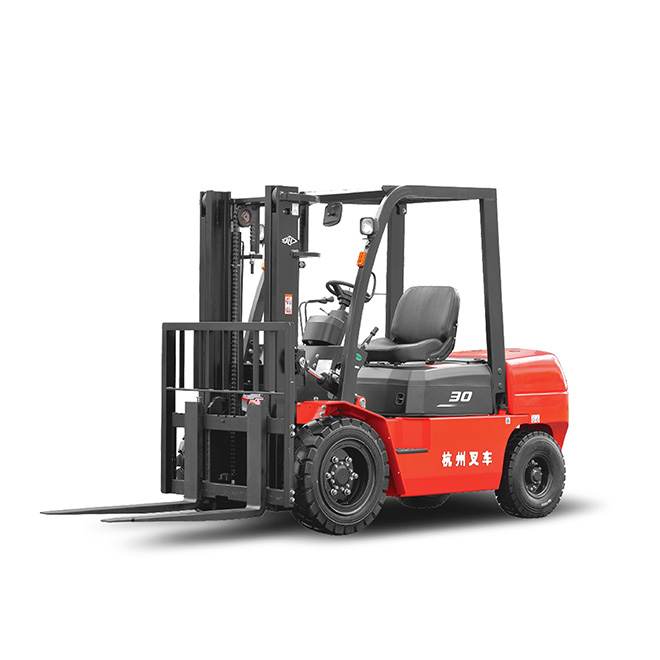
Chinese automated guided vehicles (AGVs) have moved far beyond experimental pilots, quietly embedding themselves into the daily rhythms of global supply chains. At ports in Rotterdam, smart warehouses in Singapore, and automotive plants in Germany, fleets of China-made AGVs now shuttle materials with a level of cost-efficiency that caught many legacy automation providers off guard. This shift isn’t about a single breakthrough invention—it comes from a mix of aggressive scaling, iterative software refinement, and an ecosystem that can deliver a fully integrated system at half the typical lead time.
What really sets these AGVs apart is their ability to merge advanced algorithms with practical field data gathered from thousands of domestic deployments. Companies have poured learnings from China’s ultra-competitive logistics market into dynamic path planning, multi-sensor fusion, and cloud-based fleet management, creating machines that handle chaotic, human-filled environments more gracefully than earlier generations. Clients abroad often discover that integrating these AGVs requires minimal infrastructure overhaul, letting them retrofit existing facilities in weeks instead of months.
The knock-on effects are now visibly redrawing the logistics map. Instead of routing everything through massive, centralized hubs, regional distributors are setting up smaller, AGV-powered fulfillment centers closer to end customers, shifting freight flows and reducing last-mile bottlenecks. As uptake spreads, the very definition of warehouse “standard” is being rewritten—not by traditional industrial robotics powerhouses, but by a wave of nimble Chinese manufacturers who treat logistics automation as a constantly evolving software-plus-hardware service.
Cost Meets Innovation: Why World's Warehouses Are Turning Chinese
A quiet transformation is reshaping global logistics. In distribution centers from Rotterdam to Los Angeles, Chinese automation technology is becoming the backbone of operations. The appeal is straightforward: a combination of aggressive pricing and rapid innovation cycles that most Western suppliers can't match. These systems aren't just cheaper at the point of purchase—they're designed to slash long-term operational costs through smarter energy use, compact footprints, and maintenance-friendly modular designs. For warehouse managers squeezed between rising wages and relentless delivery demands, the math is compelling.
What truly sets Chinese solutions apart is the pace of evolution. While legacy players iterate slowly, Chinese firms like Geek+ and Hai Robotics have turned warehouses into living labs, deploying fleets of robots that learn from each other and improve with every cycle. This isn't about incremental updates; it's about releasing entirely new capabilities—vision-guided picking, autonomous forklifts that navigate without magnetic tape, and software that orchestrates chaos into a steady flow—years before competitors can react. The result is a technological leapfrog effect, where a warehouse in Mexico can jump straight to a fully flexible robotics setup without enduring the clunky interim stages.
Underpinning this shift is a unique ecosystem. Shenzhen's component markets and dense manufacturing clusters allow robotics startups to source sensors, LiDAR units, and specialized chips at speeds and prices unthinkable elsewhere. When a prototype can be built in days instead of months, the cost of failure drops, and bold experimentation flourishes. This isn't just about cheap labor—it's about an industrial network that turns ideas into hardware at startup velocity. As a result, the world's warehouses aren't just buying Chinese machinery; they're plugging into a feed of constant, cost-conscious innovation that's redefining what a warehouse can be.
From Copycats to Cutting Edge: China's Industrial Vehicle Leap
Not long ago, Chinese industrial vehicles were dismissed as cheap knockoffs, often trailing behind established global brands in both quality and innovation. Today, that narrative has been completely rewritten. From forklifts to heavy-duty excavators, domestic manufacturers have quietly engineered a dramatic turnaround, mastering core technologies and redefining industry standards.
This shift wasn't accidental. Relentless investment in R&D, strategic acquisitions of foreign patents, and a laser focus on electrification and automation have propelled local players to the forefront. Companies like BYD and SANY now export electric forklifts and autonomous loaders that compete head-to-head with the likes of Toyota and Caterpillar, often at a lower cost and with smarter features.
The leap is perhaps most visible in niche segments, where Chinese firms are setting new benchmarks. In ports and warehouses across Europe and Southeast Asia, Chinese-made automated guided vehicles and lithium-ion powered equipment are fast becoming the preferred choice—not because they are cheaper, but because they offer superior technology and reliability. It's a story of a copycat turned innovator, quietly reshaping global supply chains one vehicle at a time.
Electric Dreams: China's Green Logistics Push
From humming electric delivery vans navigating narrow hutongs to silent cargo ships gliding along the Yangtze, China is reimagining the journey of goods. The nation's logistics sector, once synonymous with diesel fumes and relentless noise, is undergoing a quiet but profound transformation. It's a push fueled not just by environmental targets but by a pragmatic realization: green logistics can be smart business.
The shift touches every link in the supply chain. In Shenzhen, the world's first city to fully electrify its bus fleet, delivery companies are following suit, swapping scooters and vans for battery-powered alternatives that cut costs as much as emissions. Meanwhile, sprawling distribution centers are getting a green makeover with rooftop solar panels and automated sorting systems that slash energy use. Even the packaging is evolving, with reusable crates and biodegradable wraps slowly replacing single-use plastics.
This isn't just a top-down mandate; consumers are driving change too. A generation of eco-conscious shoppers expects carbon-neutral delivery, and brands are scrambling to respond. The race is on to build a logistics network that moves goods cleanly, efficiently, and silently—a vision that just a decade ago felt like a distant electric dream.
The New Silk Road of Automation: Connecting Global Supply Chains
Automation is quietly redrawing the map of global trade, forging a new kind of connectivity that transcends physical borders. Just as the ancient caravans once linked distant markets, today's automated systems—from smart warehouses in Rotterdam to robotic assembly lines in Shenzhen—are creating seamless, data-driven corridors. These digital pathways don't just move goods faster; they weave together supply chains that can anticipate disruption, adjust routes in real time, and match demand with pinpoint precision. The result is a living network where machines and algorithms converse across continents, making the flow of commerce feel almost frictionless.
What sets this new silk road apart is its invisibility. It runs on shared protocols, predictive analytics, and autonomous vehicles that require neither rest nor negotiation. A factory in Germany can stock parts from a supplier in Vietnam without a single keystroke of human reordering, while a retailer in Brazil receives inventory calibrated to local buying patterns hours before a trend peaks. The real glue isn't steel or asphalt, but the quiet choreography of interconnected automation platforms that treat the entire planet as a single, manageable workshop.
Yet for all its elegance, this emerging backbone demands a fresh kind of trust—trust in code, in interoperable systems, and in the resilience of a supply chain that thinks for itself. Companies are no longer just trading partners; they are nodes in a vast, self-optimizing organism. The challenge now is less about building faster ships or larger warehouses, and more about weaving intelligence into every link. Those who master this invisible infrastructure won't just survive the next disruption—they'll help build a global economy that moves with the speed of light and the precision of a heartbeat.
FAQ
China's dominance stems from massive economies of scale, a mature supply chain, aggressive R&D in electric and automated technologies, and flexible manufacturing that can quickly adapt to global demand. This allows Chinese firms to offer competitively priced vehicles without compromising on advancing features.
Chinese electric forklifts are accelerating the shift away from internal combustion engines by providing affordable lithium-ion options with longer runtimes and faster charging. This helps warehouses and ports worldwide reduce carbon footprints and meet stricter environmental regulations, making green logistics more accessible.
Automated guided vehicles (AGVs) and autonomous forklifts from China are integrating advanced sensors and software at lower price points. This democratizes automation, enabling even mid-sized logistics centers abroad to streamline material handling, reduce labor costs, and minimize human error.
China's vehicle sector has tailored products for high-throughput e-commerce environments, such as narrow-aisle reach trucks and quick-charge pallet jacks. These solutions support 24/7 fulfillment speed and space optimization, directly boosting the efficiency of global e-commerce supply chains.
Under the Belt and Road initiative, Chinese industrial vehicles are deployed in partner countries for building ports, railways, and warehouses. This not only exports machinery but also sets operational standards, deeply embedding Chinese technology into the backbone of emerging logistics networks.
Brands are investing in localized service networks, obtaining CE and ANSI certifications, and aligning with global safety standards. Track records in European and North American operations now demonstrate reliability, easing earlier skepticism about durability and after-sales support.
Chinese manufacturers are pioneering modular battery-swapping stations for forklifts, allowing continuous operation without downtime for charging. This innovation is transforming multi-shift warehouses globally, eliminating battery change-out rooms and improving fleet utilization.
Through flexible engineering and close partnerships with international distributors, Chinese makers customize vehicles to comply with local emissions, safety, and telematics regulations. This agile approach ensures seamless integration into different legal frameworks without major delays.
Conclusion
China’s industrial vehicle sector is quietly rewriting the rules of global logistics, and the shift is more profound than just cheaper hardware. Walk into a modern warehouse in Rotterdam or Dallas, and you’ll likely encounter smart forklifts humming along autonomously—machines born from China’s rapid move from simple copycats to cutting‑edge innovators. These aren’t just souped‑up lift trucks; they integrate AI‑driven navigation, real‑time data sharing, and seamless fleet management, all at a price that makes automation accessible far beyond Fortune 500 firms. The result is a quiet revolution where efficiency leaps ahead without breaking budgets, forcing traditional manufacturers to rethink their playbooks.
Beyond the warehouse walls, Chinese automated guided vehicles and electric logistics platforms are redrawing the global supply‑chain map. Think of it as a new Silk Road of automation: battery‑powered container handlers at ports, green delivery vans in city centers, and interconnected AGV fleets that talk to each other across borders. The push toward electrification isn’t just about meeting emissions targets—it’s a strategic move that slashes operational costs and future‑proofs logistics hubs. By merging aggressive innovation with scale, China is turning its industrial vehicle sector into a connective tissue for world trade, enabling smaller players to compete globally and accelerating a shift to cleaner, smarter freight networks that feel almost organic in their adaptability.
Contact Us
Contact Person: Liuxue
Email: [email protected]
Tel/WhatsApp: +86-19084200370
Website: https://www.hf-ec.com/