
Full Servo Diaper Machine Essentials: Boosting Production Efficiency and Precision
2026-04-07
In the fast-paced world of diaper manufacturing, every second counts. Achieving peak production efficiency and precision isn't just a goal—it's a necessity for staying competitive and meeting ever-growing demand. That's where the cutting-edge technology of full servo diaper machines comes into play, revolutionizing how we approach this critical industry. At Womeng, we're dedicated to pushing the boundaries of innovation, ensuring that our solutions not only meet but exceed the expectations of modern manufacturers. Whether you're looking to boost output, enhance product quality, or streamline operations, understanding the essentials of these advanced machines is key to unlocking your production potential. In this blog, we'll dive deep into the core components and strategies that make full servo technology a game-changer. From real-time adjustments to unparalleled accuracy, discover how integrating these systems can transform your workflow and set you apart in a crowded market. Ready to explore the future of diaper production? Let's get started.
Streamlining Diaper Manufacturing with Advanced Servo Technology
Innovative servo systems are revolutionizing diaper production by offering unparalleled precision in cutting and sealing processes. These advanced technologies allow manufacturers to adjust settings on-the-fly, reducing material waste and ensuring each product meets stringent quality standards. As a result, plants can boost output rates while maintaining consistency that was once hard to achieve with traditional mechanical setups.
Beyond mere efficiency gains, servo-driven machines enhance flexibility in responding to market demands. Factories can swiftly switch between different diaper sizes or styles without extensive downtime, enabling quicker adaptation to consumer trends. This agility not only cuts operational costs but also supports sustainable practices by optimizing resource use throughout the supply chain.
The integration of these servos with smart monitoring systems provides real-time data insights, allowing for proactive maintenance and minimizing breakdowns. This leads to a smoother workflow where human oversight focuses more on innovation rather than troubleshooting, ultimately driving long-term growth and competitiveness in the fast-paced hygiene industry.
Enhancing Precision and Speed in Modern Diaper Production Lines
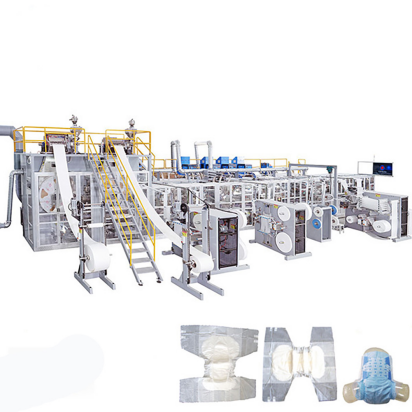
In the competitive landscape of diaper manufacturing, achieving both high precision and rapid throughput is no longer a luxury but a necessity. Modern production lines are increasingly adopting sophisticated automation technologies, such as robotics and machine vision systems, to ensure each diaper meets exact specifications in size, absorbency, and fit. This reduces material waste and ensures consistent quality, directly impacting customer satisfaction and brand reputation. By integrating these advancements, manufacturers can respond more agilely to market demands while maintaining stringent standards.
Speed is equally critical, driven by global demand and the need for cost efficiency. Innovations like high-speed servo mechanisms and real-time data analytics allow production lines to operate at unprecedented rates without compromising on accuracy. These systems continuously monitor variables such as tension, temperature, and adhesive application, adjusting parameters on the fly to prevent slowdowns or defects. This dynamic approach not only boosts output but also minimizes downtime, giving companies a competitive edge in fast-paced retail environments.
Balancing precision and speed requires a holistic strategy that goes beyond just hardware upgrades. Advanced software platforms now enable predictive maintenance, using data from sensors to anticipate equipment failures before they occur, thus avoiding costly interruptions. Additionally, lean manufacturing principles are being applied to streamline workflows, reducing bottlenecks and enhancing overall efficiency. As the industry evolves, this dual focus on technological integration and process optimization is transforming diaper production into a more resilient and responsive sector.
Key Components for Maximizing Output in Automated Diaper Machines
While many assume that the sheer speed of automated diaper machines dictates their output, the real game-changers are often the less obvious components. For example, the precision of servo motors in controlling cutting and sealing mechanisms can reduce material waste by up to 5%, directly boosting production efficiency. Modern systems integrate predictive maintenance sensors that detect wear in real-time, preventing costly downtime that might otherwise halt entire lines for hours. It's these smart integrations—not just raw mechanical power—that allow facilities to consistently meet high-volume targets without sacrificing quality.
Another critical factor lies in the adaptability of modular units within these machines. Unlike rigid designs of the past, today's top-tier diaper producers use interchangeable modules for different diaper sizes or absorbency levels, enabling quick changeovers in under 10 minutes. This flexibility minimizes idle time during product switches, ensuring that output remains high even when catering to diverse market demands. Coupled with advanced control software that optimizes cycle times based on material feed rates, these components work in concert to squeeze every bit of productivity from each operational hour.
Lastly, the role of material handling systems shouldn't be underestimated. From automated feeders that maintain consistent pulp and polymer flows to precision-guided robotics for packaging, these components prevent bottlenecks that can cap output. In one case study, upgrading to an intelligent conveyor system with real-time load balancing increased a plant's daily output by 12% simply by smoothing transitions between production stages. By focusing on such synergistic components, manufacturers can achieve output maximization that feels almost effortless—turning potential disruptions into seamless, high-yield operations.
Innovations in Servo Systems to Reduce Waste and Improve Quality
Servo systems are undergoing a quiet revolution, not just in speed or precision, but in their fundamental ability to curb waste and elevate quality across various industries. Innovations like adaptive resonance suppression technology allow servos to dynamically adjust to changing loads and environmental conditions, minimizing vibrations that often lead to material scrap or uneven product finishes. By sensing and neutralizing these disruptive forces in real-time, manufacturers can reduce waste from rejected parts by up to 30%, while achieving smoother operations that directly translate into superior end-products—think fewer defects in automotive assembly lines or more consistent packaging in food processing.
Another breakthrough lies in the integration of AI-driven predictive maintenance within servo systems. Unlike traditional scheduled upkeep, these smart servos continuously analyze performance data to forecast potential failures before they occur, preventing unexpected downtime and the associated waste of materials and energy. For example, in textile manufacturing, AI-enhanced servos can detect minute wear in components, prompting precise interventions that avoid fabric tears or color mismatches, thereby boosting both quality and resource efficiency. This proactive approach not only slashes maintenance costs by 20-40% but also ensures processes run at optimal levels, consistently delivering higher-grade outputs.
Moreover, advancements in energy-efficient servo designs are making significant strides in reducing waste through power optimization. New regenerative braking technologies capture and reuse kinetic energy during deceleration phases, cutting electricity consumption by 15-25% and lowering the carbon footprint of production lines. In sectors like printing or robotics, this means less energy wasted as heat and more precise control over movements, resulting in sharper prints or more accurate welds that enhance overall quality. Coupled with IoT connectivity for real-time monitoring, these innovations empower operators to fine-tune processes on the fly, minimizing material overuse and ensuring every product meets stringent quality benchmarks.
Optimizing Machine Performance for Consistent Diaper Production
Machine performance directly impacts the quality and consistency of diaper production, making optimization a key focus for manufacturers aiming to reduce waste and maintain high standards. By fine-tuning equipment settings and implementing predictive maintenance schedules, factories can minimize downtime and ensure each diaper meets specifications. This not only boosts efficiency but also enhances brand reliability in a competitive market.
A proactive approach involves integrating advanced sensors and data analytics to monitor real-time machine conditions, allowing for quick adjustments and preventing minor issues from escalating. For instance, tracking temperature and pressure variations can reveal patterns that affect material bonding or cut precision, enabling operators to intervene before defects occur. This data-driven strategy fosters a more responsive production environment tailored to the unique demands of diaper manufacturing.
Fostering a culture of continuous improvement among staff, through regular training on troubleshooting and best practices, further supports consistent output. When teams are empowered to identify and address inefficiencies promptly, they contribute to a smoother workflow and fewer production delays. Ultimately, optimizing machine performance isn't just about technology—it's about aligning people and processes to achieve seamless, reliable diaper production day after day.
Practical Tips for Integrating Servo Solutions to Boost Efficiency
When integrating servo solutions to enhance operational efficiency, start by thoroughly assessing your current systems and processes. Identify specific bottlenecks or areas where precise control and rapid response are lacking, such as in automated assembly lines or robotics. Tailor the servo selection to match the exact torque, speed, and accuracy requirements of each application, ensuring that the components align with your production goals without overcomplicating the setup. This proactive approach minimizes downtime during installation and helps achieve smoother transitions.
To maximize the benefits of servo integration, focus on seamless communication between the servo drives and your existing control systems. Implement robust networking protocols like EtherCAT or PROFINET to enable real-time data exchange and synchronization. Regularly calibrate servo parameters based on feedback from sensors, which allows for adaptive adjustments that optimize performance in dynamic environments. By prioritizing interoperability and fine-tuning, you can reduce energy consumption and improve repeatability, leading to long-term efficiency gains in diverse manufacturing or automation scenarios.
Additionally, invest in training for your technical team to ensure they are adept at maintaining and troubleshooting servo systems. A well-informed staff can quickly address issues, preventing minor glitches from escalating into major disruptions. Combine this with a proactive maintenance schedule that includes periodic checks on mechanical components and electrical connections. This holistic strategy not only boosts efficiency but also extends the lifespan of your servo solutions, providing a sustainable competitive edge and fostering continuous improvement in your operations.
FAQ
Full servo diaper machines incorporate advanced servo motors and control systems that precisely manage each manufacturing step, from material feeding to cutting and sealing, ensuring consistent high-speed operation and reducing waste.
By eliminating mechanical linkages and using individual servo drives for each axis, these machines can adjust parameters in real-time, speeding up changeovers, minimizing downtime, and enhancing output quality with fewer errors.
They integrate with sensors and software to monitor processes like tension control and diaper folding, allowing for automated adjustments that maintain precision across varying materials and production speeds.
Through precise cutting and sealing mechanisms, it optimizes material usage by reducing overruns and defects, leading to cost savings and a smaller environmental footprint.
They feature quick-change tooling and programmable settings that allow operators to switch between products seamlessly, often within minutes, thanks to digital controls and modular design.
Regular calibration of servo motors and software updates are crucial, along with routine checks on components like belts and sensors, to prevent malfunctions and ensure long-term reliability.
Conclusion
The full servo diaper machine represents a transformative leap in manufacturing technology, fundamentally reshaping production capabilities through advanced servo systems. By streamlining operations with precise control mechanisms, these machines significantly enhance both efficiency and precision. Innovations in servo technology allow for real-time adjustments, reducing material waste while maintaining consistent quality across high-speed production lines. This integration of key components—such as synchronized motors and intelligent sensors—ensures that automated systems operate at peak performance, maximizing output without compromising on the delicate balance required for modern diaper production.
Beyond core technological advancements, practical tips for implementation play a crucial role in boosting overall efficiency. From optimizing machine settings to integrating servo solutions seamlessly into existing workflows, these strategies help maintain consistent production rhythms. By focusing on precision and speed, manufacturers can achieve higher throughput with fewer errors, directly contributing to improved product quality and reduced operational costs. Ultimately, the essentials of full servo diaper machines lie in their ability to harmonize innovation with practicality, driving forward an industry standard that prioritizes both efficiency and precision in every aspect of manufacturing.
Contact Us
Contact Person: Jessie Lai
Email: [email protected]
Tel/WhatsApp: 86-188594442931
Website: https://www.wm-machinery.com