

Export Smooth HDPE Geomembrane: Essential Insights for Global Project Success
2026-06-17
When it comes to lining projects that demand durability and chemical resistance, smooth HDPE geomembrane often becomes the backbone of modern engineering. But between specification sheets and supplier promises, how do you separate reliable material from mere marketing? At WEN FENG STONE, we’ve watched too many projects stumble on overlooked details—from installation stress to long-term UV exposure. This guide cuts through the noise, offering field-tested insights that can make or break your project’s success.
Why Smooth HDPE Geomembranes Dominate Global Projects
At the core of smooth HDPE geomembranes' widespread adoption is their exceptional chemical resistance and durability. Unlike textured alternatives that can trap sediments or become clogged, the flat surface offers a seamless barrier against a wide range of aggressive leachates, acids, and hydrocarbons. This makes them the go-to choice for landfills, mining heap leach pads, and industrial wastewater ponds where long-term containment with minimal maintenance is non-negotiable. Project managers consistently note that the absence of surface asperities reduces the risk of stress cracking and simplifies welding, cutting installation time by up to 30% while delivering stronger, more reliable seams.
Another factor tipping the scales is the cost-efficiency over the entire lifecycle. Smooth HDPE geomembranes require no additional protective geotextiles in many applications, slashing material and freight expenses. Their slick finish also facilitates easier cleaning and inspection—rainwater simply sheets away, and any damage becomes immediately visible. This low-friction characteristic proves invaluable in slope stability from the very start, as cover soils or protective layers slide into place without the need for excessive anchoring. For engineers balancing tight budgets with strict environmental regulations, these practical advantages keep smooth HDPE at the top of the spec sheet.
Finally, global supply chains and standardized manufacturing have cemented their dominance. Major producers offer consistent roll widths and thicknesses that integrate effortlessly with ancillary components like pipe boots and batten bars. Because the material has been studied for decades, performance data is plentiful, giving regulatory bodies and design consultants the confidence to approve it without extended pilot testing. In emerging markets particularly, the combination of off-the-shelf availability and proven longevity makes smooth HDPE the default liner, eclipsing complex composite systems in all but the most specialized niches.
The Hidden Costs of Exporting Subpar Geomembranes
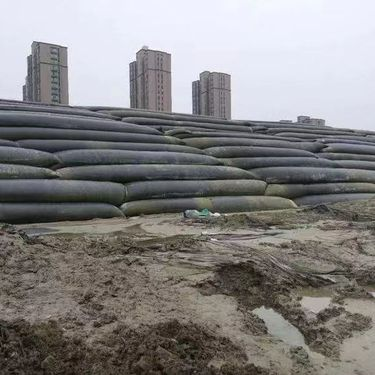
When buyers focus only on upfront price, they often overlook what happens after subpar geomembranes arrive at the project site. Installation crews struggle with inconsistent thickness, brittle seams, or material that degrades under normal UV exposure. The immediate result? Install delays, wasted labor, and a spike in on-site repairs that chew through contingency budgets. Worse, these issues rarely stay hidden—leaks discovered during post-installation testing force costly re-excavation and replacement, turning a supposedly budget-friendly purchase into a financial sinkhole.
Beyond the physical fixes, there are quieter, more corrosive costs. A failed liner in a containment pond or landfill can trigger environmental penalties, legal battles, and damage to the exporter's reputation that outlasts any short-term savings. Distributors who sell unreliable products often find themselves blacklisted from future tenders, especially in industries where project owners share supplier performance data informally. The hidden freight of exporting low-grade geomembranes isn't measured in shipping weight—it's the trust, market access, and peace of mind that get lost along the way.
Performance Metrics That Truly Matter on Site
When assessing on-site performance, it’s easy to get lost in a sea of vanity numbers. But the metrics that genuinely reflect user experience and business health are often simpler than you think. Start with actual engagement: how long do people stay, what do they click, and do they complete meaningful actions? A low bounce rate means nothing if visitors aren’t progressing toward a goal. Instead, track scroll depth, click-throughs on key elements, and micro-conversions that signal intent.
Page speed remains a cornerstone, but not just any speed metric—focus on perceived performance. Time to Interactive (TTI) and Largest Contentful Paint (LCP) reveal how quickly your page becomes usable and visually complete. Yet beyond raw speed, consistency matters more. A page that loads in two seconds but stutters during scroll will frustrate users more than a steady four-second load. Track layout shifts (CLS) and ensure interactive elements respond within 100ms to keep the experience fluid.
Finally, tie everything back to your actual business outcomes. Ecommerce sites should obsess over checkout abandonment rate and cart-to-detail view ratios. Content-driven platforms need to measure scroll-triggered ad viewability, time on meaningful sections, and return frequency. The metric that matters is the one that directly connects a user’s on-site action to revenue, loyalty, or a deeper relationship with your brand—everything else is just noise.
Installation Pitfalls That Engineering Teams Overlook
A subtle trap that catches even seasoned teams is treating dependency resolution as a solved problem. They’ll pin top‑level library versions, assuming that’s enough, while transitive dependencies drift between environments. The result: a staging deploy succeeds, but production crashes on a breaking change in a deeply nested package that nobody explicitly added. Lock files are an easy fix, but they’re often overlooked because things work fine in a developer’s local container—until they don’t.
Another blind spot is assuming that dev, staging, and production environments are interchangeable. They never truly are. Differences in operating system patch levels, installed system libraries, or even default network timeout settings can turn a smooth install into a days long debugging session. The problem gets worse when teams rely on manual setup steps that are documented in a wiki that nobody updates. Reproducibility suffers, and the gap between environments grows silently over time.
Installation routines that aren’t designed to be idempotent create brittle, panic‑driven rollback scenarios. Running the same script twice might overwrite configurations, corrupt state, or simply fail with cryptic errors. When a partial deployment needs to be recovered or a configuration management tool re‑applies a playbook, non‑idempotent steps turn a minor hiccup into a full outage. Checking that every install action can be safely re‑run is rarely prioritized until after the first incident.
Real-World Lessons from International Geomembrane Deployments
A mining site in the Chilean Atacama taught us that even the best specification can fail if you ignore the abrasive power of wind-blown grit. The original liner design looked flawless on paper, but within months, exposed edges started thinning at stress points nobody had modeled. The fix involved locally fabricated protective shrouds and a revised anchoring pattern that let the membrane flex without fatigue. It was a clear reminder that lab data needs a healthy dose of site-specific humility.
In a water reservoir project spanning the Jordan Valley, logistics ended up shaping the installation more than any engineering decision. The contractor had to navigate tight border crossings and unpredictable material flow, which meant welding crews often couldn’t follow their planned sequence. Instead of rigidly sticking to the schedule, the team developed a modular deployment method that allowed them to seal independent sections as soon as panels arrived. That adaptability cut rework rates in half and kept the project on track despite constant supply hiccups.
Perhaps the most overlooked insight comes from a decade-old landfill expansion near Kuala Lumpur. Regular post-installation surveys revealed that biological activity in the underlying soil—specifically from root systems and burrowing insects—was altering the support layer in ways that accelerated strain in the geomembrane. The monitoring protocol was then adjusted to include subsurface imaging every two years, not just surface checks. It’s an approach born from quiet observation rather than dramatic failure, proving that long-term stewardship often matters more than initial construction perfection.
Innovations Shaping the Next Generation of HDPE Liners
A quiet revolution is unfolding beneath landfills, tailings dams, and industrial ponds. The newest HDPE liners are no longer just passive barriers—they are becoming intelligent, self-monitoring systems that can detect chemical breaches or physical stress long before a leak ever develops. Embedded with conductive layers and fiber-optic sensors, these geomembranes provide real-time data on seam integrity, heat exposure, and deformations. It’s a shift from reactive maintenance to proactive containment, turning what was once a buried hope into a guarded certainty.
Material science has also stepped in with bold new formulations. By blending high-density polyethylene with advanced polymers and nano-additives, manufacturers are creating liners that resist cracking in subzero conditions, withstand aggressive chemicals, and fend off UV degradation for decades longer than their predecessors. One emerging approach uses co-extruded layers that combine different performance traits—a textured grip on one side and a slick, impermeable surface on the other—eliminating the need for separate geonets and reducing installation time. These hybrids not only cut project costs but also shrink the environmental footprint by minimizing raw material use.
Yet the most unexpected leap may be in circular design. The next generation of HDPE liners is born from a conscience, not just a spec sheet. Companies are now reclaiming, purifying, and reprocessing post-industrial and post-consumer polyethylene into high-quality lining membranes that meet the same rigorous demands as virgin resins. This closed-loop thinking is reshaping how engineers specify containment solutions: durability is no longer just about resisting the elements, but about leaving nothing behind when the liner’s service life ends. It’s innovation that doesn’t just hold waste—it redefines it.
FAQ
It's a high-density polyethylene liner with a flat surface, offering low friction and excellent chemical resistance. Unlike textured variants, its smooth face simplifies cleaning and is ideal for applications where sliding is not a primary concern, such as in tank linings or canal covers.
Subpar materials can lead to premature failure, environmental contamination, and costly legal disputes. Ensuring high-quality raw resin and manufacturing precision minimizes on-site welding defects and extends service life, which is critical when the liner is buried under tons of waste or water.
Common uses include landfill base and cap systems, mining heap leach pads, aquaculture ponds, and wastewater treatment lagoons. Its smooth surface works well where flexibility and ease of jointing are needed, especially in secondary containment for chemical storage.
Yes, standards like ASTM D7145, GRI-GM13, and ISO 9001 are often referenced. Buyers should request compliance certificates and third-party test reports for properties like tensile strength, tear resistance, and stress crack resistance to ensure the product meets project specifications.
Rolls must be wrapped in UV-resistant, moisture-proof packaging and placed on treated wooden pallets. Using container liners and securing the rolls to prevent movement reduces risks. It's also wise to coordinate with freight forwarders familiar with geosynthetic cargo to handle customs delays.
The main issues are poor seam welding from dirty surfaces or incorrect temperature settings. Thoroughly clean the liner, calibrate welding machines for the specific thickness, and conduct trial welds. Also, avoid placing the membrane directly on sharp, angular subgrade without a suitable geotextile cushion.
High-density polyethylene has inherent UV and thermal stability when carbon black is added. However, prolonged exposure to direct sunlight can accelerate aging. For above-grade installations, specifying a UV-stabilized grade or covering promptly with soil or concrete is recommended.
Conclusion
Smooth HDPE geomembranes have become the backbone of containment systems in global infrastructure, mining, and environmental projects—but their success hinges on more than just product specifications. Engineering teams consistently favor these liners for their chemical resistance, flexibility, and weldability, yet real-world performance often reveals gaps between lab data and field conditions. Exporting geomembranes introduces layered complexity: international logistics, quality variance, and overlooked installation demands can quietly erode project timelines and budgets. The hidden costs of subpar liners—premature leaks, seam failures, remediation expenses—far outweigh initial savings, making rigorous third-party testing and transparent supply chains non-negotiable.
On site, thickness uniformity, stress-crack resistance, and long-term oxidative stability dictate a liner's lifespan, but even advanced materials fail if installation practices ignore substrate preparation, thermal expansion, or seaming under humid conditions. Lessons from global deployments underscore that collaboration between exporters, engineers, and local installers prevents repetitive failures. Meanwhile, innovations like conductive backing for spark-testing, textured hybrids, and smart monitoring layers are quietly redefining what's possible. For project success that transcends borders, the focus must shift from pure cost-per-square-meter to total lifecycle integrity—a perspective that separates resilient ventures from costly cautionary tales.
Contact Us
Contact Person: Jennifer LEE
Email: [email protected]
Tel/WhatsApp: 8618553418999
Website: https://vip.e-baixing.com/wenfengshitong