

Custom Commercial and Industrial Energy Storage Systems That Scale With Your Business
2026-11-16
Energy needs don't stand still—so why should your storage system? For growing commercial and industrial operations, off-the-shelf batteries often force a choice between overspending today or outgrowing your setup tomorrow. That's where UNC comes in. We design custom energy storage solutions that flex with your load profiles, site constraints, and expansion plans—whether you're adding a production line, shifting to EVs, or chasing new sustainability targets. In this article, we'll explore how tailored systems can cut demand charges, boost resilience, and pay for themselves faster than generic alternatives. If you've ever felt boxed in by fixed capacities or rigid warranties, keep reading—you might just rethink what 'scalable' really means.
Match Storage to the Way You Actually Use Power
Most people buy a battery based on total capacity alone, then wonder why their actual runtime falls short. The smarter move is to look at how you draw power throughout the day. Are you running a few small devices for hours on end, or do you need a short, intense burst for a saw or microwave? Matching the storage system to your real usage pattern prevents you from paying for capacity you never tap or, worse, getting caught short when demand spikes.
Think of it like a water tank: the size matters, but so does the diameter of the pipe. If you only sip power slowly, a high-capacity unit with a modest discharge rate works fine. But if your routine includes heavy loads, even for ten minutes, you need a battery that can deliver amps fast without voltage sag. Review your daily energy rhythm—peak draws, average consumption, and idle periods—then choose storage that aligns with that curve rather than a hypothetical worst-case scenario.
Also consider partial recharging habits. If you top up from solar only during a short midday window, a battery that accepts charge quickly will serve you better than one that trickles in. Your storage should flex with your lifestyle, not force you to rearrange your power use around it. The best system is the one you forget is there because it simply handles whatever you plug in.
Don't Pay for Capacity You Don't Need—Yet
The temptation to secure extra server capacity ahead of a launch feels like buying insurance. But most teams never hit the spike they planned for. Idle cores, unused memory, and reserved instances quietly drain budgets while promising a safety net that rarely gets tested.
A better move is to watch real traffic patterns for a few weeks before committing. Small, reversible adjustments beat a massive upfront purchase. Cloud providers make it easy to scale in minutes, so you lose very little by waiting until a trend actually shows up in your metrics.
The exception is when you have a hard date—like a product launch or a seasonal event. Even then, you can stage capacity increases a day or two in advance and dial back if the demand doesn't arrive. Paying for headroom on a permanent basis is a habit, not a strategy.
Modular by Design, Not an Afterthought
Most architectures treat modularity as a patch applied after the fact—splitting a monolith once it starts groaning under its own weight. Here, the opposite happened. The system was broken into discrete, self-contained units from the first sketch, each with a clear contract and no hidden dependencies. That early decision shaped everything from data flow to error handling, so adding or removing a piece never requires a cascade of changes elsewhere.
The practical payoff shows up quickly. Need to swap out a storage backend or replace an authentication layer? You isolate the module, write a new implementation behind the same interface, and plug it in. There is no ripping out tangled logic or hoping a refactor does not break three unrelated features. Because the boundaries were drawn before the first line of production code, each part can be tested, versioned, and deployed on its own schedule.
That approach also changes how the team thinks about the future. Instead of dreading the next big requirement as a threat to stability, they see it as a new module waiting for its interface. The system does not just tolerate change—it expects it, and leaves room for it without compromising the parts already running.
Your Facility Isn't Generic. Your Storage Shouldn't Be Either.
A standardized rack may fit a standardized operation, but once your workflow involves non-standard dimensions, fragile components, or odd-shaped inventory, a one-size-fits-all storage system quietly works against you. Custom storage is not about adding cost for the sake of it; it's about removing the small daily frictions that generic solutions simply ignore. When every shelf, drawer, and compartment matches the actual items you handle, retrieval time drops and handling damage becomes a rare exception rather than a recurring complaint.
Think about the moments that slow your team down: reaching around awkward protrusions, double-handling delicate parts, or improvising foam inserts that never quite fit. Bespoke storage addresses these directly, because it is designed around your load sizes, access patterns, and environmental conditions. Whether you need narrow aisles for high-density picking, reinforced frames for heavy tooling, or protected compartments for electrostatic-sensitive electronics, the result is a system that feels less like furniture and more like an extension of your process.
The difference becomes clear when you walk the floor. With generic storage, people adapt their habits to the equipment. With custom storage, the equipment adapts to the people and the product. That shift means fewer unnecessary movements, less hidden damage, and a layout that can evolve as your facility does. If your operation has quirks, specialties, or unusual constraints, your storage should reflect them—not ignore them.
Scale From Pilot to Portfolio Without Rework
Scaling a successful pilot into a full portfolio often fails because the pilot was never built to scale. Teams treat the first deployment as a one-off experiment, then discover that production requires different infrastructure, security, and data flows. To avoid rework, design the pilot with the same constraints you expect across the portfolio: standard deployment pipelines, consistent identity and access controls, and real monitoring from day one. The pilot should not be a toy; it should be the smallest slice of your target operating model.
The second shift is to package everything while you build. Instead of documenting steps later, turn infrastructure, configuration, and rollback procedures into versioned templates and automated runbooks during the pilot itself. This hardens the pattern once, and every subsequent site or region inherits the same foundation. Resist the urge to allow local exceptions in the first few rollouts—each small tweak becomes a fork that you will have to reconcile later. Keep the core identical and push variations into clearly bounded configuration files.
Finally, treat scaling as a rollout, not a new project. Set up drift detection and automated compliance checks early so that each added site conforms to the original blueprint without manual audits. When a new requirement appears, update the shared template and propagate it across the portfolio in a controlled way. This keeps the cost of adding the tenth site roughly equal to adding the second, because you are no longer rebuilding from scratch each time.
Engineered for Your Load Profile, Not a Datasheet
Most power supplies are judged by a single line on a spec sheet—a number that assumes a tidy, constant load. Real equipment doesn't behave that way. Motors surge, sensors idle, actuators spike, and your system rarely sits at one steady state. We design around the actual current draw curves, the inrush patterns, and the ragged edges of your application, not a hypothetical test bench.
That means we ask different questions: What happens during the first 50 milliseconds after turn-on? How deep do the dips go when a valve slams shut? Is there a periodic load that repeats every few seconds? By mapping your load profile in detail, we can optimize the power stage, magnetics, and control loop for real behavior—often shrinking size and heat while extending service life.
The result is a supply that feels almost custom, because it is. It doesn't just meet a voltage and current rating; it rides through the messy dynamics of your machine without tripping, drooping, or wearing out prematurely. You get performance that datasheets can't promise, because they were never written for your load profile.
FAQ
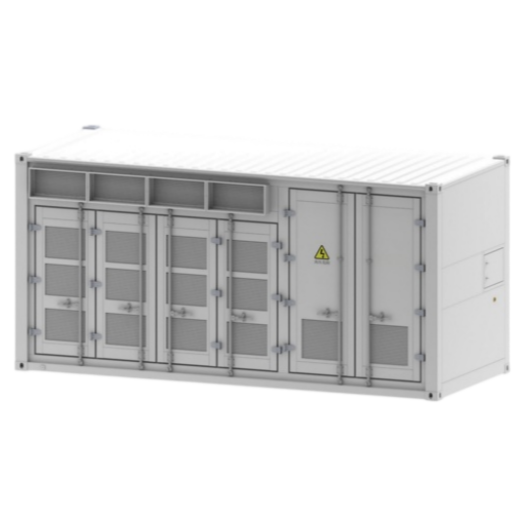
It means the system can start small and add capacity in modular increments as demand rises, without replacing core components or shutting down operations. You might begin with a single cabinet and expand to a multi-container setup years later using the same control architecture.
Facilities with uneven load profiles tend to see the biggest gains—cold storage warehouses, manufacturing plants, EV fleet depots, and commercial buildings with demand charges. Custom design lets each site target its specific pain points rather than settling for a one-size-fits-all battery.
Lithium iron phosphate often wins on cycle life and thermal stability for daily cycling, but nickel manganese cobalt can make sense where space is tight and weight matters less. The final call depends on your discharge duration, ambient conditions, and how often you plan to cycle the system.
Yes, and that's often where custom engineering pays off. The system can be configured to charge from solar during the day, discharge during peak rate windows, and coordinate with generators during outages so you don't end up with conflicting control signals.
Beyond the battery modules and inverters, consider switchgear upgrades, fire suppression, structural reinforcements, permitting, and ongoing software licenses. A well-designed custom proposal should list these line items up front instead of burying them in change orders later.
A single modular block can often be installed and commissioned within a few weeks once permits are approved. Larger multi-megawatt systems may take several months because of civil works, utility coordination, and grid interconnection studies.
Most modern systems need little more than quarterly inspections of cooling filters, torque checks on electrical connections, and firmware updates. The battery management system handles cell balancing, but you'll want an annual thermal imaging scan to catch loose connections early.
Yes, usually when adding modules pushes you into a higher voltage class or requires a major switchgear replacement. At that point, a separate system on a different electrical service point may avoid costly retrofits and reduce single-point failure risk.
Conclusion
Custom commercial and industrial energy storage systems are built around a simple idea: your power usage has its own rhythm, and your storage should move to that beat. Instead of forcing a one-size-fits-all battery bank into your facility, these solutions start with your actual load profile—when you draw peak power, when you idle, and where the spikes hurt most. That means you only pay for the capacity you genuinely need today, while the modular architecture keeps the door open for tomorrow. No oversized racks gathering dust, no undersized inverters clipping your ambition. The design is inherently scalable, letting you grow from a single pilot unit to a multi-site portfolio without ripping out hardware or rebuilding your control logic. It’s storage that learns your facility, not the other way around.
Because your operations aren’t a generic datasheet, the system is engineered from the ground up to match how you actually use power—whether that’s shaving demand charges, integrating on-site solar, or riding through outages with selective loads. Modularity isn’t an afterthought bolted on for marketing; it’s the core principle, so adding capacity later feels like plugging in another rack rather than a construction project. You avoid the trap of buying for a hypothetical future, yet you’re never boxed in by an early decision. The result is a storage asset that mirrors your business trajectory: lean when margins are tight, expansive when demand grows, and always configured for the specific currents running through your switchgear.
Contact Us
Contact Person: Manager Leng
Email: [email protected]
Tel/WhatsApp: 8613764878967
Website: https://www.unc-energy.com