

China SiC Wafer Boat Manufacturing Insights for Semiconductor Equipment
2026-11-02
China’s SiC wafer boat manufacturing is no longer a story of low-cost copying. It’s becoming a differentiator in semiconductor equipment performance—one where material purity, machining tolerance, and coating stability decide furnace yields. Yet most buyers still lack a clear view inside this rapidly maturing supply base. Semicorex has been working directly with Chinese fabs and equipment makers, and the insights below cut through the noise to show what actually matters.
Material Trade-offs in Chinese SiC Wafer Boat Fabrication
Chinese fabricators often weigh high-purity sintered SiC against graphite-based composites when building wafer boats. The former delivers exceptional thermal shock resistance and minimal particle shedding, but its raw powder imports and long firing cycles push unit costs upward. Local suppliers have tried blending recycled SiC grit to lower expenses, yet this introduces micro-porosity that can trap process gases and shorten boat life in LPCVD nitride runs.
A second trade-off shows up in coating strategies. Full SiC boats resist fluorine-based cleaning chemistries better than graphite with a thin SiC CVD layer, but machining dense SiC is slow and tool wear is severe. Some Chinese workshops now rough-machine graphite boats locally, then send them out for thick SiC coating—a hybrid approach that balances upfront price against replacement frequency, though coating delamination remains a known failure mode in high-temperature oxidation furnaces.
Thermal expansion matching also steers decisions. SiC’s low CTE aligns well with silicon wafers, reducing warpage during ramp-up, yet the stiffness that makes it dimensionally stable also makes it brittle in handling. Chinese production lines dealing with 150 mm and 200 mm wafers often accept a slight CTE mismatch from cheaper recrystallized SiC to avoid the cost of fully dense sintered grades, accepting more frequent boat inspections as a trade-off.
Tolerancing and Machining Methods for High-Stability Boats
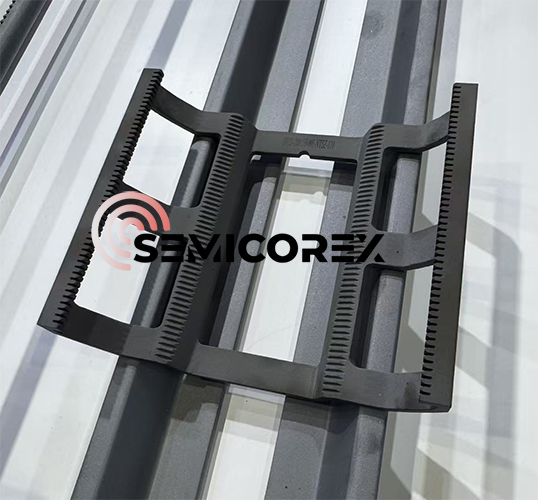
In the construction of high-stability boats, tight tolerancing is not merely a quality checkpoint but a structural necessity. Small deviations in hull symmetry or bulkhead placement can shift the vessel's center of gravity, undermining roll damping and overall sea-keeping ability. Builders typically specify tolerances down to ±0.5 mm on critical mating surfaces, while looser ranges of ±1.5 mm are reserved for non-load-bearing interior fittings. The challenge lies in balancing precision with the natural flexibility of marine-grade aluminum and composite laminates, which can spring back after machining.
Machining methods have evolved to meet these demands, with CNC waterjet cutting and five-axis milling becoming standard for complex hull frames and stringer contours. Unlike traditional plasma cutting, waterjet avoids heat-affected zones that can warp thin plates or degrade adhesive bonds in sandwich constructions. For high-stability designs, continuous fiber-reinforced composites often require diamond-coated tooling and low-feed rates to prevent delamination. Builders also employ post-machining stress relief, such as vibratory conditioning, to lock in dimensional accuracy before final assembly.
A less obvious but equally critical factor is the sequencing of machining operations. Rough cuts are performed to within 2 mm of final dimension, followed by a resting period that lets internal stresses redistribute. Only then are finish passes executed, often under temperature-controlled conditions to minimize thermal expansion effects. This staged approach reduces cumulative error and ensures that each hull component aligns precisely, allowing the vessel to maintain its designed stability even under variable loading and sea states.
Cleanroom Discipline vs. Real-World Chinese Production Floors
Walk into a certified cleanroom in Singapore or Silicon Valley and you'll find operators gliding between laminar flow hoods, every motion rehearsed, every wipe logged. The discipline is not aspirational; it's mechanical. Air showers, sticky mats, sterile gowning sequences, particle counters that trigger alarms at the first hint of a three-micron trespass. This is contamination control as a kind of high church liturgy, enforced by audits and batch records that would make a tax lawyer blush.
Now cross the ocean to a typical Chinese production floor turning out consumer electronics or medical disposables at scale. The gap is not always a matter of ignorance—many engineers have seen the ISO 14644 training decks—but of throughput pressure and thermal comfort. Hairnets become optional after lunch. Glove changes happen between shifts, not between touches. A line leader wipes down a bench with a rag that has seen three buildings and two provinces. The result is not chaos, but a different order: pragmatic, speed-first, and often astonishingly good at keeping visible defects low while invisible contamination slowly accumulates.
The real difference lies in what gets counted. Cleanroom discipline counts particles per cubic meter and colony-forming units per plate. Production-floor discipline counts units per hour and rework minutes per batch. Until those two scoreboards merge—until a Chinese floor manager loses a bonus over a non-viable particle spike the way she would over a missed shipment—the cleanroom will remain an imported ideal rather than a native muscle memory. Some factories are bridging this by posting particle data next to production tallies, but the habit of caring takes longer to gown up than the people.
How Domestic SiC Powder Pricing Reshapes Wafer Boat Costs
Domestic SiC powder prices have dropped noticeably over the past few years, but the effect on wafer boat costs is not a straight pass-through. Wafer boats are machined from sintered SiC blocks, so powder cost is only one layer of the cost stack. Cheaper powder allows suppliers to hold or trim boat prices, yet sintering yield, machining scrap, and density consistency can quietly offset those savings. A lower-priced powder batch with a wider particle size distribution may increase the chance of micro-cracks during sintering, which means more rejected boats and higher effective cost per usable unit.
These price shifts also reshape supplier behavior. When domestic powder is inexpensive, more local manufacturers enter the wafer boat market, which drives down quoted prices but also creates visible quality stratification. Fabs that need high-purity SiC boats for diffusion or LPCVD processes often end up spending more on incoming inspection, extra cleaning, or re-machining to bring a low-cost boat up to spec. In some cases, the total cost of ownership for a domestic-powder boat ends up higher than the initial purchase price would suggest.
Inventory strategy changes as well. Lower and more volatile domestic powder pricing encourages wafer boat makers to buy powder in smaller lots and adjust production schedules more frequently. This can shorten lead times for standard boat designs, but custom profiles may still face delays if a specific powder grade is temporarily hard to source. Cost models now give more weight to the monthly SiC powder price index, making boat quotes far more sensitive to short-term powder market movements than they were a decade ago.
Regional Supplier Networks and Their Impact on Lead Times
Regional supplier networks dramatically shorten the physical leg of the supply chain. A plant in the Midwest sourcing from Ohio or Indiana can often get components within two or three business days, whereas the same part from an overseas factory would spend weeks on a vessel and in customs. That speed lets production planners keep lower safety stock and still respond to a spike in orders, but it works only if the regional suppliers actually have spare capacity. Small local shops often run lean themselves, so a sudden order increase can push their own lead times out by days or even weeks.
Proximity also removes a lot of border friction—no customs brokers, no port congestion, no time-zone lag in communication. Yet a tight regional network can create hidden fragility. When three nearby factories rely on the same casting supplier and that supplier goes down for maintenance, lead times ripple across all three at once. Companies sometimes assume local equals safe, but a regional network needs the same kind of dual-sourcing or contingency planning as a global one, even if the backup supplier sits twenty miles away instead of twenty thousand.
Lead time performance inside a regional network often hinges on forecast sharing and delivery discipline more than distance alone. A supplier that gets a rolling eight-week forecast can sequence production and keep a buffer of common sizes, cutting standard lead times from ten days to three. Without that information, the same supplier quotes longer, hedges with overtime, and still misses dates. In practice, the firms that benefit most from regional sourcing are those that treat their nearby vendors like partners—sharing order patterns, paying on time, and locking in minimum volumes—rather than treating them as interchangeable parts of a transaction.
Testing Regimens That Separate Durable Boats from Early Failures
A hull can look flawless after a short sea trial and still hide weak spots that only appear after months of wave impact. Test regimens designed to catch these flaws often start with repeated slam loading—driving the boat off wave crests at controlled speeds while strain gauges record how much the bottom flexes. The goal isn't to break the boat on day one, but to map where stress concentrates.
After dynamic testing, many builders move the same hull into a controlled environment where temperature cycles and salt spray alternate for weeks. Bonded joints and transom cores are especially vulnerable here because moisture can creep into micro-cracks and freeze, slowly prying layers apart. A boat that survives this phase without measurable stiffness loss has cleared a major durability hurdle.
The most informative result comes from comparing deflection data before and after each test block. Early failures usually show a steady decline in stiffness, even if no visible cracks appear. That trend tells designers more than any single catastrophic break, because it separates boats that merely pass a one-time inspection from those built to hold their shape over thousands of hard miles.
FAQ
Chinese manufacturers have moved beyond simple replication by integrating high-purity graphite coatings with locally sourced SiC, reducing thermal mismatch during high-temperature epitaxy. The real difference lies in iterative process control—adjusting densification cycles to match specific furnace profiles, which yields fewer particle defects compared to standard quartz boats.
Dimensional stability is managed through a combination of isostatic pressing and post-sintering machining, but the key insight is that Chinese fabs now demand real-time warpage data from suppliers. Some manufacturers have started embedding stress-relief grooves into the boat design, which reduces bowing after repeated thermal cycling by up to 30 percent based on internal qualification runs.
High-purity beta-SiC powder and certain specialty graphite grades still come from overseas, mainly from Japan and Germany. However, a growing number of Chinese firms are qualifying domestic alpha-SiC sources with comparable purity levels, primarily driven by lead time pressures rather than cost alone.
Surface roughness directly influences particle generation and slip line formation on wafers. Chinese manufacturers are now targeting Ra values below 0.4 micrometers on contact surfaces, using diamond slurry polishing followed by ultrasonic cleaning. The nuanced approach involves balancing polish quality with edge retention—over-polishing can round critical support features and reduce load capacity.
Validation now goes beyond simple visual inspection. Fabs are running accelerated lifetime tests that simulate 2000 thermal cycles and measuring boat mass loss, micro-crack propagation, and contact pad deformation. Suppliers that provide this data upfront tend to win repeat orders, shifting the conversation from price per piece to cost per wafer cycle.
One noticeable trend is the shift toward hybrid designs that combine SiC support rails with graphite bodies for specific reactor types. Another is modular boat architectures that let fabs replace only worn contact pads instead of the entire boat, which reduces downtime and total cost of ownership in 6-inch and 8-inch SiC lines.
Apart from lower labor costs, the main traction comes from faster engineering feedback loops. Chinese suppliers can iterate on boat geometry within two to three weeks, while some overseas vendors take months for design changes. That agility matters for new SiC epi reactor platforms where standard boat configurations do not yet exist.
Expect better infiltration control using chemical vapor infiltration instead of liquid phase sintering for critical zones, plus more automated in-line metrology for every boat. The most interesting development is the use of recycled SiC scrap from wafer backgrinding to produce secondary supports, which addresses both cost and waste reduction targets.
Conclusion
Chinese SiC wafer boat fabrication sits at a peculiar intersection of high-end material science and shop-floor pragmatism. Fabricators routinely weigh high-purity graphite against SiC-coated graphite or solid sintered SiC, trading thermal stability and contamination resistance against raw material cost. For high-stability boats, machining often relies on multi-axis CNC grinding and wire EDM to hold slot pitches within a few microns, but the real differentiator emerges in how these tolerances survive handling. Cleanroom discipline varies sharply across domestic plants; some maintain full ISO Class 5 environments for final inspection while others use localized laminar flow benches over grinders and presses, leaving particle counts and trace metal residues less predictable than Western counterparts expect.
Cost and lead time are equally shaped by local supply chains. Falling domestic SiC powder prices have compressed boat unit costs, yet the purity of that powder still dictates whether a boat can survive repeated thermal cycles above 1600°C without micro-cracking or outgassing. Regional supplier clusters in Jiangsu, Henan, and Sichuan shorten lead times for graphite blanks and coatings, but also create quality variance between batches. The factories that stand out are those enforcing in-house testing beyond simple visual checks—thermal shock cycling, flexural strength measurement after machining, and particle shedding tests under simulated wafer transfer. These regimens, though not universal, are what separate boats that last hundreds of diffusion or LPCVD runs from those that fail after a few dozen.
Contact Us
Contact Person: Svenja Wei
Email: [email protected]
Tel/WhatsApp: +8613567891907
Website: https://www.semicorex.com