

China Reactor Electric Heater Advancements in Industrial Applications
2026-07-05
China's industrial landscape is undergoing a quiet revolution, driven by leaps in reactor electric heater technology that promise unprecedented efficiency and precision. Amid this transformation, Shenzhou Chemical Industry is carving out a distinctive role, turning advanced heating solutions into tangible competitive edges. But what exactly sets these new systems apart, and how are they rewriting the rules for chemical processing? Let's unpack the breakthroughs reshaping the field.
Breakthroughs in Reactor Electric Heating for Chemical Processing
Recent advances in reactor electric heating are reshaping chemical processing by offering unprecedented control over reaction temperatures. Unlike conventional steam or fired heaters, modern electric heating systems deliver energy directly to the process fluid or catalyst, minimizing thermal lag and heat losses. This direct heat transfer enables rapid start-ups and precise temperature modulation, which is critical for highly exothermic or endothermic reactions. Engineers are now leveraging advanced materials like silicon carbide heating elements and inductive coil designs that withstand corrosive environments while achieving temperature uniformity across large reactor volumes.
Another leap forward is the integration of smart power management and predictive analytics. By coupling electric heaters with real-time sensors and adaptive algorithms, plants can fine-tune energy delivery moment by moment. This not only stabilizes reaction kinetics but also reduces the risk of runaway reactions. The ability to modulate power input with sub-second granularity allows for complex multi-step syntheses that were previously impossible with sluggish thermal systems. Moreover, such systems can respond instantly to changes in feedstock composition, making them invaluable in flexible, multi-product plants.
Perhaps most transformative is the role of electric heating in decarbonizing chemical manufacturing. When sourced from renewable electricity, these heaters enable a direct path to eliminating Scope 1 emissions from reactor heating. Innovations in high-temperature resistive elements and electromagnetic heating techniques are pushing the boundaries of what can be electrified, even for processes requiring temperatures above 1000°C. As the grid becomes greener, this breakthrough aligns process intensification with sustainability goals, often simultaneously boosting yield and energy efficiency while shrinking the carbon footprint of specialty chemical production.
How Advanced Electric Heaters Boost Reactor Performance in Petrochemicals
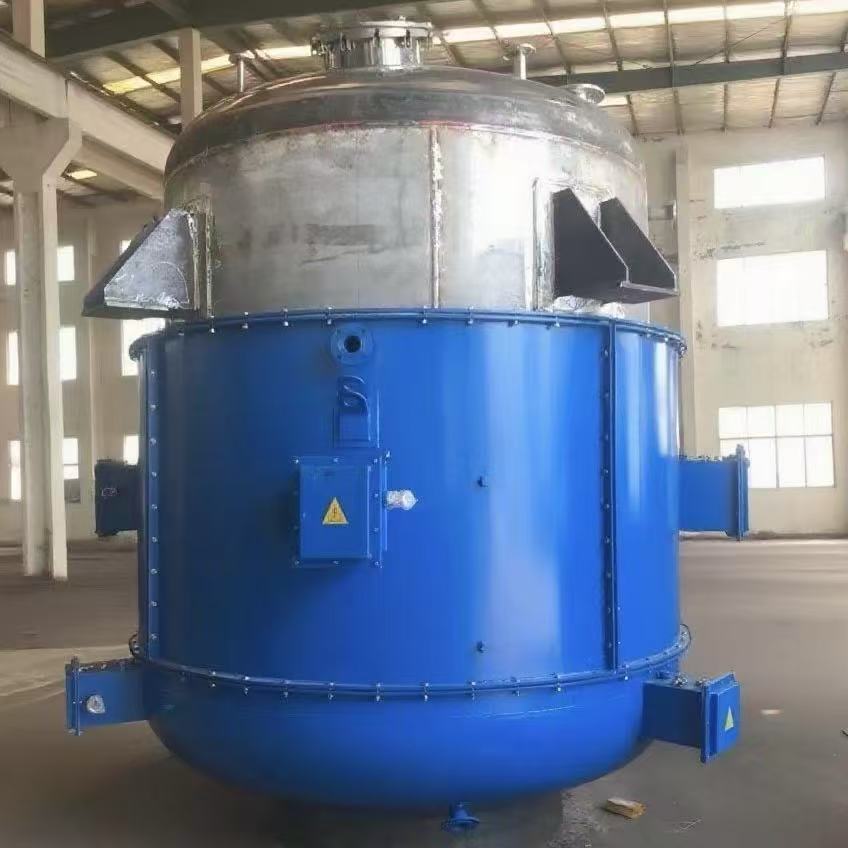
In petrochemical reactors, maintaining precise and consistent temperature profiles is critical for optimizing reaction kinetics and product yields. Advanced electric heaters, with their rapid response and fine control capabilities, eliminate the temperature fluctuations common with conventional heating systems. This precision allows reactors to operate closer to their ideal thermal windows, reducing unwanted byproducts and improving overall selectivity. For instance, in endothermic processes like catalytic reforming, tightly controlled heat input prevents localized overheating that could deactivate catalysts, thereby extending their useful life.
Beyond temperature accuracy, these heaters integrate seamlessly with modern digital control systems, enabling real-time adjustments based on process variables. Their modular design simplifies maintenance and scales easily across reactor sizes, from pilot plants to full-scale production units. Unlike fuel-based heating, electric systems produce no combustion byproducts, which can contaminate sensitive reactions. This clean operation is especially valuable in polymerization or specialty chemical manufacturing, where purity directly impacts downstream processing and final product specifications.
The energy efficiency of advanced electric heaters also contributes to lowering operational costs and meeting sustainability targets. By delivering heat directly to the process stream with minimal losses, they reduce overall energy consumption compared to indirect heating methods. Additionally, their ability to operate at high temperatures without degradation suits them for emerging processes like plastic pyrolysis, where reactors require robust, controllable heat sources to handle varied feedstocks. This adaptability positions electric heaters as a pivotal technology for next-generation petrochemical plants aiming for higher throughput and reduced environmental footprint.
China's Next-Gen Heating Solutions for High-Temperature Industrial Reactors
High-temperature industrial reactors demand heating solutions that balance precision with extreme durability. Traditional approaches often fall short when maintaining consistent thermal profiles above 800°C, where even subtle temperature deviations can compromise product quality or trigger unwanted side reactions. China's latest advances center on reimagining heat transfer from the ground up—using advanced fluidized bed combustion with staged air injection, which not only stabilizes flame structure but also pushes thermal efficiency beyond 92%. This shift moves away from legacy radiant tube systems, offering a more uniform heat flux that virtually eliminates hot spots inside the reactor core.
Material innovation plays an equally critical role in these next-gen systems. Instead of conventional high-nickel alloys, engineers are deploying silicon carbide composite heating elements that withstand oxidative and carburizing atmospheres without surface degradation. These elements are integrated into modular panel assemblies—each panel independently controlled via embedded fiber-optic temperature sensors—enabling rapid response to load changes. Field trials in ethylene cracking furnaces have demonstrated a 30% extension in operational cycles between shutdowns, largely because the panels resist coking and thermal fatigue. Such longevity directly reduces maintenance overhead in continuous production environments.
What sets these solutions apart is their intelligent orchestration framework. A distributed control system couples real-time spectral analysis of the process stream with predictive thermal models, dynamically adjusting heating zones to match reaction kinetics. This closed-loop approach not only saves energy during partial load conditions but also allows operators to switch feedstocks without repositioning hardware. Early adopters in coal-to-chemicals plants report that this adaptability has cut start-up times by half and lowered specific energy consumption, all while keeping emissions well within tightening regulatory boundaries. The combination of resilient materials and adaptive control redefines what's achievable in industrial heating reliability.
Scaling Up: Electric Heating Innovations in Large-Scale Reactor Systems
Transitioning from bench-scale electric heating to industrial reactor systems presents a unique set of engineering hurdles. While a laboratory setup might rely on a simple heating mantle or cartridge heater, large-scale operations demand uniform heat distribution across massive volumes, often under high pressure and corrosive conditions. Innovations in resistive heating element design, such as multi-zone, independently controlled arrays, now allow precise thermal profiling even in reactors exceeding 10,000 liters. These systems integrate directly into the vessel walls or employ immersion bundles, cutting energy waste by eliminating the need for intermediate heat transfer fluids.
Induction and microwave-based heating are redefining what’s possible in large-scale chemical processing. Unlike conventional jacketed vessels that heat from the outside in, volumetric methods generate heat directly within the reaction medium, dramatically reducing thermal gradients and hot spots. Recent deployments in continuous-flow reactors for polymerization and biomass conversion have demonstrated 30% faster reaction times while slashing energy consumption. The key lies in advanced power electronics that precisely modulate electromagnetic fields, adapting in real time to changes in dielectric properties or catalyst loading as the reaction progresses.
The push toward electrification in heavy industry is accelerating with modular, scalable heating solutions that sidestep the limitations of legacy steam and fired heaters. By embedding sensors and predictive controls, modern electric systems self-optimize for varying production rates, making batch-to-continuous transitions seamless. A notable example is in the synthesis of specialty chemicals, where rapid-startup electric heaters now achieve temperature setpoints 70% faster than traditional methods, with the added benefit of zero onsite carbon emissions. These systems not only shrink the footprint of reactor skids but also open the door to fully electrified, renewable-powered plants.
Redefining Thermal Control: Precision Heating for Modern Reactors
In the landscape of advanced reactor design, thermal control has moved beyond simple temperature regulation. It now demands a level of precision that directly impacts reaction kinetics, yield consistency, and operational safety. Modern reactors, whether used in pharmaceutical synthesis or high-throughput material processing, rely on heating systems that can adapt to minute changes in exothermic or endothermic behavior without lag or overshoot.
This shift has driven the adoption of distributed heating architectures, where multiple independently controlled zones wrap around the vessel. Rather than a single heat source, these systems use thin-film elements or microchannel jackets that respond in real time. The result is a thermal profile that can be sculpted along the length of the reactor, compensating for heat loss at the inlet and maintaining a flat gradient where it matters most. It's a departure from the batch-era mindset of “set and forget,” embracing instead a dynamic equilibrium that keeps sensitive chemistries stable.
At the heart of this precision is a fusion of advanced materials and control algorithms. Ceramic-based heating elements with low thermal mass allow for rapid cycling, while model-predictive controllers anticipate thermal swings by referencing kinetic models. The practical gain isn't just tighter temperature tolerances—it's the ability to push reactors into operating windows that were previously avoided due to thermal runaway risks. This redefinition of thermal control turns what was once a limiting factor into a lever for process intensification.
From Lab to Factory: Real-World Impact of China's Reactor Heater Tech
When engineers first tinkered with reactor heater designs in Chinese labs, few imagined the ripple effects. Today, those early prototypes have matured into rugged industrial systems, quietly transforming sectors from petrochemicals to green energy. What started as academic curiosity now underpins massive factories—where precise thermal control isn't just an advantage, it's a necessity.
Take the chemical industry, for instance. Traditional heating methods often meant uneven temperatures and energy waste, but China's new reactor heaters bring almost surgical precision to processes like catalytic cracking. Operators report smoother runs, fewer shutdowns, and a noticeable drop in raw material consumption. The tech doesn't just churn out products; it does so with a lighter environmental footprint, aligning with stricter emission norms without sacrificing throughput.
Beyond the factory walls, the impact radiates further. In renewable energy, these heaters help stabilize biofuel production, making alternatives more viable against fossil fuels. In small towns, modular versions support local manufacturing hubs, creating jobs and reducing reliance on imported equipment. The journey from lab bench to production line has been messy, nonlinear, and often unglamorous—but the real-world payoff is unmistakable.
FAQ
They've focused on faster heat-up times and more even temperature distribution, using redesigned heating elements and advanced insulation that cuts energy waste without sacrificing performance.
New models incorporate regenerative heating and precise power modulation, allowing them to use only the exact energy needed for each process stage, which can slash consumption by up to 30% compared to older units.
Ground-fault monitoring, automatic shutoffs tied to real-time temperature anomalies, and explosion-proof housings have become baseline, with some designs adding self-diagnostic routines that predict failures before they happen.
You'll find them heavily adopted in Jiangsu and Shandong's chemical parks, where they're used for polymerization and distillation, as well as in pharmaceutical manufacturing around Beijing-Tianjin-Hebei.
Integrated IIoT platforms let operators adjust heating profiles remotely and collect data for predictive maintenance, so instead of fixed cycles, the system adapts on the fly to viscosity changes or endothermic reactions.
Alloys like Incoloy and silicon carbide coatings are common now, paired with PTFE linings for acids, which resist scaling and corrosion far better than traditional stainless steel alone.
Conclusion
The chemical and petrochemical sectors have witnessed a quiet transformation with the integration of advanced electric heating in reactor systems. Previously reliant on conventional fuel or steam, China's recent push into electrically powered heaters has unlocked precision thermal management that was once hard to achieve. These breakthroughs, particularly in high-temperature processing, allow for tighter reaction control, boosting yields and product quality. For example, next-generation heating elements with robust materials such as silicon carbide or advanced alloys now sustain extreme temperatures uniformly, reducing hot spots and improving safety. This has proven invaluable in complex reactions where even a slight deviation can compromise entire batches. As a result, manufacturers are now upgrading existing infrastructure to adopt these cleaner, more efficient solutions.
The move from laboratory success to large-scale implementation underscores the real-world viability of these innovations. In large reactor systems, electric heating modules are being scaled up without sacrificing precision, enabling consistent heat distribution across vast volumes. This is critical in petrochemical applications where throughput is paramount. Advanced control algorithms and modular designs allow seamless integration, minimizing downtime during retrofits. Companies are reporting not only energy savings but also reduced maintenance, since electric systems avoid combustion-related wear. The broader impact extends to environmental compliance, as electric heating slashes on-site emissions. By redefining thermal control, China's reactor electric heater technology is setting new benchmarks for industrial efficiency, promising a future where high-performance and sustainability go hand in hand.
Contact Us
Contact Person: Mr. Wang
Email: [email protected]
Tel/WhatsApp: 8613705299955
Website: https://vip.e-baixing.com/szhgyw