

China N52 Magnet: The Ultimate Guide to High-Strength Rare Earth Magnets
2026-10-07
Discover the unmatched power of China N52 magnets—the strongest grade of neodymium rare earth magnets available today. From industrial automation to high-end consumer electronics, these magnets deliver exceptional magnetic force in a compact size. Yet not all N52 magnets are created equal. In this guide, we’ll break down what makes a true N52, how to verify performance, and why DAWA has become the trusted source for engineers and buyers worldwide.
What Makes N52 the Strongest Grade You Can Buy Off the Shelf
N52 magnets pack more magnetic energy per unit volume than any other grade you can grab without a custom order. The "52" refers to a maximum energy product of roughly 52 MGOe, a measure of how much magnetic force the material can store. That number comes from pushing the neodymium-iron-boron recipe close to its practical ceiling: a high neodymium content, carefully controlled grain size, and an alignment step during pressing that lines up magnetic domains almost perfectly. The result is a magnet that delivers more pull in a smaller package than N42 or N48 grades.
Off-the-shelf availability matters here. Some specialty grades can edge higher on paper, but they're typically limited-run curiosities or require minimum orders that make them impractical for most buyers. N52 is the strongest grade that suppliers stock as a standard item, in a wide range of shapes and sizes. That combination of raw strength and shelf-ready supply is what earns it the title.
The trade-off is heat tolerance. N52's magnetic field drops more quickly as temperature rises compared to lower grades. For room-temperature applications—holding, lifting, sensors, actuators—it's simply the best balance of brute force and convenience you can buy without a waiting list.
Inside Chinese Factories: How Raw Rare Earths Become Precision Magnets
Walk through the heavy steel doors of a rare earth magnet workshop in Ganzhou, and the first thing you notice is the fine gray dust settling on every surface. Workers move between sealed glove boxes, shifting sacks of neodymium-praseodymium oxide that still carry the faint mineral scent of the mine. These powders, refined from ore dug thousands of kilometers away, are about to enter a transformation measured in microns and teslas, not kilometers or tons.
The real alchemy happens in the strip casting furnace, where the oxide is reduced to a molten alloy and poured onto a water-cooled copper wheel spinning at just over one meter per second. The result is a brittle ribbon only half a millimeter thick, snapped into flakes and then jet-milled under nitrogen into particles finer than flour. Each grain gets coated with a microscopic layer of lubricant before pressing, because at this scale, even a fingerprint of oxidation ruins the magnetic alignment later.
After sintering at over a thousand degrees in a vacuum, the blanks are rough-cut, ground, and then given their final orientation in a magnetizing coil that pulses for a fraction of a second. Technicians slide finished magnets into trays, checking weight and field strength with gauss meters that read out values to two decimal places. What started as dull rock is now a component that can hold a door, drive an EV motor, or keep a surgical robot steady inside an MRI suite.
Not All N52 Magnets Are Equal: Coating, Tolerances, and Hidden Flaws
An N52 grade only tells you the maximum energy product of the raw neodymium alloy. It says nothing about how the magnet will survive in your application. A bare nickel-plated disc can flake within weeks in humid conditions, while an epoxy or PTFE coating might last for years. Thickness matters too: a 10-micron nickel layer is common, but many suppliers cut corners with 5 microns, leaving edges exposed to corrosion. Always ask for a salt spray test report rather than trusting a glossy product photo.
Dimensional tolerances are another silent killer. A spec sheet might claim ±0.05 mm, but actual batches often drift to ±0.1 mm or worse. For press-fit assemblies, that small shift can mean the difference between a snug hold and a rattling, useless part. The issue gets worse with small magnets: a 2 mm cube with a 0.1 mm variance loses 5% of its volume and a significant chunk of pull force. Reputable manufacturers will provide a Cpk value or a batch inspection report; if they refuse, walk away.
Hidden flaws hide inside the sintered structure. Micro-cracks from aggressive machining or poor sintering can turn a strong magnet into a brittle one that snaps during assembly. Chipped edges are easy to spot, but internal voids are not. Run a simple drop test on a sample batch: N52 magnets should survive a fall from a meter onto concrete without shattering. If they don't, the supplier likely skipped the stress-relief step. These flaws never show up in a datasheet, but they will show up in your production line.
From Wind Turbines to Smartphones: Where N52 Magnets Do the Heavy Lifting
Inside the nacelle of a modern wind turbine, N52 magnets are often found in direct-drive generators. By removing the gearbox, these generators cut down on moving parts that wear out, which matters when a tower stands hundreds of feet in the air and repairs are costly. The magnet grade's high energy product lets a rotor spin at lower speeds and still produce grid-ready power.
Shrink that same material down to a few millimeters and it shows up in a smartphone. N52 magnets drive the voice coil in speakers, give haptic feedback its sharp kick, and hold the autofocus mechanism in place inside the camera module. Their resistance to demagnetization means the phone can get warm during heavy use without losing vibration strength or audio clarity.
Between these two extremes, the pattern repeats in electric vehicle motors, MRI machines, and high-end audio gear. Designers reach for N52 when the task demands maximum flux density in a constrained volume—where a weaker grade would force a larger, heavier part. That trade-off is invisible to most users, but it is exactly what allows compact devices and large turbines to keep doing the heavy lifting.
Handling and Storing N52 Magnets Without Losing a Finger—or Your Data
Treat every N52 like a loaded spring. These magnets don't just attract—they snap together hard enough to shatter or take a chunk out of your skin. When separating two stuck magnets, never try to pull them straight apart. Instead, slide one sideways off the other using the edge of a workbench or a non-magnetic wedge. Keep your fingers out of the gap, and if you must handle multiple magnets at once, use thick gloves and place a plastic or wooden spacer between each piece as you work.
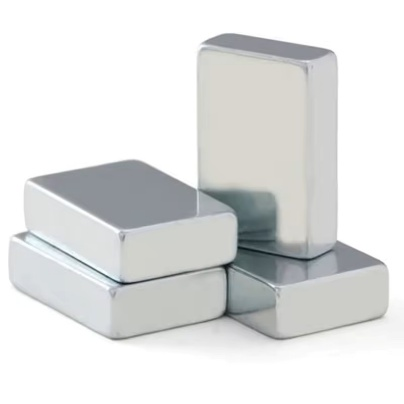
Storage is where most accidents happen. A pile of loose N52s will find each other from across a drawer, jump, and pinch anything in the way—including the drawer itself if it's metal. Store them individually in plastic compartments or wrap each one in foam, and use rigid plastic dividers rather than cardboard, which can compress under magnetic force. If you have larger blocks, keep them in a wooden box with a secure lid and a generous air gap between each magnet and the box walls.
Your data is just as vulnerable as your fingers. N52 fields can corrupt hard drives, wipe credit card strips, and scramble unprotected electronics from several inches away. Keep a minimum of 30 centimeters between any N52 and a laptop, external drive, or wallet. Better yet, store all magnets in a closed steel tin or a dedicated magnetic shielding box—never in a shirt pocket or on a desk near your phone. If you need to transport them, use a padded wooden crate and place it away from your body and any devices.
Sourcing From China Without Getting Burned: Questions to Ask Before You Order
Too many buyers treat a low quote as the finish line. Before you wire a deposit, ask the supplier who actually owns the factory. A trading company can still do a fine job, but if they're reluctant to show you a business license or introduce you to the production floor, treat that hesitation as information. Ask for a video walkthrough with that day's newspaper or a live call from the line — not a polished brochure.
Then dig into the materials and components that go into your product. A cheap price often means a hidden swap: thinner fabric, recycled plastic, a less stable chip. Ask for the spec sheet for every major input, and ask what happens if a batch arrives out of tolerance. If they can't answer clearly or blame 'the market,' you're likely buying a problem that will only surface after the container leaves the port.
Finally, pin down the ugly details before you order. What exactly counts as an AQL defect? Who pays for rework if 20% of units fail inspection? How do they handle intellectual property if you share a CAD file? A supplier that gets defensive or vague on these points isn't protecting your margin — they're protecting their own flexibility. You want a partner who can say 'here's our process, here's our liability, and here's the number of a previous client you can call.'
FAQ
N52 is the highest grade you can get in the standard neodymium magnet range. It indicates the magnet's maximum energy product, which essentially measures its strength. An N52 magnet delivers more magnetic force per unit of volume than lower grades like N35 or N42, so you get a smaller magnet doing the same job as a larger one with a lower grade.
Yes, many Chinese manufacturers now produce N52 magnets that meet strict international standards. The key is to look for suppliers who provide detailed material certifications and plating specs. China dominates rare earth production, and the best factories there use refined processes that yield consistent magnetic properties, but you should always verify third-party testing reports instead of relying on marketing claims.
You'll find them in brushless DC motors, magnetic couplings, audio speakers, holding fixtures, and even DIY projects like cabinet latches or model-making jigs. Their high strength-to-size ratio makes them ideal wherever space is tight but holding force matters, such as in medical devices, drones, and magnetic therapy products.
The number after the N refers to the maximum energy product in megagauss-oersteds. N52 has a maximum energy product around 52 MGOe, while N35 sits at 35 MGOe and N42 at 42 MGOe. In practical terms, an N52 magnet can be up to 20-30% stronger than an N42 magnet of the same shape and size but usually costs more and can be slightly more brittle.
Request a material test certificate that shows the actual remanence, coercivity, and maximum energy product values from a batch sample. Also confirm the coating type, such as nickel-copper-nickel or epoxy, and ask about dimensional tolerances. A trustworthy supplier will openly share plating thickness and pull force data rather than just promising 'strong magnets.'
N52 magnets have a maximum operating temperature of around 80 degrees Celsius before they start losing strength permanently. At room temperature, they stay stable for decades with only a tiny loss due to corrosion if uncoated. For high-heat applications, you'd need a higher-coercivity series like N52M or N52H, which trade a little raw strength for better thermal stability.
These magnets can snap together with surprising force and pinch skin or shatter if dropped. Keep them away from pacemakers, credit cards, and electronic devices. Use non-magnetic tools when separating them, and wear gloves for larger pieces. Also store them away from children, because swallowing multiple magnets can cause serious internal injuries.
Conclusion
N52 earns its reputation because it sits at the practical ceiling of sintered neodymium magnets—roughly 52 MGOe—yet the number on the datasheet tells only part of the story. In Chinese production lines, raw rare earth oxides move through hydrogen decrepitation, jet milling, magnetic alignment, and sintering before they ever reach a magnetizer. Small variations in that chain separate a genuinely high-coercivity N52 from one that loses its grip above 60°C. Coatings matter just as much: a thin nickel-copper-nickel layer with poor edge coverage will blister in humid environments, while inconsistent chamfers and micro-cracks hide beneath a shiny surface. Wind turbine pitch systems, smartphone vibration motors, and EV sensors all expose those flaws differently, which is why two magnets stamped N52 can perform like entirely different grades once installed.
Handling these blocks is less forgiving than most buyers expect. A direct pinch between two N52 discs can break bone, and an unshielded magnet near a hard drive or pacemaker creates damage that no data-recovery service can undo. Storage demands non-ferromagnetic spacing and careful temperature control, since prolonged heat slowly erodes magnetic strength. When sourcing from China, the useful questions are not about whether a magnet is genuinely N52 but about measurable limits: ask for the demagnetization curve at your actual operating temperature, request salt-spray test results for the specific coating thickness, and clarify tolerance bands on critical dimensions before payment leaves your account. Factories that answer with test data rather than marketing phrases tend to be the ones worth reordering from.
Contact Us
Contact Person: Kelvin Lo
Email: [email protected]
Tel/WhatsApp: 0769-88561131
Website: https://dawamagnetic.com/