
China Fashion Lanyard Styles Transforming Everyday Accessories
2026-11-16
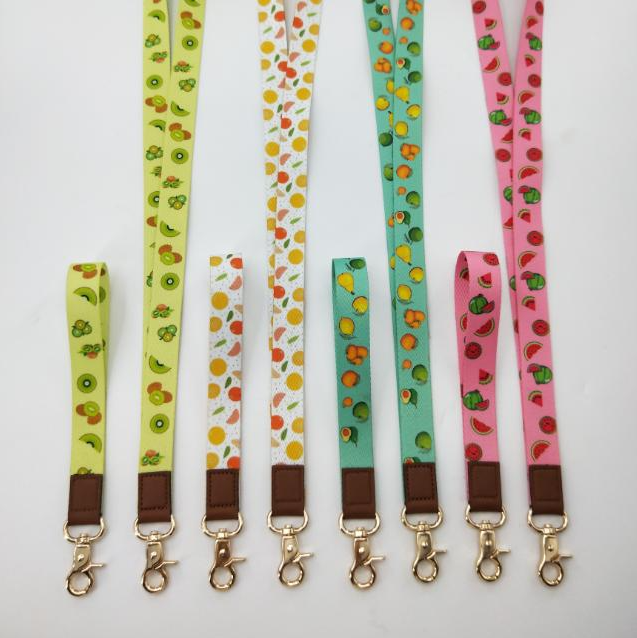
Lanyards have long been treated as forgettable office gear, but a quiet shift in China’s accessory scene is turning them into something worth styling. Instead of plain straps, you now see woven patterns, streetwear-inspired color blocking, and slim metal details that make a lanyard feel closer to jewelry than a badge holder. DONGCHUANG is part of that change, rethinking the everyday lanyard as a small but deliberate fashion choice. If your idea of a lanyard is still the generic black cord from a trade show, the styles emerging now offer a strong reason to look again.
When a Lanyard Stops Being Office Gear
There is a moment when the nylon strap around your neck stops being a piece of office equipment and starts acting like a diary you wear in plain sight. The edges fray from months of being tugged, the plastic sleeve yellows under fluorescent light, and the little metal clip leaves a faint scratch on your badge photo. None of this feels like decay. It feels like a record.
You thread a faded wristband from a music festival through the loop, or keep a bent paperclip there because it once held something important. The lanyard begins to collect small decisions: a pin turned sideways, a coffee stain near the buckle, a knot tied to shorten the length. People ask if it is required, and you say yes, but the truth is that you stopped needing it long before it stopped looking like office gear.
What hangs around your neck eventually stops representing a company and starts representing a sequence of days. That is the point where a lanyard becomes a private kind of jewelry, unremarkable to everyone else and quietly specific to you.
The New Language of Woven Straps in Chinese Street Style
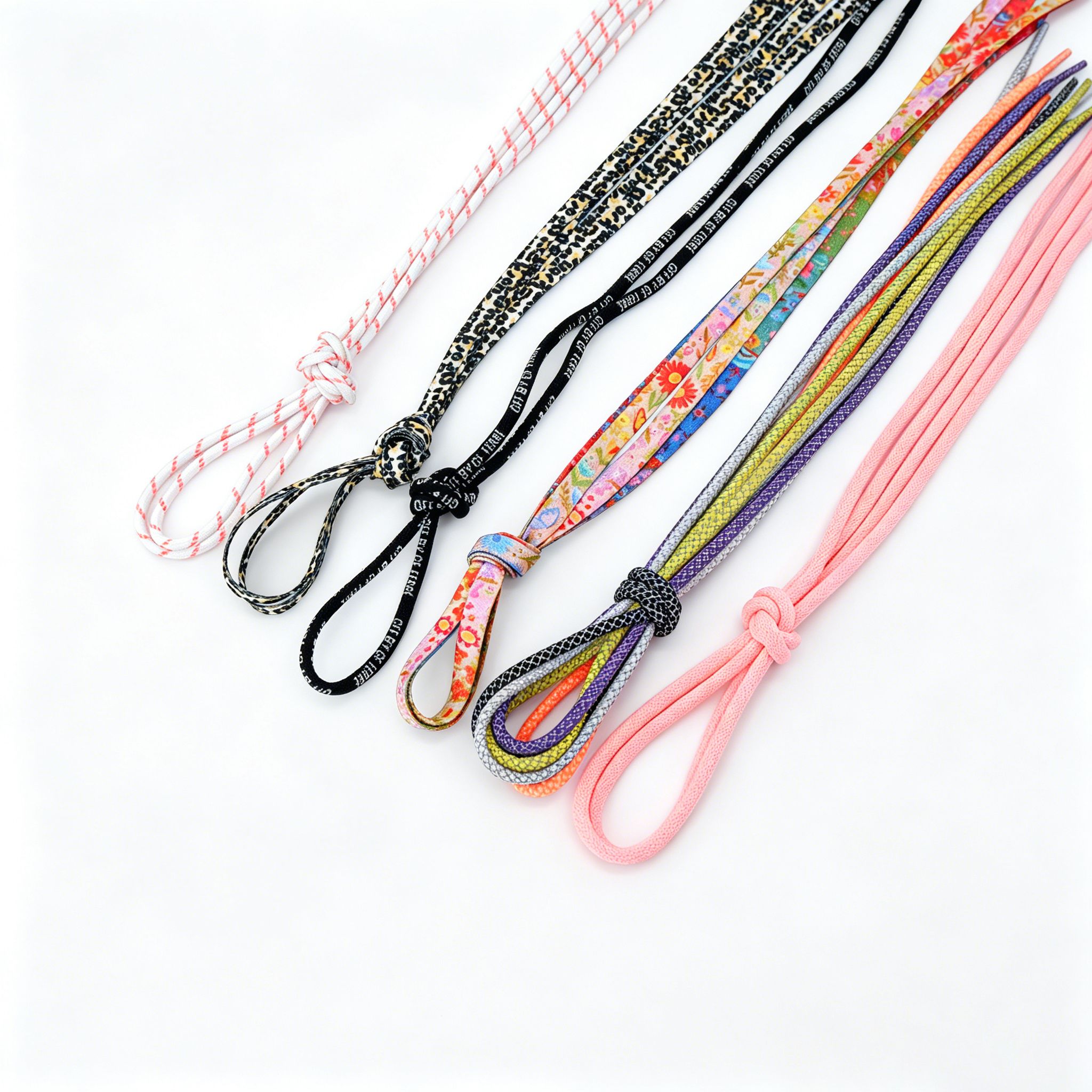
Woven straps have moved far beyond their utilitarian start in Chinese street style, becoming a quiet way to signal taste without leaning on visible branding. Around Shanghai's Julu Road and Chengdu's Taikoo Li, the swap is hard to miss: a nylon webbing strap in burnt orange or deep indigo replaces the original leather shoulder strap on a compact crossbody, while hand-braided cords in uneven thicknesses hang from belt loops or wrap around a tote handle. The appeal lies in texture rather than pattern alone—cotton herringbone against slick technical nylon, frayed ends left deliberately raw, and small metal O-rings connecting mismatched sections.
Color behavior has shifted too. Instead of matching straps to outfits, wearers treat them as a controlled clash. A chalky green woven strap might cut across a charcoal puffer, or a checkerboard braid in red and black sits against a pale trench. The rhythm of the weave itself does much of the work: tight flat weaves read more polished, while chunky round braids introduce a handmade, almost craft-fair energy that contrasts well with angular tailoring and boxy bag silhouettes.
What makes the trend feel native rather than imported is its modular logic. Straps are not permanent fixtures; they get re-threaded, knotted, or clipped from one bag to another within days. Some wearers layer two thin straps on a single bag, letting them twist into a single uneven line. Others attach a woven strip to a phone pouch or a small camera case, turning an afterthought accessory into the focal point of an otherwise restrained look.
Hand-Tied Ends and Other Small Luxuries You Can Wear to Work
A hand-tied scarf end might seem too slight to matter until you catch it moving against a blazer lapel or settling beside a button-down collar. The knot doesn't have to be perfect; that's the point. A little softness near the face can turn a standard work outfit from stiff into measured, especially on days when the rest of the look is strictly tailored.
Other quiet upgrades tend to work the same way. A narrow watch with a leather strap, a pair of polished but not flashy hair clips, or socks in a finer merino blend won't stand out from across the room. But after a few hours at a desk, you feel the difference in the way they sit, flex, and handle.
There is a shared restraint here. These pieces don't need to shout for attention or follow a trend cycle. Their value shows up in the weight of a hem, the finish of a seam, and the way something hand-finished moves with you rather than against you.
From Silk Road Motifs to Subway Turnstiles
Rush hour turns the station into a blur of coats and shoulder bags, but the turnstile still offers a small pause. On its brushed steel flank, a band of repeating vine scroll and pearl roundels has been etched, not printed or pasted. The pattern comes from a Sogdian saddle cloth, though almost no one crouches to read it. A hand reaches out, a card taps, the gate snaps open, and for half a second a commuter's knuckles rest against a motif that once moved along the same routes as silk, glass, and news.
Further down the platform, the floor markings borrow the geometry of an eight-pointed star, pulled apart and stretched into transfer arrows. Overhead, a run of diamond lattice panels shifts with the arriving train's air pressure, swaying just enough to recall felt tent walls outside a caravanserai. These are not heritage displays in the usual sense. They work as wayfinding and cladding first, yet their logic belongs to an older atlas of movement. The designers treated a subway line less as a modern rupture and more as another caravan passage with new kinds of weather.
What survives is rarely the original color or cloth, but the rhythm of the line. A pomegranate branch becomes a directional cue. A Sassanian boar roundel is reduced to a tactile dot on the accessible gate. The symbols are not explained over a loudspeaker. Instead, they sink into the daily route, until regular passengers could sketch them from memory without knowing why. That silent familiarity may be the real inheritance: decoration that once guided travelers through dust and dialects now guides them through concrete, one turnstile at a time.
Why Your Next Lanyard Might Outlast Your Phone Case
Phone cases take a beating from the moment they come out of the box. They get tossed onto tables, crammed into pockets, and exposed to hand oils and UV light until the clear ones turn amber and the edges start peeling. A well-made lanyard rarely faces that kind of abuse. It hangs around your neck or clips to a bag, maybe rubs against fabric now and then, but it isn't being squeezed, dropped, or baked in direct sunlight for hours. That lower daily stress adds up fast.
The materials also work in the lanyard's favor. Decent lanyards are usually woven from nylon or polyester webbing, which shrugs off moisture, friction, and the occasional snag. The metal or plastic hardware might show scratches, but the strap itself tends to stay structurally sound for years. Phone cases, especially thin or soft-touch models, often crack at the corners or loosen around the buttons long before the phone inside gives up. If you pick a lanyard with solid stitching and welded or riveted attachments, you're likely to replace several cases before you think about swapping the strap.
Then there's the simpler question of failure points. A phone case has to fit precisely, absorb impact, and keep access to ports and buttons open, each cutout and corner is a place where wear can turn into a tear. A lanyard has one main job: hold weight and stay attached. That focus means fewer ways for it to fail. It might fade or pick up a little pilling, but it won't yellow like clear TPU or lose its grip like a peeling silicone case.
Identity on a Thread, Rewoven Every Morning
The mirror holds a stranger for the first three seconds of every day. Sleep has undone the careful stitching of who I was yesterday, leaving loose threads where certainty used to be. I gather them slowly: the faint ache behind my eyes, the particular weight of my hands, the half-remembered dream still clinging to my wrists. Identity is not a fact I wake into but a fabric I must reweave before the kettle boils.
Some mornings the pattern comes easily, familiar as a worn hem. I pull the same threads taut—my name, my habits, the unread messages glowing like small lanterns—and the cloth holds. Other mornings the shuttle catches. A single loose strand from an old self slips through, and suddenly the weave buckles. I find myself wearing the wrong tone in my voice, serving coffee to a ghost who used to live in my skin.
What saves me is the ritual of it: the repetition that feels less like memory and more like practice. Every dawn I sit at the loom, choose which colors stay and which must be cut. By noon the fabric has tightened again, not into something fixed but into something wearable. Tomorrow it will unravel once more, and I will begin again—not as the same person, exactly, but as someone who remembers how to hold the thread.
FAQ
The shift comes from mixing utility with a sharper sense of personal style. Instead of plain polyester straps with a logo repeat, many Chinese manufacturers now use textured weaves, matte metal hardware, soft silicone patches, embroidered motifs, and adjustable buckles that borrow from streetwear and handbag design. The result feels less like convention swag and more like a small accessory someone would choose to wear.
Most of the newer styles are built for everyday carry rather than one-off events. Denser nylon and recycled polyester webbing, reinforced stitching around attachment points, and metal or high-grade plastic clasps have become common. Many are tested for repeated tugging and weight, so they hold keys, badges, transit cards, and light tools without stretching out or fraying quickly.
Recycled polyester and heavy nylon remain popular for the strap itself, but the detailing is where things get interesting. You will see braided cord, woven jacquard, silicone debossed patches, faux leather trims, wooden beads, zinc alloy clips, and occasionally stainless steel. These combinations give the lanyards more depth than the glossy ribbon-like straps of the past.
They are being treated like mini necklaces or crossbody chains. Some people attach small pouches, lip balm holders, or compact card cases to the clip and wear them over hoodies, linen shirts, or casual dresses. Others secure them to belt loops, tote bags, or backpacks as a visible strap detail. The colorways often coordinate with sneakers or phone cases rather than with a corporate uniform.
Yes, many suppliers now offer low minimums, sometimes starting around fifty or one hundred pieces, especially for simpler construction. Customization can include woven labels, colored hardware, printed patterns, or shaped silicone tags. The trade-off is usually a longer lead time per unit cost, but small studios and independent labels are increasingly able to test designs without committing to thousands of pieces.
Subtle references drawn from Chinese visual culture show up through knot-inspired braiding, cloud or wave patterns, zodiac motifs, jade-like bead accents, and palette choices rooted in traditional crafts. Rather than literal or overly themed, the better designs tend to abstract these details so the result reads as contemporary fashion with a quiet nod to heritage.
The trend cycle has sped up, but the core shift is toward more neutral, versatile styling rather than loud novelty. Buyers can stay ahead by choosing muted earth tones, mixed textures, and hardware finishes that work with multiple outfits. It is also wise to avoid overly specific meme phrases or seasonal graphics and instead focus on silhouettes and material quality that still look intentional a year later.
Conclusion
The lanyard has quietly left its desk-job reputation behind and become one of the more interesting small canvases in Chinese street style. Instead of a plain branded strap, people now wear woven bands with patterns borrowed from Silk Road textiles, old brocade motifs, or contemporary graphic marks, paired with metal hardware that feels more like jewelry than office equipment. The shift is most visible in the details: hand-tied ends, knotted cords, small pendants, and color combinations chosen to echo a jacket lining or a pair of sneakers. These are not purely decorative choices either. A well-made strap made from tightly woven nylon or silk-blend cord can survive daily swipes through subway turnstiles and outlast the phone case clipped next to it.
There is also a personal, almost ritual side to the trend. Because the strap sits close to the body, it becomes a way to signal identity without saying much, and the choice gets remade each morning the way someone chooses a watch or rings. Some people rotate several lanyards to match moods or outfits, while others treat a single worn-in strap as a quiet signature. What makes the Chinese version distinct is that it mixes practicality with an older sense of ornament: the object still holds keys and transit cards, but it also carries the wearer's taste. In that sense, a lanyard no longer just secures an ID. It rewires a familiar, forgettable item into something closer to a daily accessory.
Contact Us
Contact Person: Bill Huang
Email: [email protected]
Tel/WhatsApp: 8613829102720
Website: https://www.dclanyard.com