
China Containerized Generators: What Makes Them a Top Choice for Global Power Needs
2026-08-30
When a remote mining site goes dark or a hospital in a storm-hit region loses grid power, the difference between crisis and continuity often comes down to a single piece of equipment: a generator you can ship, set down, and start almost anywhere. China has become a dominant force in this space, and containerized generators are at the heart of that shift. Built for brutal logistics and rapid deployment, they turn a standard shipping container into a weatherproof, plug-and-play power station. In this article, we’ll explore why these units have become a top choice for global projects — and how manufacturers like DINGBO POWER are reshaping expectations for reliability, customization, and support.
Rapid Commissioning That Cuts Weeks Off Traditional Timelines
Instead of a rigid sequence where one discipline finishes before the next begins, the commissioning schedule is built around overlapping workstreams. Mechanical completion, loop checks, and functional testing move forward at the same time, backed by pre-validated control configurations. On a recent skid-based system, this cut the site phase from five weeks to seven days without increasing crew size.
The key is moving conflict discovery off the critical path. Equipment, wiring, and software are tested together on a simulation platform before they reach the field. By the time the system is energized, most troubleshooting has already been done in a controlled environment. Remaining on-site work becomes verification, not problem-solving.
That shift has a direct effect on project economics. Shorter commissioning means fewer days of rented cranes, temporary power, and standby labor. It also allows the operations team to begin training on live equipment earlier, which shortens the time to full production. For brownfield upgrades, the approach keeps existing lines running longer before the final cutover.
ISO-Corner Castings Make Transport and Stacking a Non-Issue
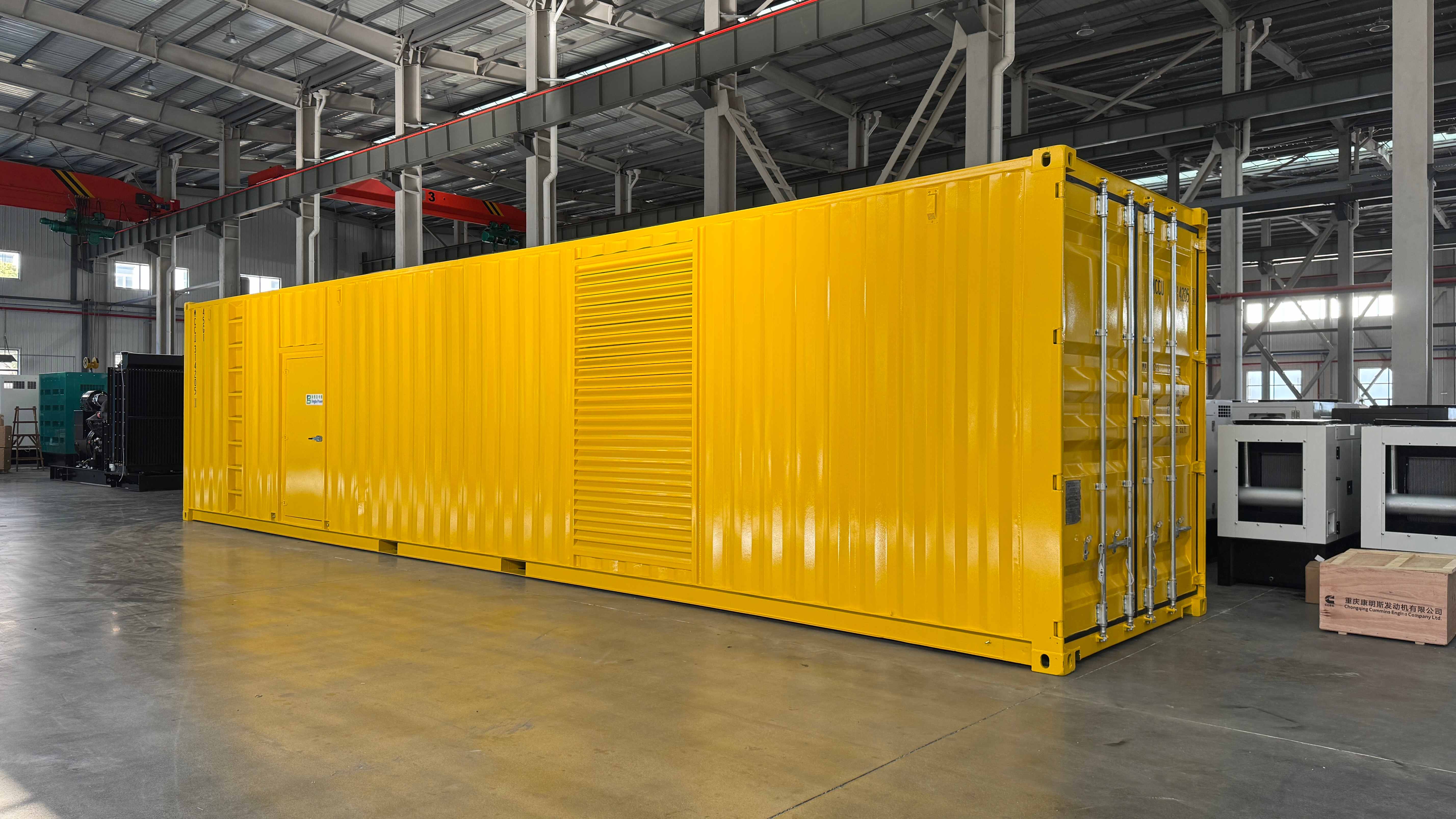
The real advantage of ISO-corner castings is that they replace guesswork with a fixed set of pickup and restraint points. Every twistlock, spreader, and chassis pin is built around the same oval slot and corner block geometry, so a container can move from a ship to a railcar to a truck without anyone needing to rig straps or weld temporary lugs. That uniformity is what keeps transport quick and predictable even when you are handling boxes from a dozen different manufacturers.
Stacking behaves differently when the load path runs through the corner castings into the corner posts. Instead of relying on side panels or floor boards to carry the weight of several containers above, the casting channels the force straight down through the strongest part of the frame. This keeps the stack stable during rough handling, wind, or uneven yard surfaces, and it also means the lower boxes are not slowly deformed by the pressure of the units on top.
There is also a wear factor that often gets overlooked. ISO-corner castings are cast steel with a controlled hardness, so repeated engagement with twistlocks and spreader cones does not chew up the pockets the way a fabricated bracket would. That durability matters in high-cycle terminals where the same casting might be grabbed and released thousands of times. When the corner fittings are reliable, transport and stacking stop being a special operation and become one less thing you have to think about.
Engineered Enclosures for Salt, Sand, and Sub-Zero Conditions
Salt spray, drifting sand, and deep freezes ruin ordinary enclosures within a single season. The housings we build for these environments start with 316L stainless or marine-grade aluminum, then get a multi-layer coating that shrugs off chloride pitting and abrasion. Corner welds are fully sealed, gaskets are silicone rated for -60°F, and every fastener is isolated to prevent galvanic corrosion. The result is a shell that doesn't just survive the coast or the tundra—it keeps working without constant scraping, touch-ups, or replacements.
Sand is often the sneakier problem. Fine grit finds its way into hinge pins, latch mechanisms, and vent screens, grinding parts until they bind. We address that with labyrinth-sealed doors, positive-pressure purge ports, and stainless mesh filters that stop particles down to 40 microns. Latches use cam-action compression rather than sliding parts, so even after a dust storm you can open the panel without a hammer. For sub-zero operation, we skip any material that becomes brittle below -20°C and add thermostatically controlled heaters behind a sealed inner bulkhead, keeping electronics above dew point without overheating the enclosure skin.
Each build is proof-tested in a salt fog chamber and then cycled between -40°C and +60°C while pressurized with dry nitrogen. That's not a spec-sheet exercise—it catches the hairline leaks that show up only when metal contracts. We've learned that success in these conditions comes from treating the enclosure as a system, not a box. Drain channels, cable entry positions, and even the angle of the roof all matter more than the plate thickness. That's why our designs for oceanfront pumps, dune-side telemetry, and arctic valve stations share the same core principle: keep the outside out, and the inside boringly dry.
Tuned Fuel Curves That Trim Operating Costs in Real-World Loads
Most stock fuel maps are written for a test cell, not for a skid steer that idles half the day or a compressor that cycles between 40% and 80% load. Recalibrating those curves to match actual duty cycles takes out the excess fuel that never shows up as useful work.
The savings come from small, targeted changes. A wheel loader that sees frequent throttle blips during loading usually runs rich in the transient zone; leaning out that spike without touching peak torque reduces consumption by several percent. On a generator running at partial load, moving the mid-range fuel curve closer to the engine's sweet spot cuts both fuel burn and wet stacking.
None of this requires new parts or a remap that makes the machine feel sluggish. A properly tuned fuel curve simply stops paying for fuel the engine doesn't convert into motion. Over hundreds of hours, that shows up as a lower hourly operating cost and fewer trips to the tank.
Factory-Wired Paralleling Panels Remove Integration Guesswork
Coordinating multiple generators on a single bus has traditionally meant hours of drawing review, field verification, and handshake testing between the controls vendor and the installing contractor. A factory-wired paralleling panel eliminates most of that uncertainty because the breakers, bus connections, CTs, and control wiring are assembled and tested as one system before they reach the job site. Instead of sorting through loose schematics or hoping the field electrician interprets a control diagram the same way the engineer intended, the design is locked in at the factory and verified under load.
The practical payoff shows up during startup. Wire-by-wire checks drop dramatically, and the usual troubleshooting calls about mismatched phase rotation or missing interlocks simply don't happen with the same frequency. Load sharing, synchronization, and protective relays are already coordinated to the specific generator set and breaker combination, so commissioning moves faster and the owner gets a cleaner handoff. It also makes future service easier because every conductor and component has a defined landing point rather than a field-modified workaround.
Built-In Telematics That Turn Maintenance Into a Planned Event
A vehicle with built-in telematics doesn't wait for a dashboard light to signal trouble. It continuously reads data from the engine, brakes, battery, and fluids, then compares those readings against real-world usage patterns. This means service intervals are calculated from how you actually drive, not just a generic mileage chart in the owner's manual.
When the system spots wear approaching a critical point, it can notify your preferred service center, check parts availability, and offer appointment slots that fit your schedule. The result is a maintenance stop that feels like a routine calendar entry instead of an unexpected interruption. For fleet managers, the same data aggregates across every vehicle, revealing which units can be serviced together to cut downtime.
Over time, these telematics create a living service history that sharpens predictions. A part that fails slightly earlier on one route can trigger a proactive replacement on identical vehicles before issues spread. Maintenance shifts from being a reaction to a breakdown into a planned event that protects both the vehicle and the day's schedule.
FAQ
Their real advantage is that they arrive as a complete, self-contained power house. Everything—engine, alternator, fuel tank, control panel, and often a small workshop area—is housed inside a standard shipping container. That means a single crane lift can place the unit on a gravel pad or compacted soil, and it can be running within hours. For remote sites or disaster response, that speed and minimal site preparation matter more than almost anything else.
Most established Chinese suppliers treat the container as a platform rather than a fixed product. You can specify voltage, frequency, prime or standby rating, synchronization, remote monitoring, fire suppression, sound attenuation, and even specialized fuel systems for natural gas or biogas. The container itself can be modified with extra doors, internal lighting, air conditioning, or partitioned control rooms. This level of tailoring is often done at a price point and lead time that Western or Japanese builders find hard to match, while still meeting international standards like ISO or CE where required.
Many are built with residential or hospital-grade soundproofing as an option. The container walls are lined with rock wool or foam, ventilation openings use baffled ducts, and exhaust systems can include hospital-grade silencers. On the emissions side, Chinese manufacturers increasingly offer Stage V or EPA Tier 4 final engines when the destination country requires it, or they can fit SCR and DPF after-treatment. So it is not just about raw power—there are configurations aimed at keeping both decibel levels and particulate matter within strict local limits.
It helps to look beyond the headline fuel consumption per hour at full load. Ask for specific consumption curves at 50%, 75%, and 100% load, because many containerized generators spend most of their life at partial load. A well-matched engine-alternator package from a Chinese supplier should deliver reasonable consumption per kilowatt-hour, and the base tank is often sized for 8 to 24 hours of continuous running. External day tanks or automatic refueling connections can extend that significantly if you plan for longer outages.
Yes, but only if you specify the right options. For desert sites, you would want oversized radiators, sand filters on air intakes, and possibly a tropicalized insulation package. For arctic conditions, manufacturers can add coolant heaters, oil heaters, battery warmers, and insulated louver systems. The container itself gives a useful barrier against wind and dust, but the real difference comes from the climatic kit. Reputable Chinese builders are used to shipping to the Middle East, Africa, Central Asia, and northern Russia, so they typically have standard packages for these environments.
Because the entire system lives inside a standard ISO shipping container, it can move by truck, rail, or ship without special permits or heavy-lift cargo handling. Once on site, you simply place it on a level surface, connect fuel lines and power cables, and perform a short commissioning check. There is no need to build a separate generator room, install a weatherproof canopy, or pour an expensive foundation in many cases. For temporary or semi-permanent installations, that translates directly into lower site costs and faster project timelines.
Yes, and that is becoming one of the stronger reasons to choose a containerized platform. Most units can be ordered with deep-sea or programmable controllers that support automatic synchronization with the grid, other generators, or solar and battery inverters. With the right control package, several containers can be paralleled to act as a small power station, or a single unit can be set to start and stop based on renewable output. That flexibility makes them practical for hybrid microgrids, mining camps, and industrial backup where the load profile changes throughout the day.
Conclusion
The appeal of China's containerized generators often starts with how quickly they move from delivery to full operation. Pre-commissioned fuel and control systems, along with factory-tested enclosures, mean on-site setup frequently happens in days rather than the weeks older installations demanded. That speed is reinforced by ISO corner castings, which let a single crane or stacker reposition units without custom lifting frames or costly civil work. The same corners allow generators to be stacked two or three high at ports and storage yards, turning otherwise wasted vertical space into usable inventory. As a result, projects in remote or congested sites spend less time on rigging and more time on actual power delivery.
Beyond logistics, the enclosures themselves are built around real field conditions: salt spray, blowing sand, and sub-zero starts are treated as baseline requirements, not optional upgrades. Inside, fuel mapping is tuned away from laboratory load profiles toward the partial and fluctuating loads common in mining, construction, and island grids, cutting consumption where it actually hurts the budget. Factory-wired paralleling panels remove the trial-and-error of integrating multiple units, while embedded telematics shifts maintenance from reactive breakdowns to scheduled, low-disruption service windows. This engineering approach means the generator arrives as a coherent system, not a collection of parts that still need to be figured out on site. The result is a power package that fits into global projects with fewer surprises and less hidden labor.
Contact Us
Contact Person: Rita
Email: [email protected]
Tel/WhatsApp: +8613481024441
Website: https://www.dbdieselgenerator.com/