

Calcium Chloride 94% Powder Export Guide for Global Buyers and Suppliers
2026-11-16
Calcium chloride 94% powder may look like a straightforward commodity, but inconsistent purity, poor packaging, and unclear export documents still derail too many global orders. This guide cuts through those recurring problems with practical checks for buyers and suppliers alike. From moisture control to customs-ready specifications, Shouguang Golden Chemical shares the details that help you source and ship with more confidence.
Where 94% Calcium Chloride Fits in Heavy-Duty Deicing and Dust Suppression
A 94% calcium chloride product tends to earn its place where the job outpaces the limits of plain rock salt. On interstate ramps, bridge decks, port yards, and airport taxiways, the material releases heat on contact with ice and keeps working when the temperature drops well below the range that makes sodium chloride sluggish. Crews rely on it for overnight storm cycles, packed glaze, and surfaces that cannot wait for sunlight or heavy traffic to loosen the bond.
The same chemistry shows up differently on unpaved roads and heavy earthmoving sites. Mine haul roads, quarry access routes, logging tracks, and construction staging areas benefit from its ability to pull moisture from the air and hold it in the roadbed. That keeps fine dust from lifting into traffic, cuts the need for frequent watering, and leaves the surface less prone to washboarding and blade wear. One measured pass can settle a stretch for weeks instead of days.
In both roles, the product fits where repeat passes, lost time, and poor surface conditions carry real cost. It is not the default option for mild weather or light-duty needs, but it becomes the sensible choice when temperatures stay low, dust becomes a safety or maintenance issue, and the work requires a treatment that holds up between applications.
What a Certificate of Analysis Reveals Before the First Shipment
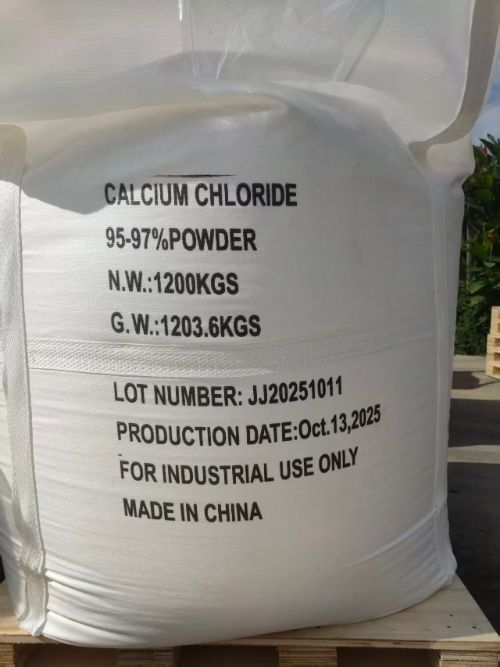
A certificate of analysis often reads like a quiet promise of consistency. Long before the first container leaves the port, it distills months of lab work into a handful of numbers: moisture content, active ingredient percentage, microbial limits, and sometimes residual solvent profiles. Buyers who skip straight to the bottom line miss the real conversation happening between the lines — whether the batch matches the pilot sample, whether the drying curve held steady, and whether the storage conditions were honest enough to preserve what was measured.
What makes this document useful is not that it proves perfection, but that it exposes the range of a supplier's control. A narrow spread across three production batches tells you more than a single flawless result. Look for traces of real handling: slight shifts in ash content that map to harvest timing, a viscosity value that hints at how the material was filtered, or a heavy metals panel that actually names the method used. Those details separate a genuine quality gate from a recycled template.
Before the first shipment arrives, the certificate is also a test of how a supplier handles deviation. If the numbers sit unusually close to every specification limit, ask what happened to the batches that fell outside. A thoughtful answer — including rework, rejection, or an adjusted drying step — usually predicts fewer surprises later. The paper itself never guarantees the cargo, but it shows whether someone on the other end was paying attention when no one was watching.
Bulk Packaging Methods That Protect Powder During Long Ocean Crossings
Powders traveling by sea rarely fail from pressure or impact alone. The bigger threat is moisture working its way into the load over several weeks. Daytime heat drives humidity into the container, and overnight cooling pulls it back out as condensation. For bulk powders, that cycle causes caking, spoilage, or contamination. One of the more reliable setups is a woven polypropylene outer bag fitted with a sealed polyethylene liner. The liner is heat-sealed after filling, leaving very little air space, so the powder does not constantly inhale damp marine air when temperatures shift.
High-barrier foil liners go a step further for hygroscopic or high-value materials. They are used alongside desiccant sachets inside each bag, or desiccant blankets hung inside the container. Some shippers also flush the headspace with nitrogen or pull a vacuum before final sealing. That reduces oxidation and buys extra shelf life, which matters when the product may sit at a humid port for days before customs clearance. The added cost is usually small compared with losing an entire batch to lumps that cannot be reworked.
Protection at the container level often decides whether the inner packaging survives. Lining the container with a dry liner, wrapping pallets with reinforced film, and placing moisture absorbers near the doors can stop condensation from dripping directly onto bags. Tight bracing is just as important, because repeated rolling in heavy seas can cause stack movement and wear through the outer fabric. Multiple barriers, rather than one thick layer, tend to hold up best when a long crossing exposes the cargo to rough weather and sharp temperature swings.
Customs and Compliance Steps That Slow Down Unprepared Exporters
Many first-time shippers assume the physical movement of goods is the hard part, but customs clearance is where unprepared exporters lose days without a clear reason. A commercial invoice that lacks a precise product description, a vague certificate of origin, or a mismatch between the declared value and the packing list can trigger a cascade of document requests. Customs officers rarely reject a shipment outright at this stage; instead, they ask for clarification, and each exchange moves the entry to the back of the queue. The delay compounds quietly while the freight sits in a bonded warehouse.
Compliance steps such as tariff classification, import permit verification, and restricted-party screening tend to get compressed into the final hours before departure. Exporters who treat the six-digit HS code as universal often discover that destination countries require additional digits or assign different rulings to the same product line. A missing health certificate, an outdated electronic filing, or a failed audit of the consignee can hold cargo at the port for inspection. By the time the issue is resolved, storage charges and demurrage have already erased the margin the exporter was trying to protect.
What slows unprepared exporters most is not malice from regulators but the repeated solving of avoidable problems. Without an internal checklist that runs before booking, every shipment becomes a new negotiation with the same administrative obstacles. Experienced teams verify the destination rules, confirm the exact classification, and secure the supporting paperwork while the goods are still being packed. The unprepared ones pay for the same education at the port gate, one delayed shipment at a time.
Pricing Breakdown: Freight, Moisture Allowances, and Payment Security
Freight costs are rarely fixed, and treating them as a rounding error can quietly erase margin. The breakouts show actual routing, fuel surcharges, and port or rail handling as separate lines rather than blending them into a single delivered number. That way, a change in carrier or a spike in bunker fuel does not blur the underlying product cost.
Moisture allowances turn a wet load into a fair calculation. When material arrives above the agreed moisture ceiling, the excess water weight is deducted from the invoiced tonnage before the unit price is applied. It protects the buyer from paying dry-weight prices for water, while giving the supplier a clear standard instead of a subjective discount negotiation after delivery.
Payment security sits behind the price and keeps the terms from drifting. Instruments such as an irrevocable letter of credit, a confirmed payment undertaking, or an escrow release tied to inspection results give both parties a defined trigger for funds movement. The commercial result is a price that holds up in practice, not only on the quote.
How Regional Demand Shapes Lead Times and Supplier Leverage
When a single region heats up, the ripple effect on lead times is rarely linear. A factory cluster in Guangdong might be running at 85% capacity for months, then suddenly find itself booked solid because three large buyers in Europe placed overlapping orders. That kind of localized spike doesn't just add two weeks to a production schedule; it changes the tone of every conversation with suppliers. Suddenly, the vendor who used to chase your purchase order is the one setting terms, renegotiating minimums, and quietly prioritizing customers who have paid slightly higher rates in the past. Buyers who fail to read these regional pulses end up surprised by delays that were, in hindsight, entirely predictable.
Regional demand also redistributes leverage in subtle ways. A procurement team sitting in North America might assume their annual volume gives them negotiating power, but if the supplier's local market in Southeast Asia is booming, that assumption collapses. The factory can simply sell the same capacity to domestic or regional buyers at better margins, with shorter shipping distances and fewer compliance headaches. What looks like a global supply relationship is, in practice, a collection of regional markets competing for the same machines and labor hours. Sharp buyers track not just their own order book but the demand signals in the supplier's home region, because that is where real lead time pressure originates.
Over time, this dynamic rewards companies that build what might be called regional demand literacy. Instead of treating lead time as a fixed number in a system, they treat it as a moving reflection of where demand is concentrating. When a region's construction, retail, or electronics sectors surge, the component suppliers in that region shift their output accordingly, and distant buyers feel the effect weeks later. Savvy sourcing teams use that lag to their advantage, securing capacity before the regional wave fully hits, or deliberately shifting orders to suppliers whose local demand is cooling. The suppliers, for their part, learn which buyers understand this rhythm, and they tend to reserve more flexible terms for those who do.
FAQ
The number means the material contains at least 94 percent calcium chloride by weight, with the remainder being mainly water, sodium chloride, and trace salts. This is suitable for de-icing, dust control, concrete acceleration, and oilfield use, but not for food or pharmaceutical applications.
China is still the main source for large volumes. Indian producers have become more visible for flexible order sizes, and a handful of Middle Eastern suppliers occasionally offer spot cargoes. Availability can shift with energy and raw material costs.
Most buyers use 25 kg or 50 kg HDPE bags with an inner liner, palletized and shrink-wrapped. For larger operations, 1,000 kg or 1,250 kg bulk bags reduce handling time and cost at the destination port.
Moisture pickup. This material absorbs water quickly, so poorly sealed bags or humid transit conditions can turn a free-flowing powder into hard lumps. Check the container for holes, confirm the desiccant is in place, and inspect pallet wrapping before loading.
Request a certificate of analysis from an independent lab. The useful values are calcium chloride content, magnesium and alkali chloride levels, moisture, and visual appearance. Supplier-issued documents alone are not enough for a first order.
Major producing countries do not usually restrict exports. The bigger issue is the importing country's classification, since technical grade and food grade can fall under different codes and duty rates. Confirm the correct code with a local customs broker before shipment.
For a standard 20 to 25 metric ton order in regular packaging, most suppliers need about 10 to 20 days after receiving the deposit. Custom bag marking, pallet configurations, or larger tonnage can add another two to four weeks.
Typically no. This is a technical grade aimed at de-icing, dust suppression, drilling, and construction. Food and pharmaceutical buyers should look for FCC, USP, or BP grade material with tighter purity limits.
Conclusion
Buyers sourcing calcium chloride 94% powder for winter road programs or mining-site dust control often overlook the practical divide between a data sheet and what actually arrives at the port. The 94% grade sits in a working range: strong enough for heavy deicing and long-lasting enough to keep haul roads stable, without the premium tied to higher-purity food or pharmaceutical material. Still, a certificate of analysis should be reviewed before the first container is booked—not just for calcium chloride content, but for magnesium, alkali metal chlorides, and moisture, since small shifts in these values change handling and performance. Equally important is packaging. Moisture-resistant liners, sealed valve bags, or supersacks strapped inside the container reduce caking and leakage on long ocean crossings, where temperature swings and humidity can quietly damage poorly packed powder.
On the compliance side, unprepared exporters lose more time at customs than they save on cheaper freight. Classification, safety data sheets, and destination-specific import rules need to line up before shipment, because a single missing document can hold a container at the terminal. Pricing is rarely just about the per-ton rate. Ocean freight, port fees, moisture allowances, and payment terms all move the final landed cost, and buyers who fix only the unit price often discover hidden exposure later. Regional demand also changes supplier behavior: a cold winter in North America or infrastructure expansion in the Middle East can tighten supply, stretch lead times, and shift leverage toward producers. The buyers and suppliers who stay most reliable are usually those who treat these variables as one connected export process rather than a series of separate transactions.
Contact Us
Contact Person: Tom Cui
Email: [email protected]
Tel/WhatsApp: +8618663670626
Website: https://www.jinjigoldenchem.com