

Bohemian Printed Carpet: How to Pick a Good One
2026-10-10
A room without a rug can feel unfinished, but a bad Bohemian printed carpet can kill the vibe you are going for. The right one brings warmth, texture, and a story underfoot—if you know what to look for. In this guide, we break down the key details that separate a quality piece from a quick disappointment, with Senseco helping you shop with confidence.
Why the Backing Matters More Than the Pattern
You can swap out a tired pattern every few years, but a poorly made backing will haunt you long after the design has lost its charm. The backing is what anchors every fiber, keeps edges from curling, and decides whether a rug lies flat or buckles underfoot. A dense, well-constructed backing distributes foot traffic evenly, preventing the pile from crushing in high-use zones. Without it, even the most striking pattern turns into a trip hazard within months.
Think of the backing as the silent architecture beneath the surface. It absorbs the impact of chairs scraping, kids sprinting, and vacuum heads grinding across the top. A cheap foam or latex backing breaks down into brittle flakes that end up scattered across your floor, while a quality woven or felted backing holds its shape year after year. That stability matters more than whether the pattern is trending or timeless, because nobody admires a beautiful rug that slides or wrinkles under every step.
Moreover, the backing determines how a rug cleans and ages. A breathable, moisture-resistant backing allows spills to be blotted up before they reach the floor, while a dense barrier backing can trap dampness and lead to mildew underneath. Patterns fade and taste changes, but a robust backing extends the life of the piece and keeps it feeling secure under bare feet. When you choose a rug, inspect the reverse side first—the pattern is just the cover, the backing is the book.
Natural Dye or Chemical Dye: How to Tell
Hold the fabric up to bright sunlight. Natural dyes rarely sit perfectly even—look for tiny variations in saturation, a slight unevenness where the fiber took the color more deeply in some spots. Chemical dyes tend to lock into a flat, almost plastic uniformity. If you have a loose thread, burn a small piece: plant-based dyes often leave a soft gray ash and smell faintly of burnt leaves, while synthetic dyes can smell acrid or chemical.
Wet a hidden corner and press it against a white cloth. Many natural dyes, especially indigo, madder, or turmeric, will bleed a little even after washing. The stain on the white cloth usually looks organic—soft, muted, uneven at the edges. Synthetic dyes may also bleed, but the color often transfers as a brighter, more uniform blob with a sharper edge. This isn't foolproof, but combined with the sunlight check it gives you a clearer read.
Finally, consider how the color ages. Natural dyes fade like old leaves or flower petals: they lose brightness gradually and may shift toward warmer, earthier tones. Chemical dyes can also fade, but they often do so in a more predictable, overall washout or develop a slightly chalky look. If the piece is vintage, check the seams and inner folds where light hasn't reached—natural dyes there usually show a gentler, more organic contrast than synthetics.
Pattern Scale Shifts the Room's Energy
A room reacts to the size of its patterns the way a voice reacts to volume. Tiny, intricate motifs pull the walls inward, creating a sense of quiet enclosure—almost like a whispered conversation between the furnishings. Oversized blooms or bold geometrics, on the other hand, throw the space open, making ceilings feel higher and corners less defined. The same floral print in a six-inch repeat versus a twenty-four-inch repeat will deliver two entirely different rooms: one that cradles, one that expands.
There’s also a trick to mixing scales without letting the room dissolve into visual noise. Anchor the space with one dominant large-scale pattern—on a rug or a feature wall—then let smaller prints act as supporting textures. The eye needs a place to land, and a generous motif offers that resting point. When every pattern shouts at the same volume, even a well-chosen palette can feel chaotic. But a deliberate jump in scale, say from a two-inch gingham on a cushion to a thirty-inch palm leaf on drapery, creates a rhythm that moves through the room like a slow crescendo.
Light plays its own game here. Small patterns tend to read as solid color from a distance, especially in low light, so a tight herringbone or micro-dot can flatten a wall into a soft, even tone. Large patterns catch shadows and highlights across their curves, giving the surface a subtle undulation that changes as the day shifts. If a room feels flat or static, try replacing a small-scale print with the same motif blown up by four or five times. The energy doesn’t just change—it starts to breathe.
Knot Count Tells You How Long It Will Last
A rug's knot count isn't just a number to impress collectors—it's a direct window into how many years of foot traffic it can survive. Each knot locks a tiny bundle of wool or silk to the foundation, and when you pack more of them into every square inch, the surface becomes denser and far less likely to show wear. Low-knot pieces might look fine on day one, but after a few seasons of chairs scraping and kids sprinting through, the gaps between knots start to widen and the pile flattens out.
Think of it like the thread count on bedsheets: higher numbers mean fibers are held tighter together, so they resist abrasion and matting far longer. A rug with 200 knots per square inch will typically outlast one with 80, simply because there's less room for individual strands to shift, snag, or break under pressure. That's why antique Persian rugs with 500+ knots can still look rich after a century, while cheaper machine-made alternatives lose their pattern definition within a decade.
Of course, knot count alone won't save a rug from poor materials or bad care, but it's the single most reliable predictor of structural longevity. If you're choosing between two similar designs, pick the one with the higher count—it'll stay crisp under your feet long after the other starts looking tired and threadbare.
The Sunlight Test for Color Fastness
The sunlight test accelerates what normally happens over months of window exposure. Fabric swatches and dyed surfaces are mounted in frames and placed under xenon arc lamps or on outdoor exposure racks. Some setups cycle through light and dark periods, while others add moisture sprays to mimic morning dew. The goal is to see how dyes and pigments respond to ultraviolet energy, not just visible brightness.
Fading resistance is usually reported as a numerical grade. A score of 4 on the 5-step gray scale is acceptable for many indoor textiles, but outdoor canvas and awning fabrics should reach at least 6 or 7 on the 8-step blue wool scale. A lower number can mean visible fading within a single season, especially for deep reds, bright yellows, and certain blues that rely on less stable dye structures.
Interpretation depends heavily on end use. A sheer curtain that gets indirect light all day has a much easier life than a boat cover exposed to salt, heat, and direct sun. Test results are useful for comparing candidates under identical conditions, but they do not guarantee identical aging in every climate. For that reason, many designers treat sunlight fastness data as a starting point rather than a final verdict.
Edge Finishing Speaks Volumes About Craftsmanship
Run a finger along the edge of a well-made garment and you'll feel the difference immediately. Sharp, clean corners on a collar, a hem that lies flat without puckering, or a seam that curves smoothly around an armhole all point to a maker who took the time to get the details right. It's not about flashy techniques—it's the quiet confidence of a finish that doesn't draw attention to itself but holds up under close inspection.
Mass-produced pieces often rely on shortcuts: raw edges hidden behind a quick serged stitch, facings that flip out after the first wash, or topstitching that wanders off course. Bespoke tailors and skilled sewists treat edge finishing as a signature. They might bind a seam with silk, fell it by hand, or use a Hong Kong finish on an unlined jacket. Each choice reflects an understanding of how fabric behaves over time and how a garment feels against the skin.
Next time you pick up a shirt or a pair of trousers, turn it inside out. Look at how the raw edges are contained. If they're neat, consistent, and purposeful, you're holding the work of someone who cares about more than just the outside appearance. That level of care is rare, and it tells you everything about the craftsmanship behind the piece.
FAQ
Wool blends and polypropylene tend to last longest. Wool feels softer and resists dirt, but costs more. Polypropylene handles spills and sun exposure without fading, which helps if the carpet sits near a window. Cotton printed versions look great in low-traffic spots but won't survive heavy daily wear.
Pick one or two main colors from the carpet and echo them in cushions or curtains. If your furniture already has busy upholstery, go for a rug with a border or a faded, vintage-style print rather than a full geometric repeat. Also step back three feet and see if the pattern still reads as a calm backdrop or starts vibrating.
Low to medium pile is easier to vacuum and doesn't trap crumbs or pet hair as much. High pile feels plush underfoot but shows footprints and matting faster. For a bohemian printed carpet that gets walked on daily, aim for about 0.25 to 0.4 inch pile height.
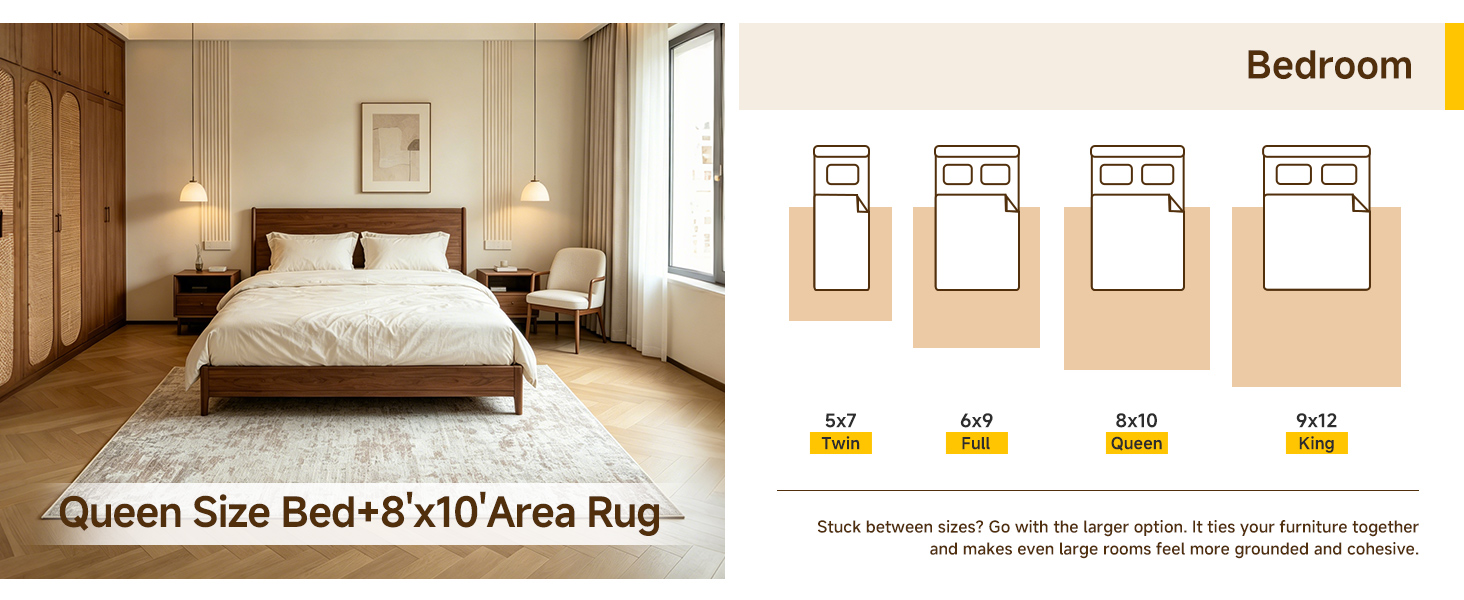
A 8x10 foot rug usually lets the front legs of the sofa and any side chairs sit on it while leaving a border of floor around the edges. In smaller rooms, a 6x9 can work if at least the coffee table and the front sofa legs fit on the rug. Always leave 12 to 18 inches of bare floor from the rug edge to the wall.
Yes, if you choose a flatweave or very short loop pile with a dense backing. Hall runners in a durable printed design can handle foot traffic better than shaggy styles. Look for a pad that grips the floor so the runner doesn't slide or buckle.
Check the backing and the yarn tips. If the color only sits on the surface and the base threads underneath look white or pale, it's likely a cheaper print that will wear off. Rub the pile firmly with a damp white cloth — if color transfers, expect fading. Also avoid carpets that smell strongly of dye right out of the package.
Yes, especially with synthetic printed rugs. A sharp chemical or gasoline-like smell often means high VOC levels from glues or dye fixatives. Air the rug outside for a few days and use a low-VOC rug pad under it. If the smell doesn't fade in a week, return it.
For a 5x8 to 8x10 size, expect to pay between $150 and $500 for a rug that will last several years. Under $100 often gets you a thin printed layer that creases and fades within a season. Above $600, you're mostly paying for natural wool, thicker pile, or handmade details.
Conclusion
When you're drawn to a bohemian printed carpet, it's easy to get lost in the colors and motifs. But before falling for the pattern, flip it over. The backing tells you more about durability than any design ever will. A tightly woven, slightly stiff backing usually means the fibers are anchored well, whereas a flimsy, loose weave will sag and tear after a few months. Also check if the dye is natural or chemical. Natural dyes, like madder or indigo, fade unevenly but gracefully over time, while harsh chemical dyes often bleed or turn garish once exposed to moisture. Rub a damp white cloth on a hidden corner—if color transfers, walk away. Then consider pattern scale. A large, bold motif energizes a room and works best in spacious, airy settings; a small, dense repeat adds quiet texture and suits cozy corners.
Knot count is another tell. Higher knots per square inch mean a tighter, longer-lasting pile—you'll feel the difference underfoot immediately. But don't stop there. Carry the carpet to a window or outside. Strong sunlight reveals true color fastness: if the hues look washed out or change tone after a few minutes of direct exposure, they won't survive daily life. Finally, run your hand along the edges. Clean, hand-whipped or properly bound edges indicate skilled craftsmanship and prevent future unraveling. A quality bohemian carpet balances visual charm with these hidden structural details. Once you start noticing backing, dye, scale, knot density, sunlight behavior, and edge finishing, you'll never look at a printed carpet the same way again—and you'll choose one that actually lasts.
Contact Us
Contact Person: Ivy Yin
Email: [email protected]
Tel/WhatsApp: +86 18519681805
Website: https://www.sensecomarketing.com/