

Best Warehouse Forklift Models for High-Volume Facilities
2026-09-24
Running a high-volume warehouse comes with relentless pressure: pallets move nonstop, aisles stay tight, and downtime bleeds money. The right forklift isn't just a machine—it's the pacemaker of your entire operation. In this guide, we break down the best models built to handle constant throughput, including a closer look at why HANGCHA keeps showing up on shortlists. If you're tired of forklifts that wilt under the daily grind, keep reading.
Silent Powerhouses: Electric Models for Continuous Shifts
In warehouses that never sleep, electric forklifts and pallet trucks are the quiet workhorses moving goods through shift after shift. Their motors produce a low, steady hum that barely rises above the ambient noise of loading docks, letting operators stay alert without the roar of combustion engines. This isn't just about comfort—it's about keeping a round-the-clock operation from wearing down the people who run it.
Battery technology has quietly reshaped what these machines can do. Lithium-ion packs now deliver consistent power across a full eight-hour stretch, with fast top-up charging during meal breaks. No more swapping out lead-acid batteries mid-shift or waiting for a battery room to free up. The result is a smooth, uninterrupted flow of work where the equipment fades into the background and the focus stays on the task.
Maintenance demands drop sharply, too. Electric motors have fewer moving parts than their diesel or LPG counterparts, meaning less time spent on oil changes, filter replacements, and exhaust system repairs. For facilities running continuous operations, this translates into fewer surprises and more predictable uptime. The machines simply keep going, shift after shift, without drama.
Squeezing Every Inch: Forklifts for Tight Aisles
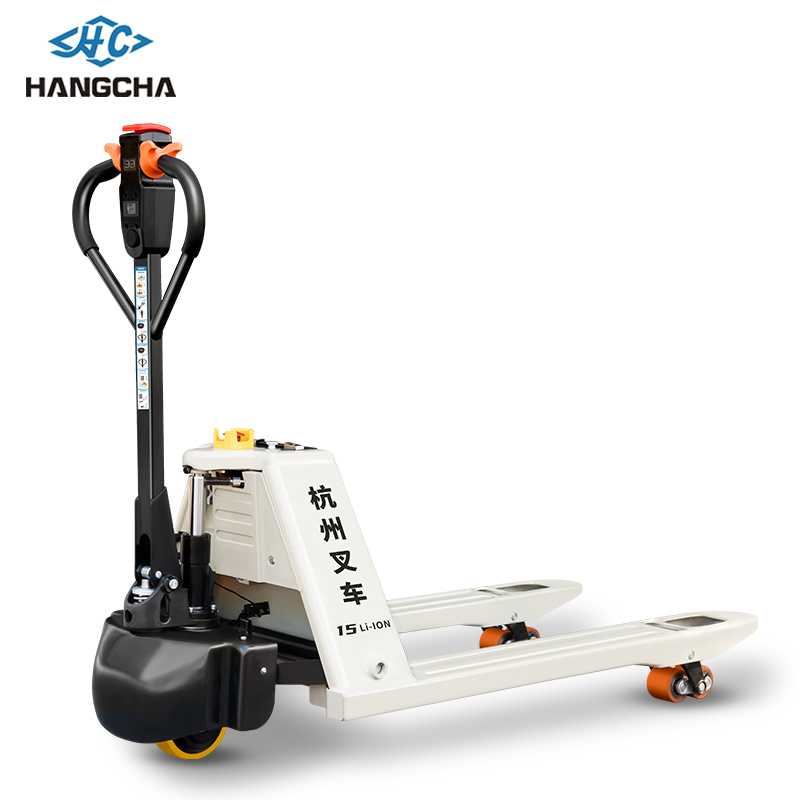
Narrow aisle forklifts aren't a scaled-down version of your standard counterbalance truck. They exist because pallet positions pay the bills, and every square foot of floor that doesn't hold product is a cost. A conventional sit-down forklift might need a 12-foot aisle to turn and place a load. That's 12 feet of dead space between every rack row. Narrow aisle equipment flips that equation: the truck stays in the aisle, and the forks do the reaching, rotating, or sliding. You're not just buying a smaller machine; you're changing the way loads are handled so the aisles can shrink to 8 feet, 6 feet, or even less.
Three designs dominate this category. Reach trucks push the mast forward and use a pantograph mechanism to grab pallets from racks without moving the chassis. They work well in aisles down to about 8 or 9 feet. Turret trucks go further, with forks that rotate 180 degrees so the operator never has to turn the truck around inside the aisle. Some turret models operate in aisles as narrow as 5.5 feet, often riding on guide rails or wire guidance. Then there's the VNA (very narrow aisle) approach, which pairs a turret-style truck with a fixed rail system and height-level sensors. The catch is that your floor needs to be very flat, and your racks need to be installed within tight tolerances. A wavy slab or a leaning upright will make the narrowest trucks unreliable, no matter how good the operator is.
The economics can be surprising. A turret truck costs more up front than a standard reach truck, and it usually requires specialized training and more careful maintenance schedules. But if your warehouse is running out of space and the only alternative is moving to a bigger building, squeezing the aisles often pays for itself within a year or two. Some operations recover 20 to 30 percent more pallet positions in the same footprint. Before committing, check your floor flatness spec, the condition of your racking, and whether your operators can adapt to a seated or standing orientation that limits visibility. It's not a one-size-fits-all fix, but for dense storage environments, the fork geometry matters more than horsepower.
Robots on the Floor: When to Go Autonomous
Most warehouse teams don't switch to autonomous robots because the technology suddenly becomes impressive; they switch when the cost of keeping humans on repetitive routes starts to show up in weekly labor reports. A useful trigger is watching how often a picker or forklift driver moves between the same fixed points without needing to make a judgment call. If that path rarely changes and interruptions are predictable, a robot can usually handle it without constant oversight.
The harder signal is not about the robot's ability to drive, but about the floor's tolerance for exceptions. Autonomous operation tends to break down when pallets are dropped in travel lanes, shrink wrap builds up near charging stations, or inventory gets staged in unexpected corners. Before committing, run a two-week log of every time a human has to step in and correct a route. If those corrections happen more than a few times per shift, the environment still has too much unstructured variation for full autonomy.
A practical middle path is to fence off a small, low-speed zone and let the robot run there without direct supervision for a month. Track how many times it stops and waits for help, not just whether it avoids collisions. If stop-and-wait events drop below roughly one per day and the robot completes at least 95 percent of its assigned trips without intervention, expanding the autonomous area makes sense. Otherwise, the floor still needs more standardized workflows before the robots can be left alone.
Fueling the Fleet: Charging Strategies That Save Hours
Most fleets still charge like it's 2015: plug in whenever there's a free spot, wait until the battery hits 100%, and hope the next shift doesn't stall. That approach quietly steals hours every week. The real bottleneck isn't battery capacity, it's the lack of a rolling charge schedule that accounts for route length, payload weight, and even the outside temperature. A simple rule of thumb—charging only to 80% during midday breaks and reserving full charges for overnight—can cut average turnaround time by nearly a third without buying a single new charger.
Another overlooked lever is charger placement. Putting high-power DC units where drivers already stop for paperwork or lunch, instead of at the back of the yard, removes an extra chore from the day. Pairing that with load-shifting software that automatically throttles power during peak utility rates squeezes more miles out of the same electrical panel. One regional delivery fleet found that just moving two chargers closer to the dispatch window saved 18 minutes per vehicle per shift—time that went straight back into deliveries.
For mixed fleets, the savings get sharper. Electrified box trucks and vans rarely need a full top-up if they return with 40% or more remaining, yet many operators still plug them in for eight hours. A tiered strategy—fast charge only the vehicles going back out within two hours, slow charge the rest overnight—reduces both peak demand charges and driver idle time. The result is less waiting, fewer missed routes, and a fleet that actually feels faster on electrons than it did on diesel.
The Real Price Tag: Maintenance and Downtime Costs
Most buyers fixate on the sticker price, but the quiet drain of maintenance and downtime often outweighs that initial number within the first few years. A machine that breaks down for even a few hours a week doesn't just cost you repair fees—it stalls your entire workflow, pushes deadlines, and forces overtime pay just to catch up. Real ownership cost includes every unscheduled stop, every worn-out part ordered at premium rush rates, and every hour your team stands idle waiting for a fix.
Smart operators shift their focus from purchase price to cost-per-hour of actual productive time. A slightly more expensive machine with a track record of low failure rates and fast local parts availability can end up costing far less over five years than a bargain model that nickels-and-dimes you with constant service calls. The hidden math is simple: if a cheaper unit spends 15% more time down, that lost output often erases any upfront savings within twelve months.
Before you sign the purchase order, ask the seller for real-world downtime data, not just the glossy brochure. Find out how long a typical repair takes, what parts are most commonly replaced, and whether the manufacturer keeps regional service techs on call. Maintenance isn't a line item you can skip—it's the true price tag hiding behind the advertised number.
From Receiving to Shipping: Matching Forklifts to Tasks
A dock receiving palletized freight rarely needs the same machine that pulls double duty in narrow aisles. Sit-down counterbalance forklifts handle trailer unloading well, but once inventory moves into high-density racking, a reach truck or articulated model often cuts cycle times and prevents rack damage.
On the shipping side, load weight and lift height decide more than brand preference. A 3,000-pound load at 20 feet demands a different mast and capacity rating than moving empty pallets around a staging lane. Matching the forklift to the actual daily task list—not the occasional worst-case scenario—keeps operators from wrestling oversized equipment through tight doorways.
The payoff shows up in fewer product touches and less battery or fuel waste. Instead of buying one “all-purpose” truck, many warehouses pair a compact electric stand-up for order picking with a heavier cushion-tire unit for outbound loading. That split lets receiving unload without waiting on shipping, and keeps each area moving at its own pace.
FAQ
For docks and staging lanes that never slow down, the Crown RM 6000 reach truck keeps operators moving with its mono-mast visibility and rapid lift speeds, while sit-downs like the Toyota 8FBCU25 work well for mixed pallet sizes and long hauls across the floor. I'd also look at the Hyster J45XN if you need a compact electric that doesn't overheat during back-to-back shifts.
The Toyota 8FBCU25 is a common choice because it handles continuous duty cycles without eating up floor space. If you prefer side-battery extraction to cut swap time, Hyster’s J45XN pulls the battery out from the side so you're not waiting on a hoist. For cooler rooms or tight budgets, Doosan’s B25X-7 performs well with fewer electronic niggles.
The Crown RM 6000 series stands out. Its open mast design gives better forward sight than most, and the travel speed stays around 8.5 mph even with a full load. Raymond's 7000 series is another solid pick if your operators fight aisle chatter, because the suspended floor and seat damping reduce fatigue on long shifts, which matters more than spec sheets suggest.
For uneven pavement and all-weather loading, the Toyota 8FGU25 with a diesel option pushes heavy loads without losing torque. I'd also mention Unicarriers FG25T—it’s less popular but handles gravel lots surprisingly well. If propane fits your fuel setup, the Yale GP050MX runs quieter than most and keeps exhaust heat manageable around trailers.
That split really comes down to how often your operators get off the truck. If they’re on and off every few minutes to scan or strap, a stand-up like the Raymond 4250 lets them step off faster, but if they stay seated for 30-minute runs, a sit-down counterbalance like the Clark TMX25 reduces leg fatigue. High-volume docks usually favor stand-ups for short, frequent cycles.
Look for sealed wet-disk brakes, not drum brakes. The Hyster J45XN and some Toyota electrics now use wet-disk brakes that don't need frequent adjustment when drivers ride the pedal in heavy traffic. Also check the cooling system: a single cooling fan for controller and hydraulics, like on Crown's RM series, prevents midday thermal derating. Quick battery swaps with side extraction, as on Hyster, can add an extra hour of productive runtime per shift.
They can, but only with the right wire guidance and a disciplined slotting plan. The Crown TSP 6500 turret truck handles pallet picks in aisles down to 5 feet, but if your order profile includes many split-case picks, VNA trucks fall behind because operators still dismount too often. For full-pallet high volume, they're hard to beat on density.
Conclusion
When you're running a high-volume warehouse, the right forklift isn't just a tool—it's the difference between hitting throughput targets and watching orders pile up at the dock. Electric models have quietly become the workhorses of continuous shifts, not because they're trendy, but because they eliminate exhaust fumes and cut noise while delivering torque that rivals their diesel cousins. Pair that with machines designed for tight aisles—think narrow stance, mast tilt that barely kisses the racking—and you can reclaim square footage without sacrificing lift capacity. The real shift, though, happens when autonomy enters the floor: robot forklifts no longer feel experimental. They handle repetitive pallet moves, free up operators for value-added tasks, and reduce the kind of small collisions that add up to real downtime.
But a forklift's sticker price is only the opening act. What matters more is how you fuel the fleet and what happens when a unit sits idle for repairs. Fast-charging strategies, opportunity charging, and battery swapping can save hours every week—hours that translate directly into more picks per shift. Maintenance isn't a line item; it's a silent thief. Hydraulic leaks, worn tires, and neglected software updates can turn a reliable model into a bottleneck. The smart approach is to map forklifts to the actual flow of goods: reach trucks for putaway, counterbalance models for loading, order pickers for case picking. High-volume facilities don't need the most expensive forklifts—they need the right mix of machines that stay moving, stay charged, and rarely surprise you with a repair bill.
Contact Us
Contact Person: Liuxue
Email: [email protected]
Tel/WhatsApp: +86-19084200370
Website: https://www.hf-ec.com/