

Best Conveyor Pulley Types for Heavy Duty Material Handling
2026-11-16
Heavy-duty material handling doesn't forgive shortcuts—especially when it comes to conveyor pulleys. The right pulley keeps your line moving under brutal loads; the wrong one brings downtime you can't afford. In this guide, we break down the pulley types that actually earn their place in demanding operations, and why teams trust YUFENG to deliver that reliability.
Why Drum Pulleys Still Dominate Heavy Loads
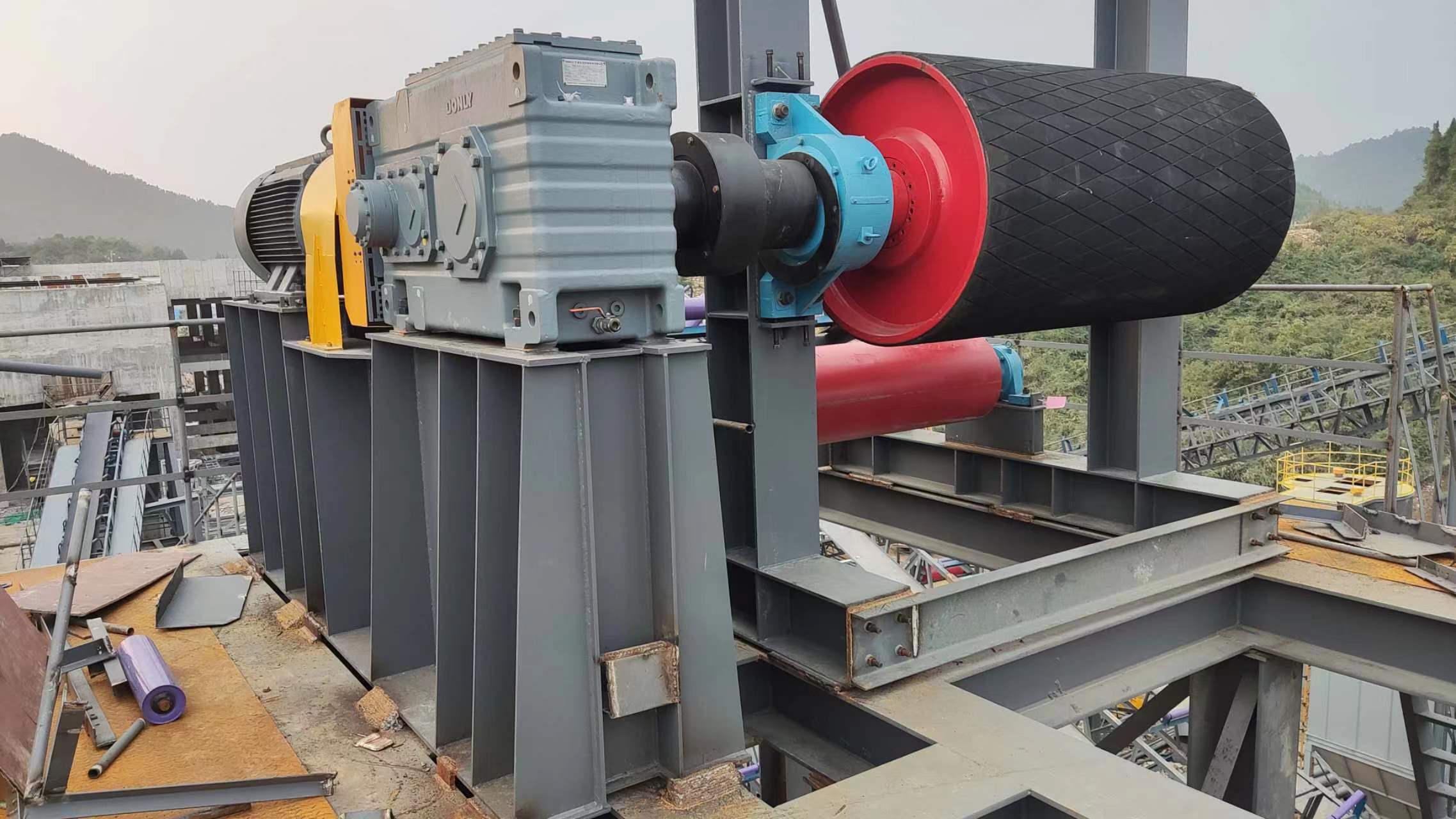
When a conveyor has to move thousands of tons of ore or aggregate every hour, there is no room for fragile components. Drum pulleys earn their place by combining a thick cylindrical shell with internal end discs and a shaft that can be sized precisely for the expected load. This design spreads stress across the full width of the belt instead of concentrating it at small contact points, which is exactly what heavy bulk handling demands.
Another reason they remain the go-to choice is their tolerance for abuse. In mining, ports, and steel mills, pulleys get hit with impact, moisture, abrasive dust, and temperature swings. A well-built drum pulley does not need frequent alignment or delicate adjustments. Once it is lagged and balanced, it can run for years with only routine bearing checks, even when the belt tension spikes well beyond the original specification.
Cost also keeps drum pulleys ahead of more complex alternatives. They are straightforward to manufacture, easy to inspect, and available in a huge range of diameters and face widths. That means an engineer can specify a drum pulley for nearly any heavy-duty conveyor without long lead times or custom engineering overhead. In heavy load applications, predictable performance and simple replacement almost always win over theoretical efficiency gains.
Wing Pulleys: Shedding Debris Without Sacrificing Grip
Traditional solid pulleys often get packed with wet or sticky material, which forces the belt off track and wears down components. Wing pulleys take a different approach by replacing the solid face with a series of spaced, angled wings. Each wing acts like a small paddle, letting loose material drop through the gaps instead of building up. This self-cleaning action keeps the belt surface cleaner and reduces the need for frequent maintenance.
The real design challenge is preventing that debris-shedding ability from reducing friction. If the wings are too narrow or too far apart, the belt only makes contact on a few edges, leading to slip under load. To avoid this, the wings are typically shaped with a slight taper and arranged so that the belt still sees enough continuous surface area across its width. The angle of each wing also helps direct material outward, away from the centerline, without compromising the grip needed for high-torque applications.
What makes this approach reliable in harsh environments is that it does not rely on scrapers or extra cleaning devices. The geometry alone handles most material shedding, even when dealing with sticky clay, wet sand, or fibrous waste. Operators get the traction of a solid drum in most cases, but without the constant build-up that leads to belt wander and premature pulley replacement. The result is a conveyor component that stays effective longer between service intervals, especially on the return side where carryback is a persistent problem.
Lagging Choices That Keep Belts Tracking Under Stress
A conveyor belt under heavy load tends to drift the moment one pulley surface loses its bite. Hard, worn, or overly smooth lagging turns small tension differences into sideways movement. Choosing a lagging with a slightly softer durometer—typically 60 to 70 Shore A for rubber—lets the pulley absorb minor belt irregularities without sacrificing grip. The result is a contact patch that stays engaged instead of skating.
Groove design does more than shed water. Deep diamond or chevron patterns create channels that carry mud and fines away from the center of the pulley face, which keeps the belt from hydroplaning on wet cycles. In high-stress applications where slip generates heat, ceramic lagging with molded rubber backing offers a compromise: hard ceramic buttons dig into the belt cover for positive traction, while the rubber base cushions impact and prevents cover damage.
Installation quality often decides whether a good lagging choice actually holds. Uneven thickness across the pulley face or gaps at the seam create a subtle crown or valley that pulls the belt to one side under tension. A properly cured, tightly bonded lagging layer maintains a true cylindrical profile. Checking wear lines every few hundred operating hours can reveal early tracking drift before it becomes a shutdown issue.
Mine Duty vs. Mill Duty: Matching Strength to the Job
Choosing between mine duty and mill duty equipment comes down to where the machine will actually live and what it will face every shift. Mine duty gear is usually found right at the extraction point, handling raw, abrasive material before it gets crushed or screened. This calls for thicker wear plates, heavier bearings, and frames that can shrug off constant impact and vibration. Mill duty, by contrast, typically sits downstream where material has already been reduced in size, but the environment brings its own punishment—slurries, fine grit, and sometimes corrosive conditions. Manufacturers often beef up seals, use more specialized alloys, and design for tighter tolerances to keep that fine material from working its way into critical components.
The distinction isn’t about one being tougher than the other in a simple ranking; it’s about matching the failure modes. A mine duty conveyor idler might survive a drop of large rock, but the same design could fail quickly in a mill circuit where constant moisture and chemical additives eat away at standard seals. Conversely, a mill duty pump built for smooth, predictable slurry flow might crack under the shock loading of an open pit feeder. Good engineers don’t just ask for “heavy duty” anymore—they specify the exact abuse the equipment will take, from impact energy to particle size distribution to pH levels in the process water.
Getting this match wrong shows up fast in maintenance logs. Premature bearing failures, cracked housings, and worn-through liners are the usual clues that someone bought on price or assumed all rugged equipment is interchangeable. The smart approach is to walk the site, watch a full operating cycle, and talk to the operators who have been nursing the old machines along. Their scars—and the equipment’s—tell you exactly where mine duty ends and mill duty begins.
Custom Engineered Pulleys for Unforgiving Environments
Off-the-shelf pulleys rarely hold up when dust, salt spray, and temperature swings become daily realities. That's why we build each unit from the ground up around your specific load, speed, and footprint constraints—choosing shell materials, bearing arrangements, and coatings that match the actual abuse they'll face. No guesswork, no over-engineering, just a direct answer to the conditions on your site.
From arctic mining operations where steel turns brittle to offshore platforms fighting constant corrosion, our designs have proven themselves in places where failure isn't an option. We often integrate hardened lagging, labyrinth seals, and custom hub profiles that simply don't exist in catalog parts. The result is a component that runs quieter, lasts longer, and reduces the unplanned downtime that eats into your margins.
Every pulley ships with full traceability and performance documentation, so your maintenance team knows exactly what they're installing and why it will survive. We'd rather spend extra time on the front end—mapping stress points and wear patterns—than watch you wrestle with repeated replacements in the field.
When Spiral Pulleys Make Sense on a Tough Line
Spiral pulleys earn their spot when a line has to run at sharp deflection angles under heavy load. The helical groove feeds the rope or cable in a continuous path instead of letting it slam against a single wear point. On a tough pull—say a vehicle buried to the axles—that means less heat buildup and fewer burrs on the wire.
You will also notice the benefit on lines that tend to twist or jump when slack goes out. The spiral channel keeps the wrap seated, so a sudden jerk does not throw the rope off the sheave. In rocky or muddy recoveries where every reset costs energy, that stability alone justifies the extra bulk.
Match the spiral pitch to the rope diameter, not just the sheave size. Too tight a groove pinches the strands; too wide lets the line wander. After a hard day, run a finger along the groove edges. If they feel sharp or uneven, the pulley has done its job but needs dressing or replacement before the next tough line.
FAQ
The main differences come down to shell thickness, shaft diameter, bearing size, and the quality of the end disc welds. Heavy-duty pulleys are built to handle constant impact from large lumps, high belt tensions, and abrasive fines without flexing or cracking. You'll often see reinforced hubs, extra gussets, and a heavier profile around the locking elements.
That's usually the head pulley, often with some form of lagging. On high-capacity systems, the head pulley transfers most of the drive force to the belt, so it needs a strong grip and enough diameter to reduce belt stress. Many operations use diamond or ceramic lagging there to keep the belt from slipping under load, especially when the material is wet or dusty.
Wing pulleys are self-cleaning. The slatted design lets rocks, mud, and other debris fall through instead of getting trapped between the belt and the pulley face. That reduces belt wear and tracking problems, which is a big advantage in mining or aggregate operations where the return side picks up a lot of carryback.
Lagging makes sense whenever you're fighting belt slip or premature shell wear. Rubber lagging improves friction and handles moderate abrasion, while ceramic lagging is better for very wet, high-tension, or high-slip situations. If you're already seeing polished spots or grooves on a bare pulley after a few months, lagging will usually pay for itself by extending belt life.
A snub pulley increases the belt's wrap angle around the drive pulley, which gives the drive more gripping surface without needing more tension. That's helpful on long or steep conveyors where adding too much belt tension would strain the splices and bearings. It's a simple way to improve drive efficiency in a tight space.
Historically they were mostly used in food processing and light package handling, but heavy-duty motorized pulleys are now available for belt speeds and loads that cover a lot of aggregate and processing jobs. The benefit is that the motor and gearbox are sealed inside the shell, so you eliminate external drive components and reduce maintenance. However, they can be harder to service if a failure happens underground, so the decision often comes down to access and asset management preferences.
A take-up pulley maintains the right amount of slack in the belt loop as temperatures change and the belt wears. On heavy-duty systems, automatic gravity or winch-style take-ups are common because they apply consistent tension without requiring manual adjustment. That prevents the belt from slipping at the drive and reduces the risk of splice fatigue caused by uneven loading.
Look beyond the diameter and face width. Check the shell thickness, the type and depth of the lagging, the bearing housing seals, and how the end discs are welded to the hub. For very abrasive conditions, crowned shells or ceramic lagging can help with tracking and wear. Also confirm the shaft is sized for the calculated fatigue load, not just the steady-state torque.
Conclusion
Heavy-duty material handling environments punish conveyor pulleys with relentless loads, abrasive carryback, and constant belt tension. Drum pulleys remain the backbone of these systems because their solid, welded construction provides the highest structural integrity under massive weight and high torque. The unbroken cylindrical face offers a consistent contact surface that keeps belts tracking true, even when lumps and fines wedge between belt and pulley. Without the voids found in wing designs, drum pulleys resist bending and deformation, making them the default choice for primary head and tail positions where failure is not an option.
Yet wing pulleys solve a different problem: debris shedding. Their angled blades allow material to pass through instead of building up under the belt, reducing slippage and premature wear. Pairing either style with the right lagging, such as ceramic or diamond-pattern rubber, restores grip in wet or dusty conditions and prevents mistracking under sudden load shifts. Selection hinges on duty class. Mine duty pulleys suit standard overland and processing conveyors, while mill duty variants use thicker shafts and reinforced end discs for crusher-fed belts and high-impact zones. For freezing temperatures, chemical exposure, or extreme abrasion, custom engineered pulleys with specialized alloys or composite lagging deliver longer service life. Spiral pulleys earn their place on tough lines by providing self-cleaning action and a gentle belt contact pattern that reduces vibration on high-speed systems. The best choice always matches the pulley's geometry and materials to the specific burden, belt speed, and environmental stressors of the application.
Contact Us
Contact Person: Jayce
Email: [email protected]
Tel/WhatsApp: 8615318787602
Website: https://www.yuphengbelt.com/